The U.S. Commodity Futures Trading Commission (CFTC) has issued a new no-action letter offering regulatory relief for designated contract markets and derivatives clearing organizations handling fully collateralized event contracts.
According to the announcement made on May 13, the agency’s Division of Market Oversight and Division of Clearing and Risk said they will not recommend enforcement action against exchanges, clearinghouses, or participants that fail to comply with certain swap-related reporting and recordkeeping rules tied to these contracts. The relief specifically waives compliance with Parts 43 (Real-Time Public Reporting) and 45 (Swap Data Recordkeeping and Reporting Requirements) of CFTC regulations, plus related provisions in Regulations 38.8(b), 38.10, 38.951, and 39.20(b)(2).
CFTC streamlines event contract approvals
The move follows what the agency described as “numerous requests” from trading venues that list and clear event contracts. Officials said the decision is designed to streamline future requests while ensuring uniform treatment across market participants.
Under the new framework, entities seeking to list or clear similar event contracts can request identical no-action treatment and be added directly to the agency’s approval appendix, eliminating the need for repetitive case-by-case approvals.
The CFTC said this approach creates consistency as the market expands and reflects growing demand for event-based trading products.
Regulatory debate heats up
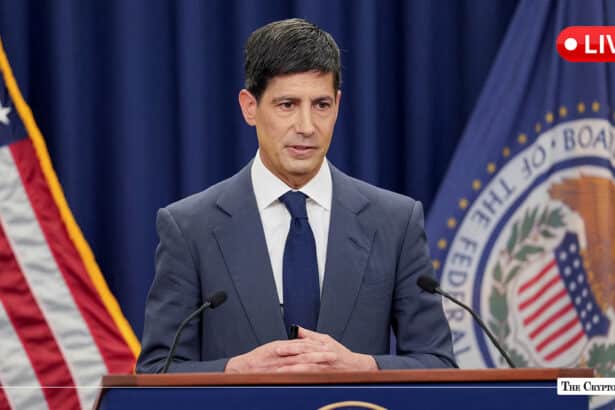
The May 13 announcement is the culmination of a deliberate four-month policy build by Chair Selig, not a one-off action. And the decision comes as prediction markets face mounting legal and regulatory pressure across the United States.
Earlier this month, the U.S. Securities and Exchange Commission (SEC) paused the launch of prediction market ETFs for the second time in two weeks, reportedly citing concerns over catastrophic-loss disclosure requirements tied to binary payout structures.
At the same time, CFTC Chair Mike Selig is reportedly monitoring legislative developments in Minnesota, where state-level challenges to prediction market activity are adding fuel to an already expanding jurisdictional battle.
Several recent court decisions have backed federal oversight authority, strengthening the CFTC’s position as the primary regulator of event contract markets while intensifying debate over how far prediction-based financial products should be allowed to expand. Kalshi has prevailed in multiple state court challenges to its sports event contracts, and the CFTC has filed amicus briefs supporting the position that registered DCMs operate under exclusive federal jurisdiction. The cumulative effect has been to strengthen the CFTC’s position as the primary regulator of event contract markets while intensifying debate over how far prediction-based financial products should be allowed to expand.
Why it matters
The latest no-action relief suggests the CFTC is taking a more practical approach to event market oversight—supporting operational growth while broader regulatory questions around prediction markets, event ETFs, and financial disclosure standards remain unresolved.
As institutional interest in event-based financial products grows, Washington’s next regulatory decisions could shape the future of one of finance’s fastest-evolving sectors.
Also read:- CFTC Backs Kalshi Against Ohio in Escalating Prediction Market Turf War