Key Highlights
- Mike Selig made comments about the growing interest in prediction platforms at the FIA Global Cleared Markets Conference.
- According to him, functioning markets can help aggregate information from a wide range of participants.
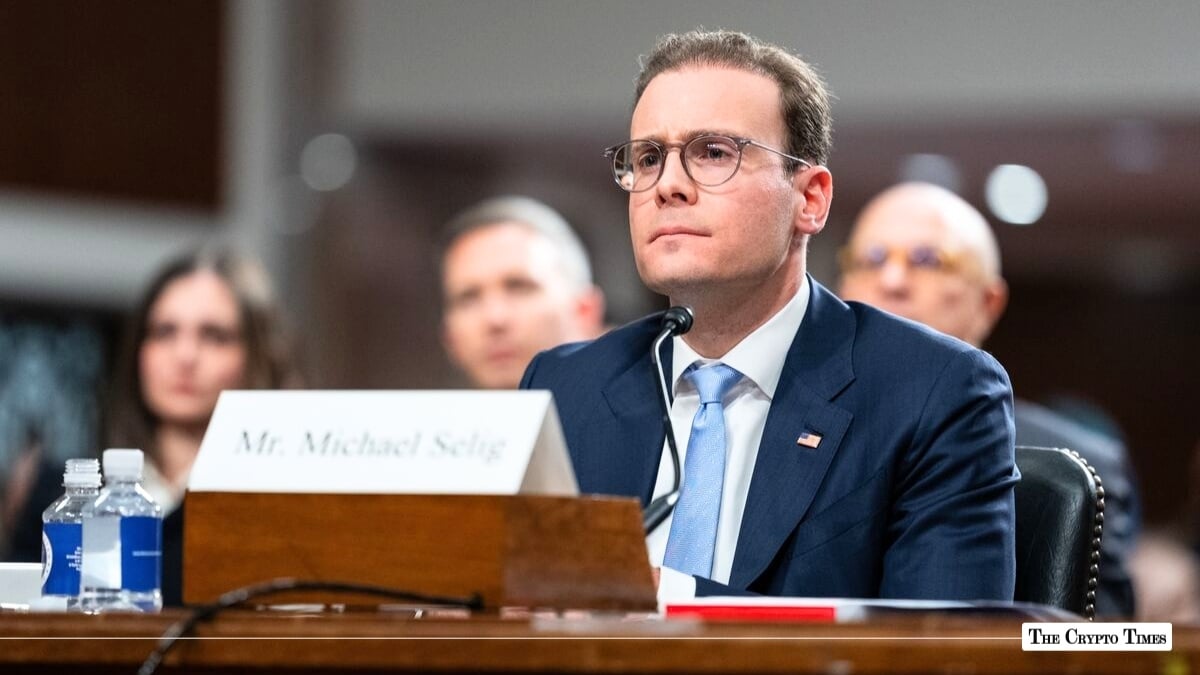
Mike Selig, chairman of the U.S. Commodity Futures Trading Commission (CFTC), said blockchain-powered prediction markets could play a role in countering misinformation online.
Speaking about the growing interest in prediction platforms at the FIA Global Cleared Markets Conference, Selig said more Americans are turning to these markets to estimate outcomes ranging from local weather events to major political developments.
He said, “It’s my hope that, by marrying prediction markets with blockchains, we can see how decentralized trust and truth can act as a check on disinformation, outright falsity, and the threat of debanking.”
According to him, functioning markets can help aggregate information from a wide range of participants, producing price signals that reflect collective expectations.
Growing use of market-based forecasting
Selig noted that prediction markets are increasingly being used as informal forecasting tools. Participants buy and sell contracts tied to future events, with prices shifting as expectations change.
The concept relies on the idea that market participants collectively process large amounts of information. When participants put money behind their forecasts, incorrect predictions tend to be penalized financially.
In Selig’s view, this mechanism can sometimes provide clearer signals than public commentary or expert opinions alone.
Role of liquidity and information aggregation
The CFTC chair stated that liquid prediction markets can be very effective in providing information on complex events, such as elections and economic developments.
He said market pricing aggregates dispersed information from individuals who may have different sources of knowledge or perspectives. When markets operate efficiently, prices can reflect the probability of certain outcomes. He argued that such systems may help people interpret uncertain events more effectively.
Blockchain’s potential role
Selig also suggested that integrating prediction markets with blockchain technology may help improve transparency and trust in these systems. Blockchains provide public records of transactions and market activity, which may help reduce concerns about manipulation or opaque control.
He stated that decentralized systems may provide another layer of security against misinformation and financial exclusion. He added that linking prediction markets with blockchain networks may allow these platforms to operate with greater transparency while reducing reliance on centralized intermediaries.
Also Read: Sen. Alsobrooks Tells Bankers to Expect Compromise on CLARITY Act