Key Highlights
- Sen. Angela Alsobrooks (D-Md.) said both sides will need to accept compromises on the CLARITY Act to get it across the finish line.
- Alsobrooks confirmed she and Sen. Thom Tillis (R-N.C.) are working on a compromise dsigned to prevent bank deposit flight while still allowing crypto innovation to grow.
- The remarks come as the Senate Banking Committee targets a late-March markup, with the stablecoin yield debate remaining the last major obstacle.
Senator Angela Alsobrooks, the Maryland Democrat on the Senate Banking Committee, told a room of over 1,400 community bankers at the 2026 American Bankers Association Washington Summit on March 10 that everyone involved in the Digital Asset Market Clarity Act, popularly known as the CLARITY Act negotiations, should prepare to walk away “a little bit unhappy.”
Speaking at the Marriott Marquis in Washington, D.C., Alsobrooks addressed the ongoing stablecoin yield standoff that has stalled the crypto market structure bill since January. She framed the bipartisan work with Republican Sen. Thom Tillis as a pragmatic effort to balance two competing priorities: preventing deposit flight from traditional banks and allowing crypto innovation to develop within a regulated framework.
“I think I have to level set that all of us will probably walk away just a little bit unhappy,” Alsobrooks said. “The compromise that myself and Sen. Thom Tillis have been working on is one we believe will help prevent deposit flight and allow innovation to grow at the same time.”
The comments represent the clearest public signal yet from one of the bill’s key negotiators that bipartisan compromise language is actively being finalized.
Why the CLARITY Act stalled
The Digital Asset Market Clarity Act, which aims to establish a comprehensive federal regulatory framework for crypto assets, stablecoins, and DeFi, was on track for a Senate Banking Committee markup in January 2026. That session was pulled at the last moment after disagreements over stablecoin yield provisions.
At the center of the dispute are amendments co-sponsored by Alsobrooks and Tillis that would restrict the ability of crypto firms to offer yield rewards on stablecoin holdings. Traditional banks argued that allowing stablecoin yield programs could pull deposits away from the banking system, with analysts estimating stablecoins could divert up to $500 billion in bank deposits by 2028. On the other side, Coinbase cited the amendments as a key reason it withdrew support for the bill, arguing the restrictions would limit USDC adoption and stifle competition with traditional financial products.
The standoff effectively froze the bill for weeks.
What changed
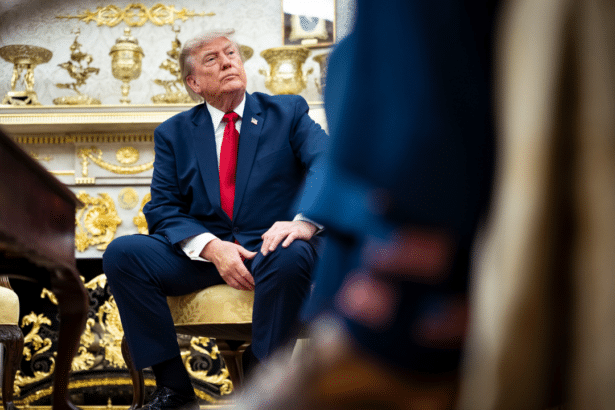
In recent weeks, the White House intervened, sharing updated legislative text with Tillis’s office after back-channel negotiations between crypto firms, banking representatives, and administration officials. President Trump publicly pressured both sides, posting on Truth Social that banks “should not be trying to undercut the GENIUS Act or hold the CLARITY Act hostage.”
Eleanor Terrett reported on March 6 that Tillis’s office has been meeting with both industry representatives and White House officials, with sources describing the talks as “moving in the right direction.” Digital Chamber CEO Cody Carbone said Tillis has been “very receptive” to discussions on stablecoin yield.
Alsobrooks’s remarks today at the ABA Summit confirm that the bipartisan track is active and that both senators are converging on compromise language, though she was careful to manage expectations on both sides.
What comes next
The Senate Banking Committee is targeting a late-March markup session to advance the bill. Even without Democratic support, the CLARITY Act could move through committee on a party-line vote, but Tillis’s vote remains critical in that scenario. If the bill clears the committee, it will be merged with a version that already passed the Senate Agriculture Committee and would then need broader bipartisan support to pass the full Senate.
Several stakeholders have noted that the stablecoin yield debate has consumed most of the negotiating bandwidth, leaving other provisions, particularly those related to DeFi protections and token classification, less fully resolved. Industry sources say the next two to three weeks will determine whether the bill advances before the midterm election cycle narrows the legislative window.
Also Read: U.S. Clarity Act Talks Stall as Stablecoin Yield Debate Grows