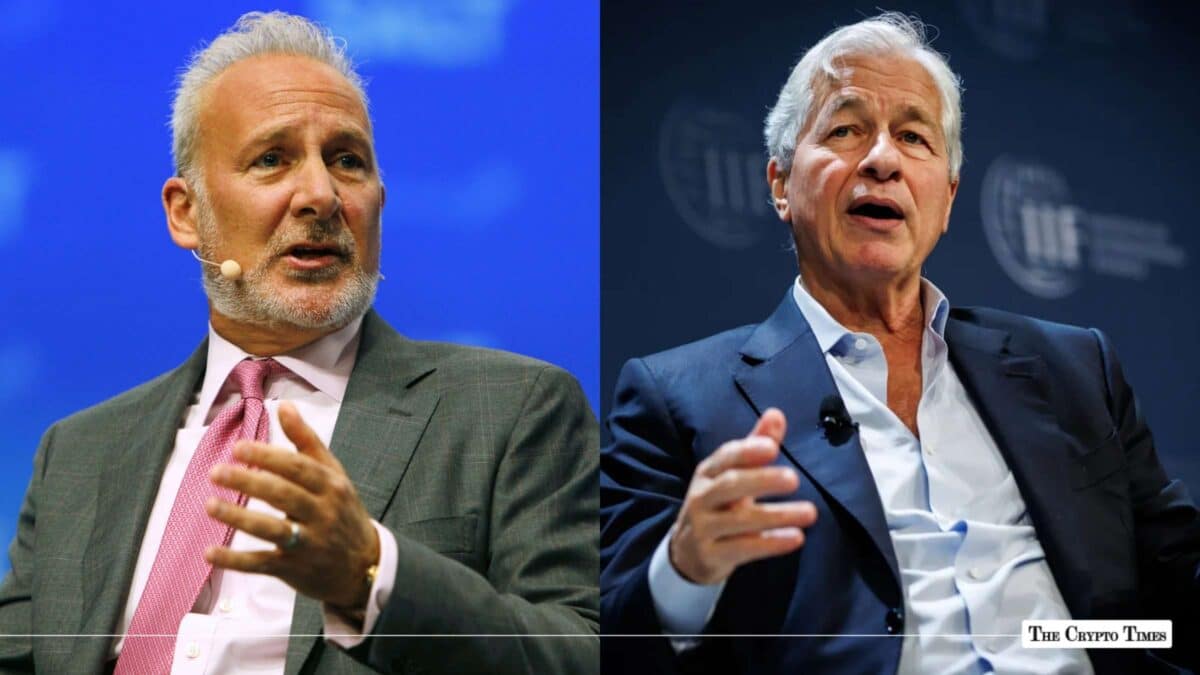
In a turn few anticipated, longtime Bitcoin skeptic Peter Schiff has come to the defense of stablecoins, dismissing JPMorgan Chase CEO Jamie Dimon’s argument that crypto firms offering interest-bearing products should answer to the same rules as banks. The intervention is striking given Schiff’s years of attacks on the wider crypto market, and it places him on the same side as an industry he routinely criticizes.
In a post published on X on June 8, Schiff argued that applying the same capital and compliance requirements imposed on banks to stablecoin issuers fails to recognize key differences between the two business models.
“Jamie Dimon claims crypto companies that offer interest-bearing products should be subject to the same capital and compliance requirements imposed on banks,” Schiff wrote. “That’s nonsense. Banks are FDIC-insured and make risky loans under a fractional reserve system. Stablecoin issuers don’t.”
Stablecoins are not banks
While Schiff has historically been one of Bitcoin’s most outspoken critics, he took an unexpectedly supportive stance toward stablecoins during the discussion. Responding to criticism from social media users, Schiff clarified that he views stablecoins differently from speculative digital assets.
“No. Stablecoins have a use case, and issuers are not banks, especially if the tokens are 100% backed by dollars and invested exclusively in Treasuries,” Schiff said.
According to Schiff, stablecoin issuers that maintain full reserves and invest primarily in short-term government debt do not present the same risks as traditional banks that engage in lending and operate under fractional reserve systems.
His comments suggest that stablecoin providers should be regulated under a separate framework rather than being treated as conventional banking institutions.
Regulatory debate continues across crypto industry
The dispute is unfolding as the CLARITY Act moves through Congress. The bill aims to settle whether digital assets fall under securities or commodities oversight, but whether crypto platforms can offer yield on customer balances has become the hardest point to resolve. The GENIUS Act, signed into law in 2025, already requires payment stablecoins to hold full reserves in high-quality liquid assets and bars issuers from paying direct interest, though it stops short of explicitly banning third-party platforms from offering rewards, the gap now at the center of the fight.
Banks warn that a parallel, yield-bearing system could drain deposits and weaken the lending model that underpins the economy. Crypto firms counter that incumbents are trying to block competition rather than address genuine risk, and a prior White House analysis even characterized banks’ deposit-flight fears as overstated. Crypto watchers, meanwhile, are relishing the unexpected alliance, with Schiff’s broadside against Dimon ricocheting across X as the kind of crossover few thought they’d see from Bitcoin’s loudest critic.
Industry split over future regulation
Schiff’s comments highlight a growing divide over how crypto businesses should be regulated as lawmakers work to modernize financial rules for digital assets.
While Dimon has repeatedly expressed skepticism toward parts of the cryptocurrency industry and called for stronger oversight, Schiff argues that lumping stablecoin issuers together with banks overlooks important structural differences.
As governments continue crafting stablecoin legislation and broader crypto regulations, the question of whether digital asset firms should be regulated like banks remains one of the industry’s most consequential policy debates.
Also read: Galaxy Cuts CLARITY Act Passage Odds From 75% to 60% as Senate Calendar Tightens