Key Highlights
- India may not need another retail payment rail when UPI already dominates, but a compliant INR stablecoin could transform programmable money and cross-border flows.
- Despite UPI’s 20 billion November transactions, Gupta says the market hasn’t yet been allowed to try a compliant INR token like ARC.
- Polygon’s Aishwary Gupta says, “We don’t want a stablecoin the wrong way — it’s the government’s call, we just embrace the rules.”
The global stablecoin market has exploded in recent years, crossing $300 billion in total market capitalization by late 2025. USDT and USDC alone account for over 90% of the volume, facilitating everything from cross-border remittances to decentralized finance (DeFi) lending and 24/7 crypto trading. In emerging markets, stablecoins have become a de-facto digital dollar layer, offering dollar liquidity without the need for traditional banking rails.
Yet, in the world’s fifth-largest economy and its most vibrant digital payments market, the conversation is shifting: should India have its own rupee-backed stablecoin, or is the question itself a solution looking for a problem?
Stablecoin usage in India: Small but growing
Despite having one of the strictest crypto regulatory frameworks in the world, India has quietly become one of the top 10 countries by stablecoin transfer volume. Chainalysis’ APAC Crypto Adoption Report for 2025 notes that Indian users transferred over $45 billion in stablecoins in the last 12 months, largely USDT and USDC on chains like Tron, Ethereum, and Polygon.
The primary use cases remain familiar: crypto trading (especially on global perpetual futures platforms), cross-border payments for freelancers and exporters, and hedging against local currency volatility during election cycles or policy announcements. A small but growing segment within the country is also using stablecoins for yield farming and lending on DeFi protocols. However, when it comes to everyday payments, stablecoins are virtually invisible in India as that space belongs entirely to the country’s unique Unified Payments Interface (UPI).
Efforts around INR-backed stablecoins
Over the recent few years, multiple teams have attempted to launch rupee-backed stablecoins. Early efforts such as Phi, Rupe, and INR Coin either shut down or pivoted after regulatory uncertainty. The Reserve Bank of India (RBI) has consistently maintained that private stablecoins pegged to INR fall under the definition of “currency” and therefore only the central bank can issue them.
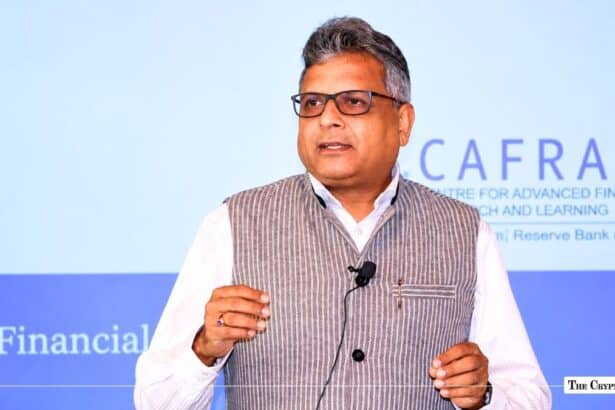
“There are currencies which are very much open, such as the US dollar which is easily tradable; there is no capital control. Then comes countries like India where there are capital controls,” Aishwary Gupta, Global Head of Payment & RWA for Polygon told The Crypto Times in an exclusive interview at India Blockchain Week (IBW) Conference 2025. “We don’t want a stablecoin wrong way because effectively you do not want to disrupt the market you want to work in and also it does not make sense since it’s a government decision and we can only embrace whatever the government has given us.”
A couple of years back, the launch of the RBI’s wholesale and retail CBDC pilots (e-Rupee) in 2022–2023 was widely seen as a preemptive move to crowd out private INR stablecoins. And to note, despite millions of wallets being onboarded, actual transaction volume on the e-Rupee remains a tiny fraction of UPI.
More recently, global players like Circle and Tether have explored partnerships with Indian banks and NBFCs to issue regulated INR-pegged tokens, but none have materialized publicly. The only visible effort that continues to make progress is Polygon’s tentatively named project ARC ( Asset Reserve Certificate).
Polygon’s ARC Project
Announced publicly on November 20, 2025, the Asset Reserve Certificate (ARC) is a fully collateralized, rupee-pegged stablecoin project, developed by Polygon Labs in partnership with Bengaluru-based fintech firm Anq. It will initially launch on Polygon’s proof-of-stake chain in Q1 2026, with future integration into the AggLayer for enhanced cross-chain liquidity and interoperability.
“The difference on the ARC token is that it is effectively a deposit token and the difference between a deposit token and a stablecoin is first one do not work to increase the balances onchain,” Aishwary said, adding, “It basically becomes embed on the transaction layer and function as a means of transaction.”
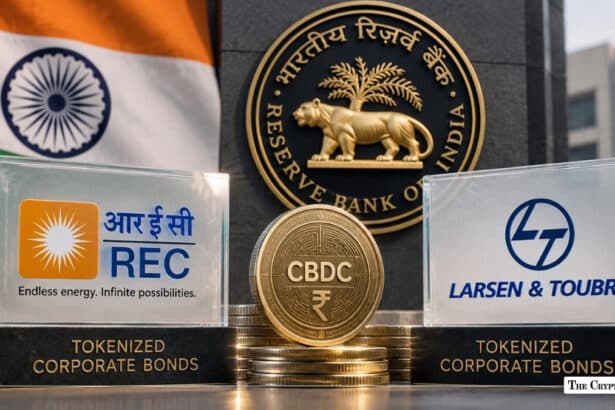
The project aligns with India’s two-tier digital currency framework, complementing the Reserve Bank of India’s (RBI) Central Bank Digital Currency (CBDC) as a private-sector interaction layer for programmable payments.
As in India, the settlement is done through banks, the idea behind ARC is to top the use case within cross-border payments. “So if you want to bring money from the U.S., such as USDC or any other stablecoin coming to India, it is swapped into ARC through deposit tokens and those deposit tokens equivalent are sitting in the bank already. So what you can do is you can just redeem your INR and it helps you in India because it pushes back a lot of USD which has started circulating in India. It also continues to help RBI dominate the market,” Aishwary emphasized.
Its issuance is restricted to regulated entities only, such as RBI-approved banks, non-banking financial companies (NBFCs), and payment firms, which will handle minting and custody under strict oversight. licitly involves these licensed institutions to ensure compliance and operational integrity.
Do we really need an INR stablecoin?
This is the question where the debate gets interesting. Proponents argue that an INR stablecoin would unlock 24/7 programmability, seamless cross-border settlements (especially with countries that have CBDC bridges), and deeper integration between traditional finance and DeFi. It could also reduce India’s reliance on dollar stablecoins and give the RBI better visibility into capital flows.
On the other hand, critics counter that India has already solved digital payments better than almost any country on earth with UPI, which has processed nearly 20 billion transactions, worth Rs. 24.58 lac crores (approximately $273 billion) in November 2025 alone, with average transaction cost near zero and settlement in seconds.
Given this traction, why build a parallel rail when the existing one is faster, cheaper, and universally adopted? Besides, users are very much familiar with USD-dominated stablecoins like USDT and USDC, so is INR-backed stablecoin really a need?
Replying to the question, Polygon’s Payment Head said have we even given them the chance to use a deposit token like ARC? “The answer is no. So unless we give them that opportunity and let the market decide, I don’t think as an individual or Polygon, we can decide what the market wants,” he said.
UPI vs Stablecoin: The clear winner is UPI (for now)
If we compare India’s UPI and stablecoins, UPI could be declared an apparent winner within the country’s financial ecosystem. For more context, let’s compare the two systems head-on:
- Speed: UPI is real-time while most stablecoins transfers settle in 5–60 seconds depending on chain congestion.
- Cost: UPI is virtually free for users; stablecoins carry network fees (though minimal on Polygon/Tron).
- Availability: UPI works 24/7 but requires both parties to have Indian bank accounts and phone numbers. Stablecoins work globally with just a wallet address.
- Programmability: Stablecoins win hands-down, escrow, streaming payments, automated yield, conditional transfers are trivial on-chain.
- Regulatory comfort: UPI is fully within RBI’s control; stablecoins (even INR-backed) introduce new risks around reserve management and systemic contagion.
- Adoption: 500+ million Indians use UPI monthly. Stablecoin wallets in India are likely under 15 million.
For retail payments, remittances under ₹50,000, and domestic commerce, UPI remains unbeatable. The only clear edge stablecoins have today is in crypto-native use cases and large-value cross-border flows where SWIFT is still slow and expensive.
Regulatory clarity needed to change the narrative
India does not need an INR stablecoin like a fish needs a bicycle, at least for everyday payments. UPI, supported by NPCI’s relentless innovation (UPI Lite, Credit on UPI, conversational payments, cross-border expansion), has already achieved what most countries can only dream of: near-universal, instant digital payments at near-zero cost.
That said, the story changes when we look beyond retail. For programmable money, salary streaming, DeFi integration, tokenized real-world assets, and seamless participation in global crypto markets, a compliant INR stablecoin could open entirely new frontiers.
Whether Polygon’s ARC or another player eventually succeeds will depend less on technology and more on regulatory clarity. If the RBI continues to view private stablecoins as competitors to the e-Rupee, the answer may remain “no” for years to come. But if policymakers see them as complementary rails that bring capital efficiency and innovation without sacrificing control, India could leapfrog into a new era of digital finance.
“It has to become something which is effectively helping out India and the way money moves in the country while also respecting all the regulations and rules that have been built into the regulatory perspective by the Indian government,” Aishwary concluded, “Now I am not going to say we don’t care about rules. But I think the answer to the matter is what the market will decide.”
The market is waiting. The infrastructure is ready. The only missing piece is policy.
Also read: Crypto Goes Mainstream in 2025, Says CoinSwitch Co-founder at IBW