Key Highlights
- RBI Governor Malhotra warned that cryptocurrencies and stablecoins carry significant risks for users and the system.
- India has no specific crypto law yet and currently relies on anti–money laundering rules and high taxes.
- Strict compliance rules and repeated RBI warnings have sharply reduced crypto activity within India’s formal system.
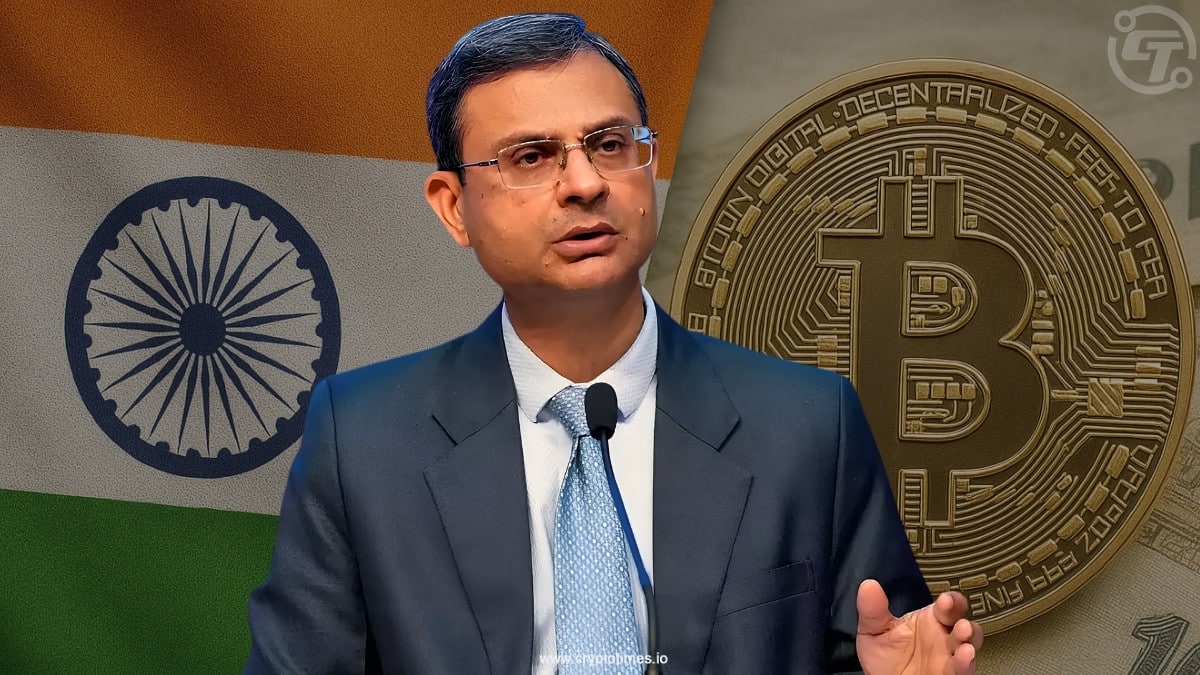
Reserve Bank of India (RBI) Governor Sanjay Malhotra has again underlined the central bank’s cautious position on cryptocurrencies, saying the risks around private digital assets remain too large to ignore.
As per a report of The Economic Times, speaking at the Delhi School of Economics, he repeated the RBI’s stance clearly, “Stablecoins, cryptos, they have a huge risk and so we are adopting a very cautious approach towards it.”
He contrasted this with the RBI’s support for domestic digital systems, noting, “When it comes to digital innovations like UPI or digital lending, our stance has been very accommodative and very enabling.”
Malhotra said the decision on regulating cryptocurrencies now rests with the government. A working group is reviewing the issue, and India currently relies on anti–money laundering rules and strict taxes instead of a dedicated crypto law.
He also highlighted the growing influence of dollar-backed stablecoins such as USDT and USDC, now worth more than $300 billion globally, raising concerns about their impact on monetary systems.
India’s Chief Economic Adviser, V. Anantha Nageswaran, has warned that the rising use of dollar stablecoins could complicate how central banks manage money supply.
Malhotra said the RBI would prefer wider use of its own central bank digital currency (CBDC) for payments. Last month, he urged central banks worldwide to adopt CBDCs to improve cross-border payments, emphasizing their advantages over stablecoins.
Crypto exchanges operating in India must register locally and meet compliance checks, but strict taxation and repeated warnings from the RBI have sharply reduced their engagement with the formal financial system.
Rupee movement and trade outlook
During the same event, Malhotra also addressed the rupee’s recent weakness, saying the RBI does not target a specific exchange rate and that the currency’s movement reflects market forces. He linked the latest decline to lower exports after the US imposed additional tariffs on Indian goods.
He said progress in trade talks with the US could help ease pressure on the current account. India’s foreign exchange reserves, at around US$690 billion, provide support during this period. He added that resolving the tariff issue may help stabilize both the rupee and the trade balance.
India and stablecoins
India is seeing early signs of stablecoins being used for remittances by workers overseas, though the volume is still small. USDT is sometimes trading at a higher price than the regular dollar exchange rate in India, attracting attention from market watchers.
Earlier this year, ruling party BJP’s spokesperson Pradeep Bhandari has called for swift action by the government, saying India could benefit from embracing stablecoins as part of the growing fintech ecosystem.
Additionally, G. Padmanabhan, former Executive Director of the RBI, also said clarity is necessary since stablecoins are distinct from crypto, and India should calibrate its stance, keeping in mind the global developments.
Both voices emphasize the need for rapid and finely tuned regulation that controls risks yet keeps abreast of international developments in digital finance.
Also Read: India Targets Q1 2026 Launch for ARC Digital Rupee-Pegged Asset