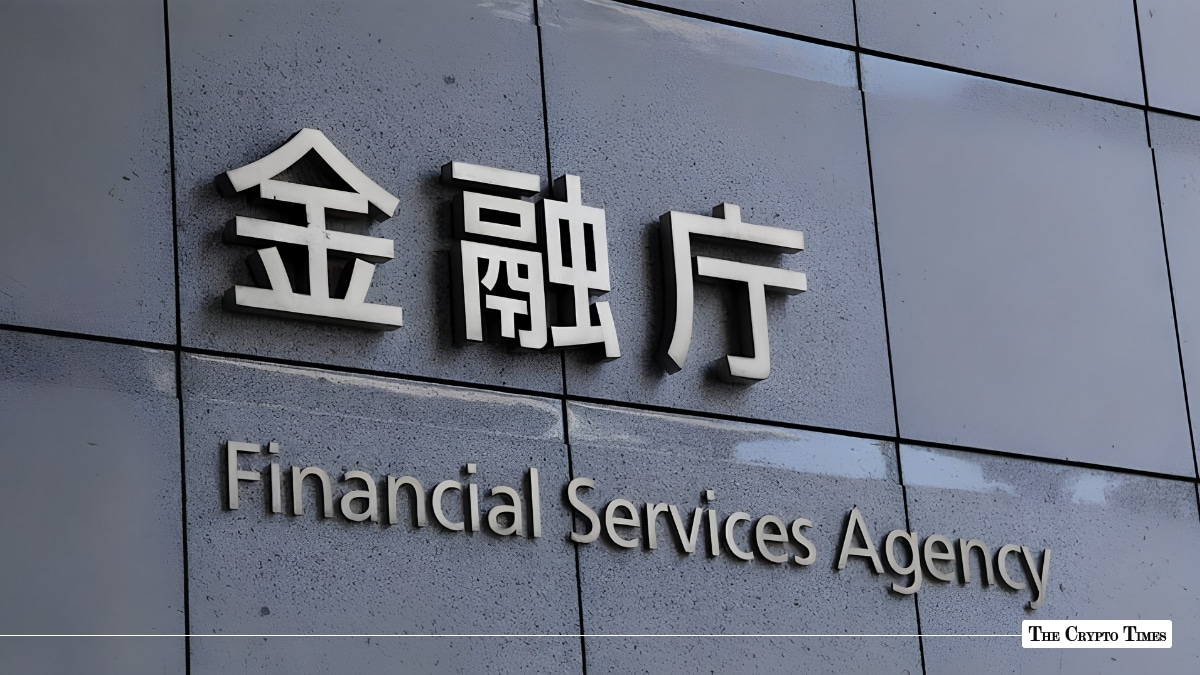
The Financial Services Agency (FSA) of Japan has amended its rules to formally recognize certain foreign-issued stablecoins as electronic payment instruments, creating a legal framework for their distribution in Japan beginning June 1, 2026.
According to the official announcement, the regulatory change applies to trust beneficiary rights established under foreign legal systems that the agency considers equivalent to Japan’s own stablecoin regime under the Funds Settlement Act. The ordinance was finalized on May 19 after a public consultation period that drew 16 comments.
By bringing these instruments within Japan’s payment laws, the FSA has clarified that qualifying foreign stablecoins can be handled by licensed operators without being treated as securities.
Foreign trust-based stablecoins gain legal recognition
Under the revised Cabinet Office Ordinance, trust beneficiary rights issued under foreign laws can qualify as electronic payment instruments if they meet standards comparable to those imposed on domestic issuers.
The amendment is designed primarily for fiat-backed stablecoins issued through trust structures, a model used in some overseas markets to ensure that token holders retain a claim on reserve assets.
Until now, these instruments could have been classified as securities under Japan’s Financial Instruments and Exchange Act, creating uncertainty over whether they could be distributed as payment products.
Qualifying tokens excluded from securities rules
The FSA also amended the definition of securities to explicitly exclude eligible foreign trust beneficiary rights.
This distinction removes a major regulatory hurdle by confirming that approved stablecoins will be regulated under payment laws rather than securities laws. This change gives exchanges and electronic payment instrument service providers greater clarity when evaluating whether to list or support foreign-issued stablecoins.
LDP roadmap pushes stablecoins into Japan’s digital finance strategy
The regulatory update came the same day that the Liberal Democratic Party released a policy proposal outlining a broader plan to position Japan as a center for AI-driven on-chain finance.
The recommendations, published by the party’s Digital Society Promotion Headquarters and its Next-Generation AI and On-Chain Finance Initiative, described stablecoins and tokenized deposits as core infrastructure for a financial system built around automated, always-on digital payments.
The report noted that global stablecoin circulation has reached roughly ¥45 trillion (about $290 billion), driven largely by U.S. dollar-backed tokens such as Tether and USD Coin. It warned that Japan risks falling behind if it does not modernize its payment rails and called for clearer stablecoin rules, greater interoperability between yen and foreign stablecoins, and further work on tokenized deposits and wholesale central bank settlement systems.
Equivalence standards will determine eligibility
To qualify, foreign issuers must operate under legal and supervisory frameworks that provide protections broadly comparable to Japan’s regime.
The FSA said it will assess factors such as reserve asset management, audit requirements, redemption rights, and whether foreign regulators can share supervisory information with Japanese authorities. The agency also noted that stablecoins associated with heightened money laundering or criminal risk may be deemed unsuitable.
The move expands Japan’s stablecoin framework beyond domestically issued tokens and establishes a formal route for approved foreign issuers to access one of Asia’s most regulated digital asset markets.
Also Read: Tether Files Seven Korean Trademarks For Logo and Tether Gold