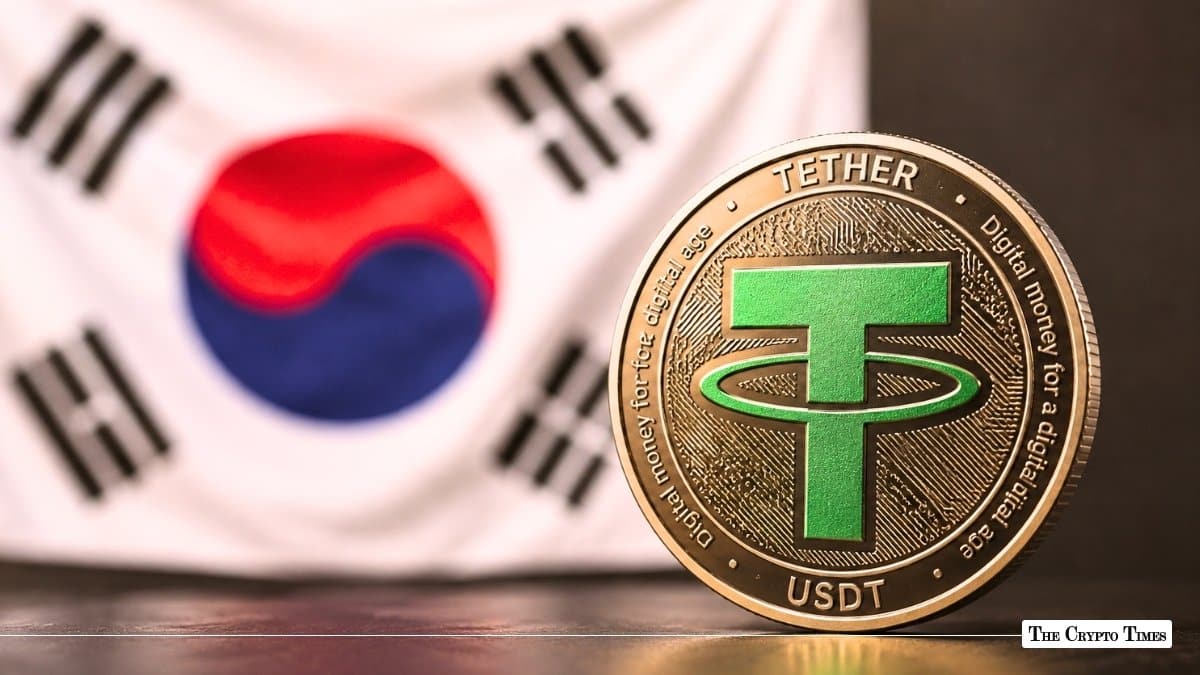
Tether, the world’s largest stablecoin issuer, has filed seven trademark applications in South Korea covering its corporate name, logo, and gold-backed stablecoin Tether Gold (XAUT) — a move the industry is interpreting as preparation for a physical business presence in one of the world’s largest cryptocurrency markets.
The filings, reported by Seoul Economic Daily on Monday, mark a strategic escalation from Tether’s previous Korean trademark activity, which focused exclusively on stablecoin product names. By registering the corporate brand and logo, Tether is laying the legal groundwork for what could become a Korean subsidiary — a step that will likely become mandatory once the Digital Asset Basic Act is finalized.
Why Corporate Trademarks Signal a Subsidiary
The distinction between product trademarks and corporate brand trademarks matters. Registering a stablecoin product name protects the brand in commerce. Registering the corporate entity’s name and logo signals intent to operate as a business within the jurisdiction — including hiring, contracting, and potentially establishing a regulated legal entity.
South Korea’s Digital Asset Basic Act, currently working through the legislative process, is widely expected to require overseas stablecoin issuers to establish local branches in order to distribute their products to Korean users. Tether’s trademark filings position the company to meet that requirement as soon as the law takes effect, rather than scrambling to comply after the fact.
“It appears that Tether and Circle, the two global stablecoin giants, are competing to gain a foothold in the Korean market even before regulations are put in place,” a cryptocurrency industry official told Seoul Economic Daily.
Circle’s Allaire Already on the Ground
Tether’s trademark push arrives weeks after Circle CEO Jeremy Allaire personally visited South Korea, meeting with financial holding companies, cryptocurrency exchanges, and fintech firms to discuss potential cooperation.
Circle recently met with major Korean exchanges, including Upbit, Bithumb, and Coinone, to expand USDC trading and improve accessibility. With Dunamu, the operator of Upbit, Circle is working on initiatives focused on regulatory compliance, transparency, and user education. With Bithumb, the companies agreed to explore integration of multi-chain digital asset infrastructure and stablecoin technologies.
Circle said it does not plan to issue a Korean won-pegged stablecoin directly, signaling instead that it may participate as a technology provider in a future bank-led consortium structure.
The two-track approach—Tether filing legal infrastructure while Circle builds commercial partnerships—suggests both companies view Korea as a critical market that cannot be conceded to the other.
Why Korea Matters: 80% Tether Dominance Under Threat
The stakes are significant. Tether currently accounts for more than 80% of stablecoin transactions in South Korea, dwarfing Circle’s approximately 10% share. But that dominance was built in the absence of regulation. Once the Digital Asset Basic Act imposes local branch requirements, compliance infrastructure, and consumer protection obligations, the competitive landscape could shift dramatically.
Korea is the third-largest cryptocurrency market globally by spot trading volume. Upbit alone regularly processes more daily trading volume than Coinbase. The Korean market’s unique characteristics—high retail participation, won-denominated trading pairs, and strict exchange licensing under the existing Virtual Asset User Protection Act—make it a prize neither stablecoin issuer can afford to lose.
The regulatory environment is also shifting rapidly. Just last week, South Korea’s National Police Agency designated “Tether Laundromats”—unregistered exchange offices used to convert criminal proceeds into USDT — as a stated enforcement priority. The dual dynamic of Tether simultaneously seeking legitimate market entry while Korean police crack down on illicit USDT usage creates a complex backdrop for the company’s expansion plans.
Tether’s Global Expansion Push
The Korean trademark filings fit within a broader global expansion strategy that has accelerated throughout 2026. Tether has been aggressively expanding beyond its core USDT stablecoin business into new markets and product lines.
The company is currently pursuing a $15–20 billion fundraise at a reported $500 billion valuation—which would place it among the world’s most valuable private companies. USDT circulation has reached approximately $186 billion with a roughly 58% global market share. Tether reported over $10 billion in net profit for 2025 and has grown its U.S. Treasury holdings to $122 billion.
The Tether Gold (XAUT) trademark filing in Korea is also notable. XAUT is a tokenized gold product backed by physical gold held in Swiss vaults, and its inclusion in the Korean trademark filing suggests Tether plans to offer more than just dollar-pegged stablecoins in the market—potentially positioning itself as a broader digital asset infrastructure provider.
The GENIUS Act Factor
Both Tether and Circle are operating under a new global baseline set by the U.S. GENIUS Act, signed into law in July 2025, which established the first comprehensive federal framework for stablecoin regulation. Under the GENIUS Act, foreign stablecoin issuers that want U.S. market access must comply with reserve, audit, and AML requirements — or face prohibitions on secondary trading of their tokens.
Korea’s Digital Asset Basic Act is expected to impose comparable requirements for the Korean market. The sequencing is significant: stablecoin issuers that establish compliant local operations early will have a structural advantage over those that wait for final regulations and then rush to comply.
For Tether, the Korean trademark filings represent a bet that physical presence and legal infrastructure will matter more than product dominance once regulatory frameworks are in place. For Circle, the CEO-led partnership tour signals a belief that institutional relationships and compliance credentials will be the differentiator. For Korean crypto users and exchanges, the outcome of this competition will determine which stablecoin infrastructure underpins the next phase of the market’s development.