Key Highlights
- The European Commission unveils reforms to ease cross-border investment and improve market integration.
- The plan strengthens the European Securities and Markets Authority (ESMA), aligning it with SEC-style oversight.
- The EU seeks to redirect €33 trillion in private savings toward domestic investment to close competitiveness gaps.
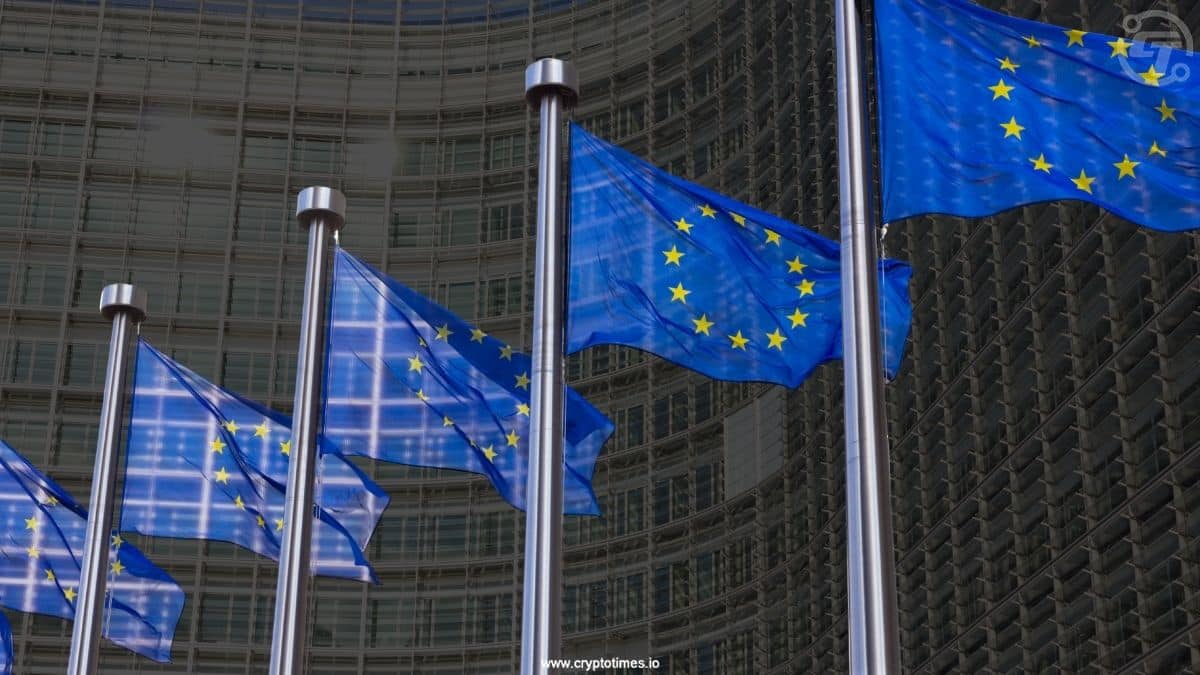
The European Commission has introduced a new reform package aimed at strengthening the European Union’s (EU) capital markets and improving competitiveness with the United States and China. The plan, announced on Thursday, outlines measures to modernize market infrastructure, ease cross-border capital flows, and expand the authority of the European Securities and Markets Authority (ESMA).
The reforms also target market fragmentation affecting both traditional finance and digital assets. Major exchanges like Deutsche Börse and Euronext still operate under differing national rules, limiting capital movement and slowing the EU’s support for tokenization and regulated crypto services.
Tackling investment hurdles
Europe’s fragmented markets remain a core challenge, limiting the EU’s ability to channel its own private savings into domestic investment. The bloc holds about €33 trillion in household wealth, yet around €300 billion leaves the EU each year, underscoring market fragmentation. Stock-market capitalization is 73% of GDP, well below the U.S.’s 270%.
The proposal seeks to ease cross-border operations by improving passporting for regulated markets and central securities depositories. It would let pan-European venues consolidate licenses and ease DLT rules, enabling broader tokenization and blockchain settlement, in line with the EU’s digital-finance agenda and recent tokenized-asset approvals.
A push for better environment
European authorities have moved quickly amid rising crypto-related risks. Earlier this month, they shut down CryptoMixer, a €1.3 billion Bitcoin-mixing service tied to darknet markets and ransomware groups. Swiss and German officials, supported by Europol, seized €25 million in bitcoin and key servers, underscoring the cross-border nature of the activity.
The EU is also pushing SEC-style oversight by elevating ESMA as the main regulator for major exchanges, clearing systems, and crypto platforms. Uneven MiCA enforcement has created tensions among member states, with some backing centralized supervision and others resisting.
Europe’s positioning
Europe is not a major sovereign bitcoin holder, the United Kingdom is the only European country listed on BitcoinTreasuries, with 23 entities holding a combined 4,353 BTC. Even so, EU officials remain open to regulated digital-asset innovation, viewing it as key to long-term financial modernization.
Beyond digital assets, the EU stresses the need to strengthen its capital markets to compete globally. A Mapfre report underscored this weakness in recent comparisons.
As the reforms head to the European Parliament and member states, officials frame them as a long-term push to boost the EU’s financial competitiveness. Their success will hinge on political alignment and the bloc’s ability to harmonize oversight without hindering innovation.
Also read: KuCoin EU Secures MiCA License in Austria, Expands Across Europe