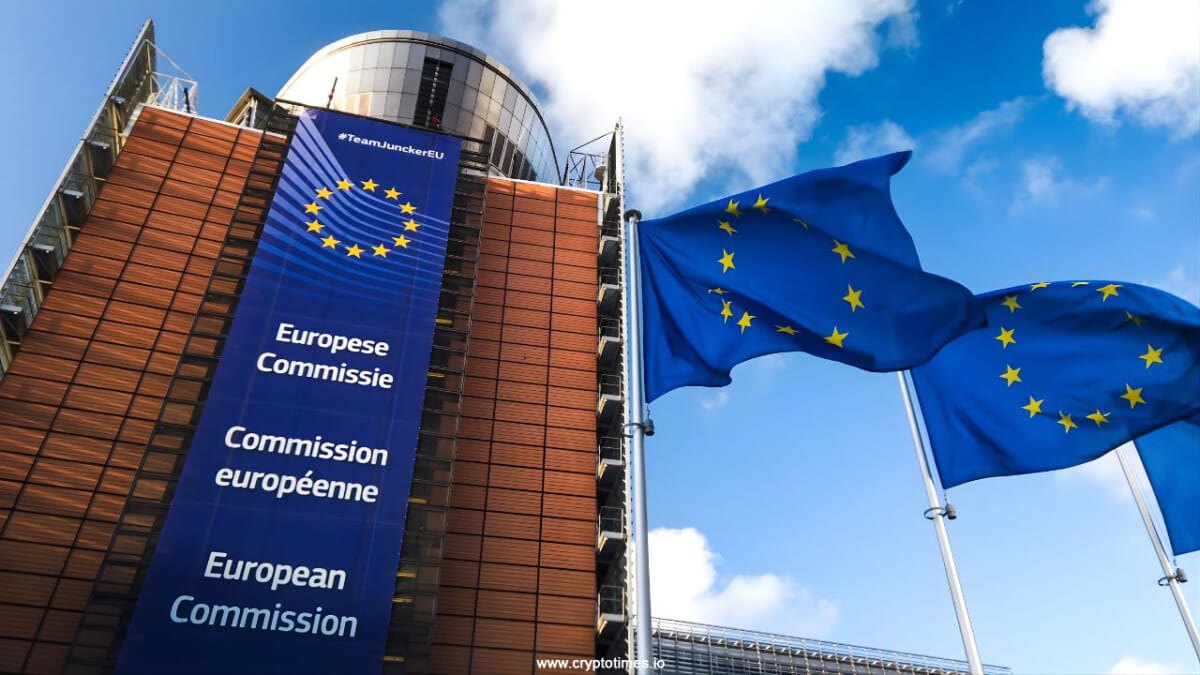
The European Commission is mulling plans to give the existing European Securities and Markets Authority (ESMA) more power over key parts of the financial system. This is a part of a plan to have a single European regulator oversee stock exchanges, crypto trading platforms, and clearing houses.
According to a report from the Financial Times, the Commission plans to present the proposal in December as part of a broader “markets integration package.” The initiative aims to address a long-standing problem in Europe’s markets — fragmentation.
At present, dozens of national regulators oversee their own exchanges and trading systems. That patchwork makes cross-border trading costly and slows down companies trying to grow across the continent.
EU eyes its own SEC
Europe is moving closer to setting up a single financial watchdog, an idea long discussed but never implemented. The planned European regulator would mirror the U.S. Securities and Exchange Commission (SEC) in how it operates.
The main role of the SEC is to oversee trading platforms, clearing systems, and crypto service providers to ensure consistent rules, investor protection, and market transparency across borders. It also requires public companies to regularly share financial reports and disclosures so that investors have equal access to reliable information.
Inspired by the SEC model, Europe’s proposal aims to centralize oversight across European markets as part of efforts to complete the region’s “capital markets union.”
The plan has gained momentum with strong support from European Central Bank (ECB) President Christine Lagarde and former ECB head Mario Draghi, who last year urged deeper financial integration to boost Europe’s global competitiveness.
What the new supervision plan could mean
Under the plan, the European Securities and Markets Authority (ESMA) would take charge of overseeing major cross-border players such as stock exchanges, crypto trading platforms, and clearing or securities depository systems. The goal is to replace the current patchwork of national regulators with a unified, consistent system of oversight across Europe.
The Commission also intends to assign ESMA a dispute-settling role for cases involving large asset managers. In situations where national supervisors disagree, ESMA would issue binding decisions. This structure is meant to reduce overlaps and regulatory conflicts between member states.
However, not every country is on board. France and the European Central Bank support the idea, saying it would strengthen Europe’s financial competitiveness. Germany, which had long resisted centralized supervision, is now showing signs of support. But Luxembourg and Ireland remain opposed, warning that a Paris-based regulator could raise costs for smaller nations and weaken local oversight.
Industry groups have also voiced concerns about higher compliance fees and more red tape. “Expanding ESMA’s responsibilities would mean higher fees paid by the industry,” said Marin Capelle of Efama, a fund-industry association.
For now, the European Commission says in the report, “it was still exploring the potential of EU level supervision in relation to some critical infrastructures, such as central counterparties, central securities depositories and trading venues, as well as in relation to big cross-border entities such as asset managers”.
ECB’s digital euro plans
Last week, the European Central Bank (ECB) moved its digital euro project into the next stage, laying the groundwork for a potential launch in 2029. The decision follows a two-year phase that began in November 2023, during which the ECB and national banks studied how a digital euro could work.
The ECB will work on building the technical system for the digital euro, testing it with banks, payment providers, and retailers, and assisting lawmakers as they shape the legal framework needed for its rollout. If European legislation is approved by 2026, the ECB expects to begin pilot testing as early as 2027.
Also Read: Brazil Proposes 30% Regularization Tax for Crypto Holders