Key Highlights
- The rule prohibits senators from entering contracts tied to the outcome of real-world events.
- The measure passed unanimously, reflecting rare bipartisan agreement on ethics safeguards.
- Restrictions currently apply only to senators, excluding House members and staff.
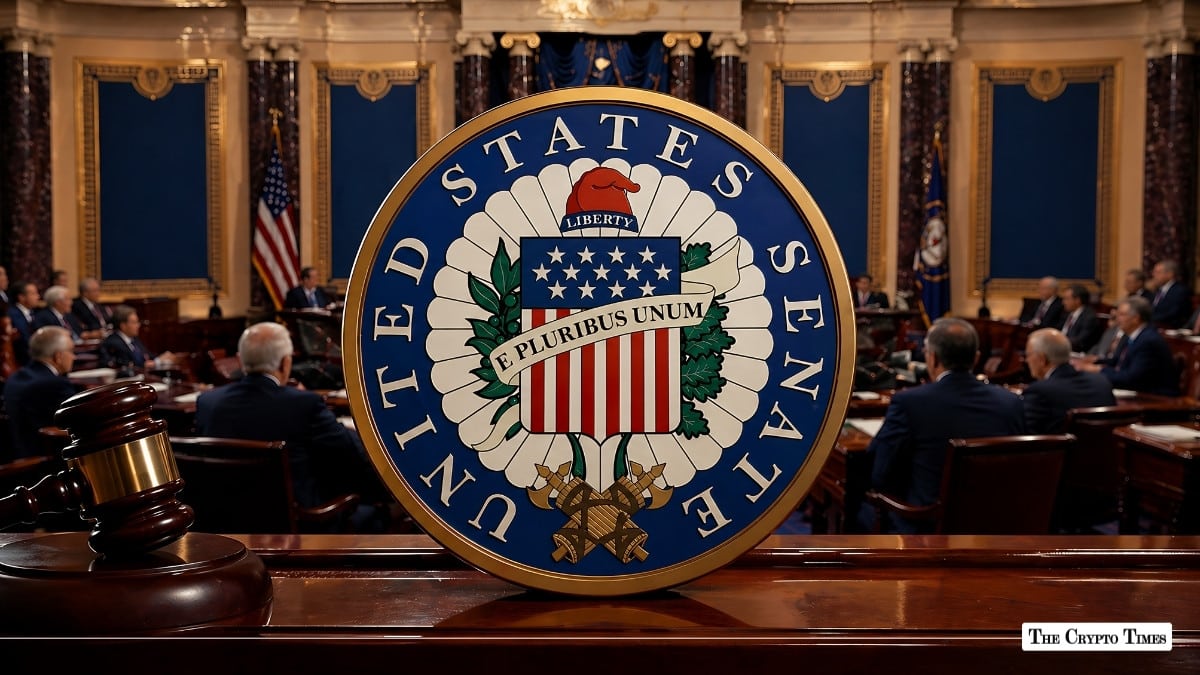
The United States Senate voted on Thursday with full bipartisan support for an amendment that bans all senators from participating in trading activities on prediction markets, in a bid to address conflicts of interest and insider trading concerns within the burgeoning sector.
The bill, presented by Senator Bernie Moreno (R-Ohio), bars senators from making any agreement, contract, or dealing the terms of which involve payment based on the happening or not happening of some particular event.
The provision directly affects prediction market platforms such as Kalshi and Polymarket, where participants trade in contracts concerning various events such as political, economic, sporting, and cultural matters.
Moreno expressed support for prediction markets on X, stating that “Serving in Congress is an honor, not a side hustle,” shortly after the vote. “Americans deserve to know that their leaders are here for the right reason!” He emphasized that public office should not be treated as an opportunity for personal enrichment through non-public information.
The resolution was adopted unanimously by voice vote, indicating consensus that politicians shouldn’t be making wagers on outcomes influenced by their legislative actions and privileged access to inside information.
The prohibition applies only to senators and does not extend to members of the House, congressional aides, or other federal employees. It also does not address stock trading by lawmakers, an issue that continues to draw criticism from ethics experts.
Support from Polymarket and Kalshi
Following the announcement, prediction market platforms Kalshi and Polymarket took to X to express their support for the move.
In an X post, Kalshi CEO Tarek Mansour stated, “I applaud the Senate for passing this resolution to ban Senators and their offices from trading on prediction markets. Kalshi already proactively blocks members of congress and enforces against insider trading. This is a great step to increase trust in our markets by making it an industry standard.”
Moreover, Polymarket, in an X post, wrote, “We’re in full support of this. Our Rulebook & Terms of Service already prohibit such conduct, but codifying this into law is a step forward for the industry. Happy to help move this forward however we can.”
The development follows enforcement actions by Kalshi against three congressional candidates for violating its market integrity rules. These rules prohibit individuals with potential influence over an event’s outcome from participating in related markets.
Ezekiel Enriquez, Mark Moran, and Matt Klein were found to have violated Kalshi Rule 5.17(z). Enriquez placed less than $100 on his own race for Texas’s 21st Congressional District and received a five-year ban along with a $784.20 fine.
Minnesota state Senator Matt Klein traded $50 on his primary race and accepted a five-year ban and a $539.85 fine.
Independent Senate candidate Mark Moran declined to settle after trading on his Virginia race and promoting the market, resulting in a five-year ban and a $6,229.30 fine.
The clear line
The move comes at a time when Congress is having an ongoing discussion regarding the regulation of prediction markets. Separate laws have been introduced that propose limiting the sale of event contracts related to elections, sports, or issues of national security or imposing additional regulations on the trading of MNPI.
The Commodity Futures Trading Commission (CFTC) is also working to clarify the legal status of prediction markets, particularly how they differ from gambling.
With this step, the Senate has set a clear boundary for its members, signaling that public office should not overlap with speculative trading activities tied to real-world events.
Also Read: Alberta’s AIMCo Buys $219M in Strategy Shares for Bitcoin Exposure