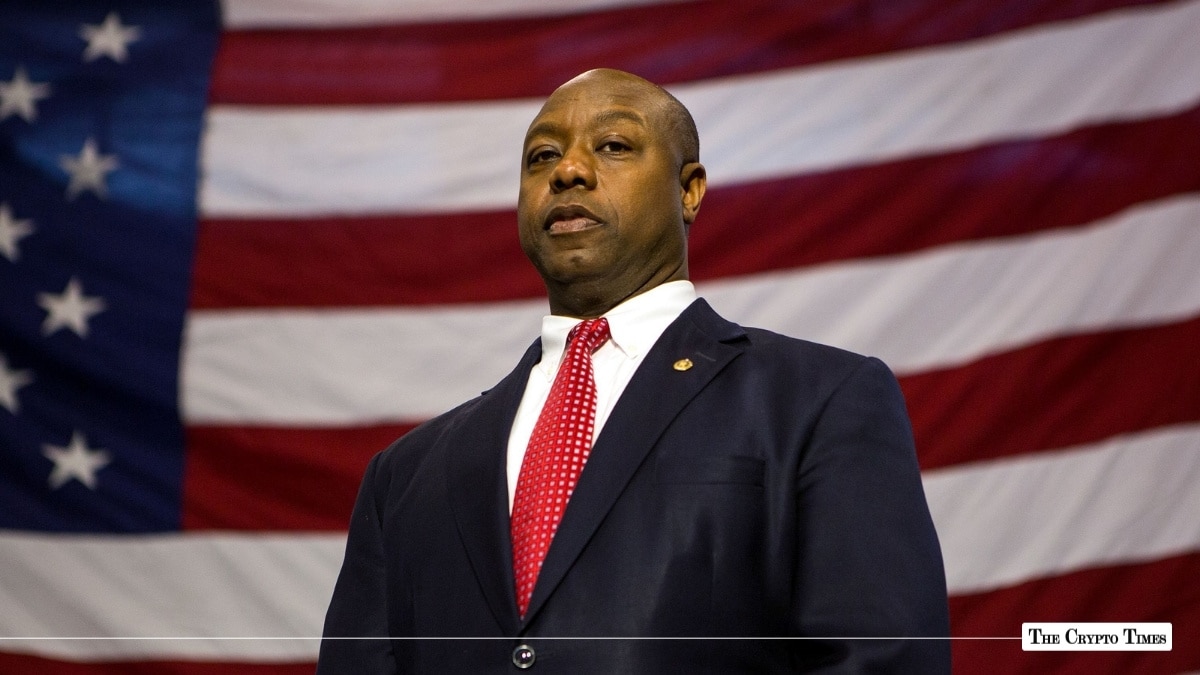
Senate Banking Committee Chairman Tim Scott said lawmakers are close to advancing the CLARITY Act, indicating the bill could soon move to a committee vote.
Speaking in an interview with Fox Business on Thursday, Scott described the legislation as being “in the red zone,” suggesting negotiations are nearing completion. He said the next step is securing full Republican backing to enable a smoother path to markup, which he expects could take place in May.
Push for unified Republican support ahead of markup
Scott emphasized the need to align all Republican members of the committee before moving forward. Achieving that threshold, he said, would make it easier to pursue a bipartisan markup and advance the legislation to the Senate floor.
The CLARITY Act has been under discussion for months, with lawmakers working through sticking points tied to market structure and oversight of digital assets. Recent remarks from other senators suggest those gaps may be narrowing, raising expectations that the bill could move out of committee in the coming weeks.
Broader effort to shape U.S. crypto framework
The CLARITY Act is designed to establish clearer regulatory boundaries for digital assets in the United States, including how different types of tokens are classified and which agencies oversee them.
Lawmakers backing the bill argue that clearer rules could reduce compliance uncertainty and improve the efficiency of financial transactions, particularly as blockchain-based systems gain traction. Scott framed the legislation as part of a wider effort to strengthen the country’s position in digital asset markets while modernizing financial infrastructure.
Timeline aligns with other policy priorities
Scott’s comments on the CLARITY Act came alongside discussion of other financial policy developments, including leadership at the Federal Reserve. He said confirmation of Kevin Warsh as Federal Reserve chair could occur within weeks after lawmakers return from their May recess, linking broader economic policy direction with ongoing legislative efforts.
While the two issues are separate, both are part of a wider agenda focused on financial system oversight and market stability.
Path forward hinges on committee action
The immediate next step for the CLARITY Act is a committee markup, where lawmakers review, amend, and vote on the bill before deciding whether to send it to the full Senate.
Scott indicated that once internal alignment is reached, the committee could move quickly. If advanced, the legislation would enter a more contentious phase on the Senate floor, where bipartisan support will be tested. For now, the shift from negotiation to scheduling signals that the bill is entering a more decisive stage in the legislative process.
Also Read: CLARITY Act’s April Fugazi: Trump Demands It, Everyone Says Yes, But Where Is It?