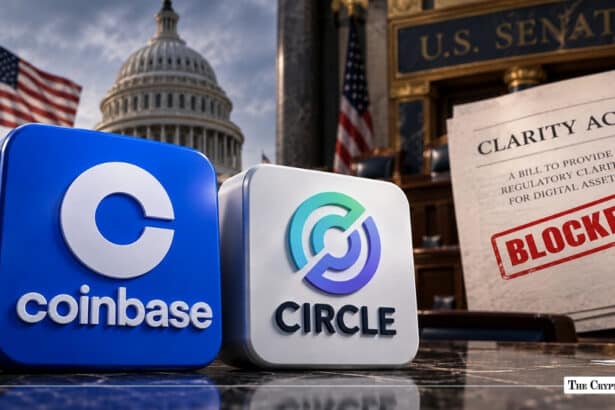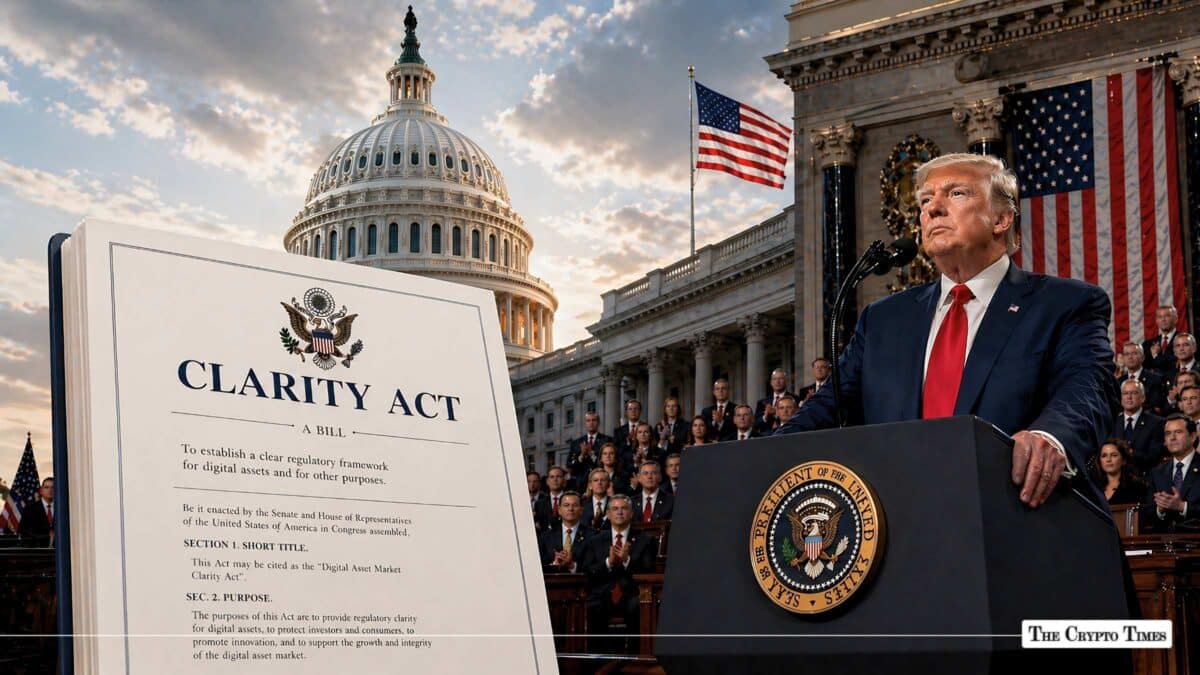
Look. I told you in April this was a hostage negotiation. I was wrong. Well, not completely because how the Clarity Act is moving, it’s still a fugazi.
Pour yourself something stronger than last time. Sit down. Because what happened in April was not a hostage negotiation. A hostage negotiation has parties. A hostage negotiation has demands. A hostage negotiation, eventually, has somebody walking out of a building.
April had none of that.
April had Brian Armstrong reversing himself. April had the Treasury Secretary on the front page of the Wall Street Journal. April had the SEC chair, the CFTC chair, the President’s economic advisers, and the man who once called the bill a fugazi all standing in the same room, holding hands, singing the same song.
And April had no markup date.
You hear me? Everyone said yes. Every last one of them. And the bill still didn’t move.
That’s not a hostage negotiation. That’s a fugazi inside a fugazi. And the punchline the part nobody on cable news will tell you, the part the lobbyists are praying you don’t notice is this:
$149 million couldn’t buy a date.
Remember that number. We’re going to come back to it.
Quick recap (because some of you just got here)
Last time, I walked you through how we got from the GENIUS Act in July 2025 to the January 2026 CLARITY Act meltdown. Coinbase walked. Armstrong torched the bill on X. The banks demanded passive yield be killed. The Senate Banking Committee postponed the markup. If you missed it, go read it — I’m not doing it twice.
What you need for this one:
The CLARITY Act is the bill that decides who regulates crypto in America. SEC or CFTC. Security or commodity. The whole game. The House passed it 294-134 in July 2025. The Senate has had it for nine months and still can’t get it out of one committee.
In March, Senators Thom Tillis and Angela Alsobrooks shook hands on a stablecoin yield compromise. Passive yield banned. Activity-based rewards allowed. Banks happy. Coinbase grumbling but quiet. The deal was done. The bill was moving.
That was the story everyone wanted to tell.
Here’s the story that actually happened.
The “everyone said yes” parade
In the first 10 days of April, the CLARITY Act got the most lopsided endorsement run in modern crypto policy. Ready?
April 5. XRP lawyer John Deaton goes on record: if this bill doesn’t move before summer, it’s dead for 2026. The Senate goes into midterm mode. Translation — you have weeks, not months. The clock isn’t ticking. The clock is screaming.
April 8. The White House Council of Economic Advisers drops a 21-page report on stablecoin yield. The headline number? A full ban on stablecoin yield would increase bank lending by $2.1 billion — a 0.02% improvement — at a net welfare cost of $800 million.
Read that twice. The banks have spent a year telling Congress that letting Coinbase pay users 4% on USDC will hollow out community banking and cause a $6.6 trillion deposit flight. The President’s own economists ran the numbers. The actual answer? Two billion, with a B. In a twelve trillion dollar lending market. Zero point zero two percent.
That’s not deposit flight. That’s a rounding error in a JPMorgan board meeting.
The banks have been screaming about a fire that, on the White House’s own numbers, is a candle. And it costs consumers $800 million to put it out.
April 9. Treasury Secretary Scott Bessent publishes an op-ed in the Wall Street Journal. Title: “Digital Asset Rules Need Clarity.” He calls on the Senate Banking Committee to hold a markup and send the bill to Trump’s desk. He frames it as national security. He names Singapore and Abu Dhabi by name. He says American crypto is leaving the country because Washington can’t pass a bill.
The Treasury Secretary. Not a senator. Not a lobbyist. The Treasury Secretary, on the op-ed page of the Wall Street Journal, lighting a fire under the Senate Banking Committee.
April 9-10. SEC Chair Paul Atkins backs quick action. CFTC Chair Michael Selig backs quick action. The administration lines up like soldiers at attention.
April 10. Brian Armstrong reverses himself. The same Brian Armstrong who blew up the January markup. The same Brian Armstrong who went silent in March while his lawyer did the talking. The same Brian Armstrong who told the Senate, in essence, no deal is better than your deal.
He posts on X. He thanks Bessent. He calls the Senate’s work strong. He endorses the bill.
The biggest blocker on the crypto side just stepped off the tracks.
April 13-15. Brad Garlinghouse, fresh from D.C. meetings, predicts the bill will be signed by late May. Tillis is reportedly ready to drop the revised text. Lummis says the disputes are 99% resolved.
Ten days. Ten days of straight green lights. Treasury, SEC, CFTC, the White House, Coinbase, Ripple, and the entire Republican leadership. The whole orchestra is in tune for the first time in a year.
You wanna know what the Senate Banking Committee did with all that?
Nothing. They did absolutely nothing.
And then nothing happened
April 15. The cheering stops.
Because somebody in our newsroom — fine, it was us — actually checked the calendar.
Coinbase: ready. Ripple: ready. Tillis: ready. Alsobrooks: ready. The White House: ready. The Treasury: ready. The SEC: ready. The CFTC: ready. The crypto industry’s lobbyists: ready, polished, fed, watered, and on speed dial.
Senate Banking Committee markup date: not on the calendar.
Not “tentatively scheduled.” Not “pending.” Not “next week.” Not on the calendar at all. The committee that has to vote on this bill, the single committee that has been sitting on this bill since January, hadn’t booked a room.
You spend a year fighting over yield language. You finally agree. Everyone with a name and a title endorses the deal. And the chairman of the committee — that’s Tim Scott of South Carolina, in case you forgot — doesn’t put it on the agenda.
This is where I want to introduce you to a number. One number. It’s going to follow you through the rest of this article.
The crypto industry, through its lobbying super PAC Fairshake, has spent over $149 million on the political process. It is sitting on a $193 million war chest for the next cycle.
$342 million. Real money. The kind of money that has elected senators, killed senators, and rebuilt entire state delegations.
And it could not buy a date on a calendar.
Not the substance of the bill. Not the votes on the bill. The date. The thing a 22-year-old staffer schedules with an Outlook reminder.
$149 million couldn’t buy a date.
Enter Kevin Warsh, with $100 million in his pocket
Now here’s where the movie starts.
While the crypto industry is doing its victory lap, while Bessent is on the WSJ op-ed page, while Armstrong is finally singing the right song, the Senate Banking Committee is doing something else entirely.
It’s confirming the next chairman of the Federal Reserve.
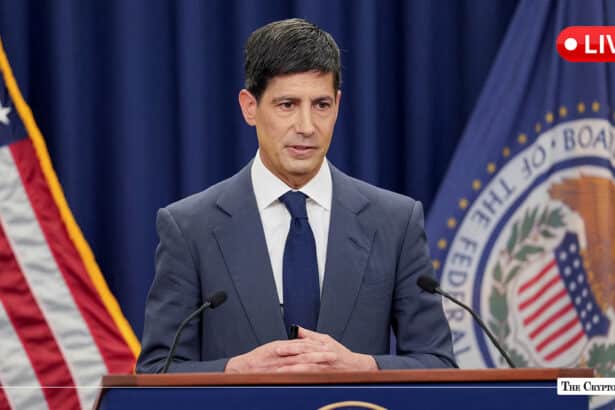
Kevin Warsh, President Donald Trump’s pick to replace Jerome Powell, walks into his confirmation hearing on April 21. He’s a former Fed governor. Wall Street royalty. Married into the Estée Lauder fortune. And his disclosure forms, helpfully reported by our own newsroom, reveal something that, if you stop and think about it for ten seconds, will blow your mind.
Kevin Warsh is sitting on over $100 million in assets. And buried in that pile? Crypto exposure. Blockchain venture exposure. The man who is about to run American monetary policy is personally invested in the very industry whose regulatory bill is sitting in the same committee that is confirming him.
I’ll wait while you get up and pour another one.
Now I’m not saying Warsh did anything wrong. I’m not saying his confirmation hearing was a conspiracy. I’m saying this: every minute of Banking Committee floor time spent confirming Kevin Warsh was a minute not spent marking up the CLARITY Act. Every day the Warsh hearing absorbs floor time is a day the markup doesn’t happen.
The committee that has to vote on crypto regulation got eaten alive by the Fed chair’s confirmation of a man who personally owns crypto.
You couldn’t write this in a screenplay. They’d send it back. “Too on the nose.”
This is the part where, if I were the Wall Street Wolf, I’d lean into the camera and say: that’s not crowding out. That’s the Fed itself getting in front of crypto’s bill while the next Fed chairman is personally exposed to crypto. That’s the system, baby. That’s how Washington actually works. The biggest legislative priority of an entire industry got buried under the personnel calendar of the Federal Reserve.
And the $149 million couldn’t move it.
Tillis blinks. Then folds.
April 17. Tillis was supposed to release the revised stablecoin text. The text everyone agreed to. The text Lummis called 99% done.
He doesn’t release it.
His office cites “strategic timing.” Translation — if you drop the text without a markup date, the banks and the crypto firms get a week to attack it from both sides, and the deal collapses. Tillis is holding the text hostage to a calendar that doesn’t exist.
Read that sentence again. The compromise is so politically fragile that publishing it would for sure kill it.
Then April 21. Tillis goes to Tim Scott. He tells the Banking Committee chairman: push the markup to May. We need more time. We need a “rational basis for final text.” Whatever the hell that means.
April is over. The bill that everyone agreed to in the first week of April is still, three weeks later, undated.
But here’s the part you need to lean in for. Here’s the part that tells you who actually runs this town.
While Tillis was telling Scott to delay, the North Carolina Bankers Association was running a direct phone campaign into Tillis’s office. North Carolina. As in, where Tillis is from. As in, the state that elected him. As in, his home-state community bankers picking up phones and telling their senator to slow this down.
The American Bankers Association is running anti-yield ads in Politico. The North Carolina bankers are calling Tillis directly. Senator Tillis — the Republican negotiator, the man who shook hands on the deal, the man whose name is on the compromise — folds.
You wanna know what $149 million in lobbying buys you? It buys you Brian Armstrong’s reversal, which moves zero votes in the Senate.
You wanna know what a phone call from Charlotte buys you? It buys you a delay that effectively kills April.
The banks didn’t even need to spend their money this round. They just had to dial.
The lobbying machine wakes up. Three weeks late.
April 20. The Digital Chambersends a formal letter to Senate leaders urging the Banking Committee to move into markup.
April 23. The Blockchain Association, the Crypto Council for Innovation, and more than 120 organizations sign a coalition letter doing the same.
You know what a coalition letter is? It’s what you do when the back channels stopped working.
For nine months, the crypto lobby has been doing this the right way. Quiet meetings. PAC checks. White House dinners. Campaign donations. A photograph at the Bitcoin Conference. The cordial machinery of Washington influence.
And in the third week of April, after every endorsement they could get, after Armstrong’s surrender, after Bessent’s op-ed, after the White House’s own economists demolished the bank’s argument — the lobby went public. 120 organizations signed a letter. A letter.
That’s not strength. That’s panic. That’s an industry realizing that everything it bought — the access, the meetings, the relationships, the $149 million — could not produce one date on one calendar in one committee. So it tried the only thing it had left: shouting in public.
And as I write this, the markup still isn’t on the calendar.
“May or dead”: The same speech, three months running
April 27. Bitcoin Conference 2026, Las Vegas. Senator Cynthia Lummis tells a crowd of more than 40,000 attendees: “We are going to markup the Clarity Act in May. We are going to get it to the finish line.”
She also says stablecoin language and market structure provisions are “almost 99% sorted out,” and warns that if Congress doesn’t act this year, the next chance is 2030.
You believe her? I’ll tell you why I do, and why it might not matter.
I believe her because Lummis announced in December 2025 that she will not seek re-election. She is the only senator on the field who has zero electoral skin in this game. No re-election. No PAC money to chase. No North Carolina bankers calling her office. She is, for the next eight months, the closest thing American politics has to a free agent. When she says “May or 2030,” she means it. She’s not posturing for donors. She has no donors.
But here’s why it might not matter.
She said the same thing at the DC Blockchain Summit in March: markup in the second half of April. She said the same thing about the yield compromise in March: 99% resolved. April came. April went. The compromise is still 99%.
99%. 99%. 99%.
You know what 99% means in the United States Senate? It means zero. A bill that’s 99% sorted is a bill that doesn’t exist. A bill that doesn’t exist doesn’t get marked up. A bill that doesn’t get marked up doesn’t reach the floor. A bill that doesn’t reach the floor doesn’t pass before midterm recess.
The window is the week of May 11. Maybe May 12. Then the Senate breaks for Memorial Day. Then there’s roughly 13 weeks of floor time before the midterm calendar swallows everything. 13 weeks to mark up the bill, win 60 votes on the floor, reconcile with the Agriculture Committee, reconcile with the House, and get the President’s signature.
Polymarket has the odds at roughly 47% for the Clarity Act being signed into law this year, down from 82% in February. Galaxy Digital’s head of research calls it 50-50 and falling.
The bill that the entire United States government endorsed in the first week of April is now a coin flip.
The fugazi, decoded (again)
So let me tell you what April really was. Stripped of the press releases. Stripped of the Bitcoin Conference applause. Stripped of the X posts.
April was the month the crypto industry won every public argument and lost the only fight that mattered.
Armstrong endorsed the bill. The Treasury endorsed the bill. The SEC and the CFTC endorsed the bill. The White House published a study showing the banks’ core economic claim was wrong by orders of magnitude. The North Carolina bankers picked up the phone and Tillis folded anyway.
Because here is the lesson of April 2026, and I want you to write it down:
The crypto industry has money. The banks have people.
Money buys lobbyists. People — specifically, voters in home states with phones — buy senators. The banks have a community bank in every congressional district. The crypto industry has a Fairshake PAC and a coalition letter signed by 120 organizations whose CEOs the average senator could not pick out of a lineup.
When the moment of truth came, when the only thing that mattered was getting one chairman to put one bill on one calendar in one committee, the $149 million couldn’t move it. A phone call from Charlotte could.
That’s the fugazi. Not the yield compromise. Not the OCC charter. Not the Tillis-Alsobrooks handshake.
The fugazi is the entire industry’s belief that money in Washington equals power in Washington. April just proved it doesn’t. Not against banks. Not when banks are calling from your home state. Not when the Banking Committee chairman has a Senate map to protect.
The CLARITY Act might still pass. Lummis might be right. May might deliver what April didn’t. The bill might land on Trump’s desk in July, get signed in a Rose Garden ceremony with Armstrong and Garlinghouse grinning behind the podium, and we’ll all pretend the last six months made sense.
But understand what happened here. Understand what April actually proved.
It proved that the most pro-crypto President in American history, the most aligned administration in American history, the most united industry in American history, and the largest crypto lobbying war chest in American history could not — could not — produce a markup date.
The hostage takers agreed. The negotiators shook hands. The script was written. The cameras were rolling.
And it was always about who gets to skim the float when America’s money stops moving.
That fight is still on. The banks are still winning. And the calendar — that little $149 million calendar — is still empty.
You either die a hero, or you live long enough to watch the bill named CLARITY become the least clear thing in Washington.
May is coming.
I’ll be back.
Also Read: Crypto Trenches vs Wall Street: Degen Chaos or Institutional Inertia?