Key Highlights
- Ripple CEO Brad Garlinghouse cites a decisive shift in Washington following a White House report that debunked banking industry fears regarding stablecoin yields.
- The CEO now targets late May for final passage, noting that previous opposition from Coinbase and banking lobbyists has largely dissipated.
- Senator Thom Tillis is expected to release a revised text this week that bans passive yields while protecting activity-based rewards like transaction rebates.
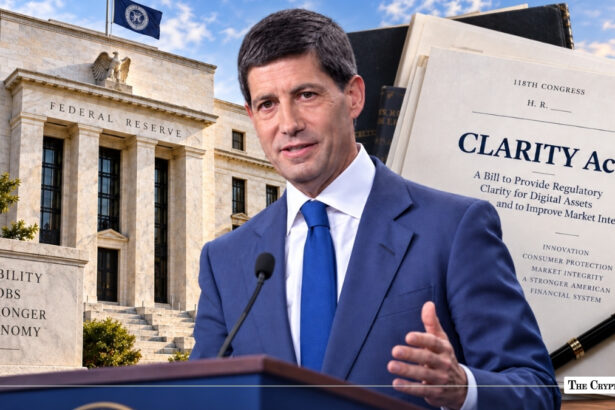
Ripple CEO Brad Garlinghouse has signaled that the long-stalled Digital Asset Market Clarity Act (CLARITY Act) is closer to becoming law than at any point since it cleared the House last July. Following a week of high-level meetings with Senators Hagerty, Scott, and Boozman, Garlinghouse characterized the current political climate as a rare moment of alignment.
Marking his 11th anniversary at Ripple on April 13, 2026, Garlinghouse posted on X: “The CLARITY Act window is open. And now is our moment to act.” He reiterated this sentiment at the Semafor World Economy Summit, explaining that the “peak frustration” of stakeholders has finally forced a functional compromise.
The Digital Asset Market Clarity Act (H.R. 3633) passed the US House of Representatives in July 2025 by a bipartisan 294–134 vote. The bill would create the first comprehensive federal market-structure framework for digital assets, splitting oversight between the Securities and Exchange Commission (SEC) and the Commodity Futures Trading Commission (CFTC). It has been stuck in the Senate Banking Committee for months over the issue of stablecoin interest.
What has changed in the past week
Garlinghouse’s optimism follows a rapid chain of political breakthroughs in April. On April 8, the White House Council of Economic Advisers released a report finding that a full ban on passive yield on stablecoin balances would cost US consumers roughly $800 million annually while delivering only “negligible” benefit to bank deposit stability — a finding that effectively undercut the banking industry’s core objection to the bill.
On 9 April, Coinbase CEO Brian Armstrong reversed his opposition to the legislation after previously blocking it twice earlier in 2026, publicly endorsing the bill in response to Treasury Secretary Scott Bessent. The same day, SEC Chair Paul Atkins backed fast-track approval, writing that “Project Crypto is designed so once Congress acts, SECGov and CFTC are ready to implement the CLARITY Act.” Additionally, Senator Cynthia Lummis called the current moment the industry’s “last chance” to pass the bill before the 2026 midterms.
The stablecoin yield dispute also appears close to resolution. The Tillis-Alsobrooks compromise drafted in late March would ban passive yield paid simply for holding a stablecoin balance while permitting narrowly defined activity-based rewards such as transaction rebates and loyalty programmes. Senator Thom Tillis is expected to release the formalized legislative text this week, which would trigger the markup process before the end of April.
A narrow path to the President’s desk
Despite the optimism, the calendar is a formidable enemy. Garlinghouse has adjusted his forecast for final passage to late May 2026.
To reach President Donald Trump’s desk, the bill must clear a 60-vote threshold in the Senate, undergo reconciliation with the Senate Agriculture Committee version (passed in January), and return to the House for a final vote. Senator Cynthia Lummis has warned that if the bill is not on the Senate floor by May, the 2026 midterm election cycle will likely shelve the legislation until 2030.
For Ripple specifically, CLARITY Act passage would codify into law the regulatory status that XRP achieved through Ripple’s 2023 court ruling, and would remove the remaining federal-level uncertainty for the company’s broader institutional push.
Also Read: Coinbase CEO’s Dramatic U-Turn: “It’s Time to Pass the CLARITY Act”