The conversation about stablecoins just changed direction.
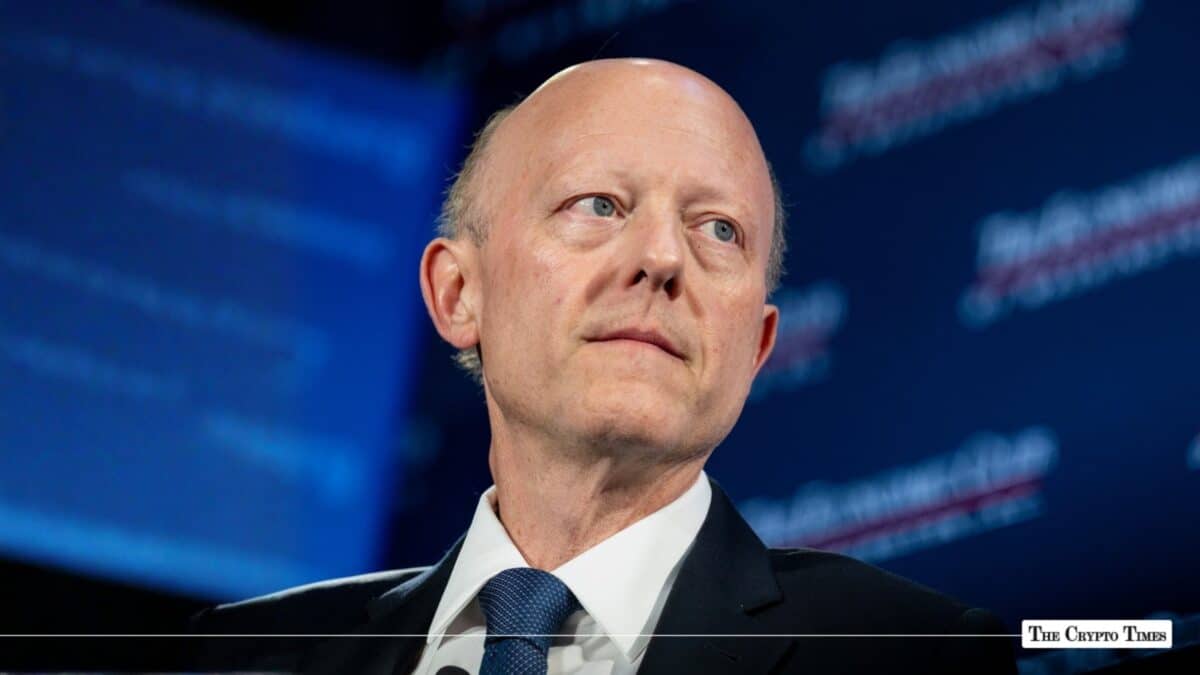
For most of 2025, the debate around dollar-pegged digital tokens revolved around payment efficiency, banking competition, and US regulatory clarity. Speaking to Reuters in Hong Kong on Wednesday, Circle CEO Jeremy Allaire reframed it as something broader and more consequential: an emerging battleground for currency competition in an era of escalating geopolitical risk.
Two quotes from the interview carry the weight of that reframing. First, Allaire said Circle recorded “several billion dollars” in USDC transaction growth following the outbreak of the U.S.-Iran war, as heightened geopolitical risk pushed users toward portable digital dollars. Second, he said there is “tremendous opportunity” for a yuan-backed stablecoin, framing it as a logical vehicle for China’s long-stated goal of expanding the yuan’s role in global trade and finance.
“If there’s currency competition, you want your currency to have the best features possible,” Allaire told Reuters. “This is becoming a technological competition.”
The framing matters. When the CEO of the world’s largest regulated stablecoin issuer publicly describes stablecoins as instruments of currency competition rather than payment tools, the conversation has shifted from fintech to geopolitics.
The Iran War USDC spike
The “several billion dollars” figure Allaire’s citation is worth pausing on. It is not a projection or a forecast—it is observed transaction behavior. When US-Iran hostilities escalated, users across multiple regions moved meaningful capital into USDC. The reasons track with decades of monetary crisis precedent: when trust in local currency or traditional financial infrastructure wavers, capital seeks dollar exposure that can be held and moved independently of institutions.
Stablecoins now serve that function at a scale traditional cross-border channels cannot match. Unlike dollar deposits in foreign banks — which require correspondent banking relationships, operate on limited business hours, and can be frozen by regulatory action — USDC operates 24/7, settles in seconds, and requires only a wallet.
For Circle, the Iran war data point validates a thesis that has been implicit in its business model for years: that stablecoin demand rises not just with retail crypto adoption but with geopolitical risk. It is the digital-age equivalent of the flight to dollar cash that historically spikes during crises, compressed to minutes and accessible to anyone with internet access.
Why a Yuan stablecoin matters
China’s currency internationalization effort has run for over a decade with limited progress. The digital yuan (eCNY), the country’s central bank digital currency, has seen extensive domestic pilot use but negligible cross-border adoption. Trade settlement in yuan has grown but remains a fraction of dollar volumes.
Allaire’s suggestion—that a stablecoin pegged to the yuan could succeed where the CBDC has struggled—is structurally plausible. Stablecoins can be held and transacted without the political baggage of state-issued digital currency, can integrate with existing crypto infrastructure globally, and can be adopted by private payment processors without bilateral government approval. Hong Kong, which Allaire specifically called out as a cross-border payments hub, already has a legal framework enabling regulated stablecoin issuance and sits outside mainland China’s capital controls.
Whether Beijing moves in this direction remains an open question — mainland China has maintained its crypto trading ban even as it encourages blockchain adoption. But Allaire’s comments signal that the most credible voice in regulated stablecoins is actively thinking about what a yuan-backed token would look like and positioning Circle to participate.
The Asian stablecoin picture
The yuan discussion arrives as stablecoin activity across Asia has accelerated. Allaire himself spoke in Seoul on April 13 about Circle’s plans to support won-pegged stablecoins pending South Korea’s Digital Asset Framework Act. Hong Kong’s HKD stablecoin regulatory framework is already operational. Japan has a stablecoin law in place. Singapore’s MAS licenses USDC for regulated distribution.
India has taken a different path, prioritizing a sovereign-backed digital rupee and maintaining a 30% tax regime on virtual digital asset gains that has driven most domestic trading offshore. The Reserve Bank of India has explicitly warned that stablecoin adoption could undermine UPI and compromise monetary sovereignty.
For Indian readers, the yuan stablecoin conversation is a reminder that Asian currency competition in the digital domain is accelerating—and that India’s current cautious stance may leave the INR outside frameworks being actively designed now.
The CLARITY Act footnote
Allaire used the Hong Kong interview to weigh in briefly on the US CLARITY Act, which has been closely watched globally for how it treats interest-bearing stablecoin products. He said any restrictions on marketing such products as bank savings “could affect stablecoin distributors more than issuers”—a framing that moves the regulatory burden away from Circle itself and toward partners like Coinbase that have built significant revenue on USDC rewards programs.
The comment lands as the CLARITY Act’s markup window in the Senate Banking Committee has quietly slipped from late April into “the coming weeks,” per Senator Thom Tillis’s public remarks this week. For Circle, the distributor-versus-issuer distinction may prove important if the final legislative text tightens marketing rules.
The bigger signal
Allaire’s Hong Kong interview was not an announcement, a partnership, or a product launch. It was a public framing—the CEO of the largest regulated stablecoin issuer describing a world where stablecoins are currency-competition instruments shaped by geopolitical events.
That framing is now on the record. The “several billion dollars” USDC spike during the Iran war confirms that the shift is already happening at the transaction level. The yuan opportunity Allaire identified suggests where the next major currency battleground sits. And the CLARITY Act remark acknowledges that US policy choices will shape, but no longer fully control, where this goes.
The era of stablecoins as a payments story is ending. The era of stablecoins as a geopolitical story is now underway.
Also Read: SocGen Targets Mass Adoption With MetaMask Stablecoin Push