Key Highlights
- Circle CEO Jeremy Allaire visited South Korea to expand partnerships ahead of Arc’s launch.
- Circle is exploring setting up a local entity in Korea, signaling a long-term commitment to the market.
- The firm is shifting beyond USD Coin issuance toward broader financial infrastructure services.
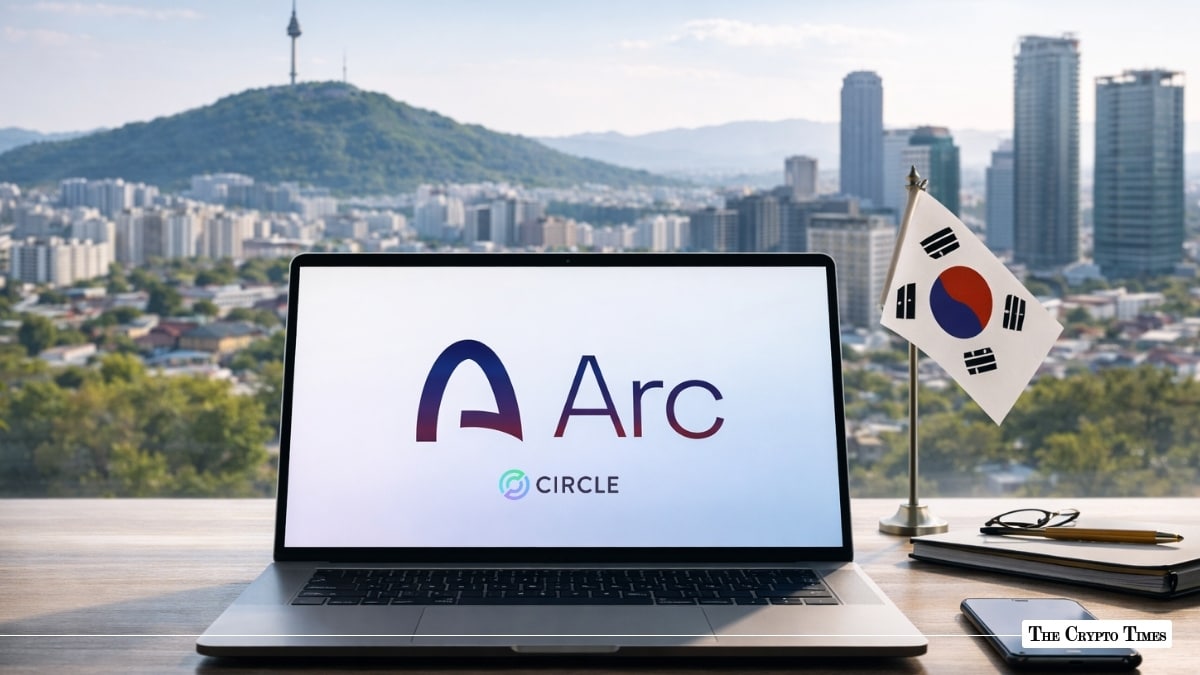
USDC issuer Circle is stepping up its expansion in South Korea, with Co-Founder and CEO Jeremy Allaire leading the charge. On Monday, Allaire visited the country — one of the world’s largest markets for cryptocurrency trading — to court partners and users ahead of the official launch of Circle’s newest settlement technology, Arc.
Speaking at a media briefing in Seoul, Allaire said, “We’re also expanding in other areas that could be powerful for the Korean financial ecosystem, such as Arc, which we are launching commercially this year.”
Arc aims to power stablecoin settlement
Arc is designed as a blockchain-based financial settlement rail that provides instant, secure, and predictable movement of stablecoins across the internet.
According to Allaire, Arc is built for the Web3 ecosystem and aims to power a stablecoin foreign exchange protocol. The system has already been tested with a pilot Korean won-pegged stablecoin, KRW1, and could support cross-border settlement use cases.
The move reflects Circle’s broader shift — from simply issuing USD Coin (USDC) to building full-scale financial infrastructure around it. Earlier, The Crypto Times reported on Circle defending USDC freezes amid the $270M Drift Protocol exploit, which sparked debate over centralization versus decentralization in regulated stablecoins like USDC.
Korea in focus
Allaire made it clear that Korea isn’t just another market for Circle. With strong retail participation and growing institutional interest, the country is emerging as a key piece of the company’s global plans.
He also left the door open to setting up a legal entity locally, depending on how regulations evolve.
During the trip, Allaire met with and signed partnerships alongside leading players, including Upbit and Bithumb. He also held discussions with KB, Shinhan, and Hana banks, as well as with financial regulators.
Building new revenue streams
While stablecoins were a major talking point, Allaire clarified that Circle does not plan to issue a Korean won-backed token itself. Still, he acknowledged that Won based stablecoins could become important as digital currencies evolve, especially if governments want to keep their currencies competitive on-chain.
Beyond stablecoins, Circle is quietly building new business lines. Allaire said that as of the end of 2024, these units generated almost no revenue, but this year, the company expects them to grow to between $150 million and $170 million through new revenue streams.
Balancing compliance and speed
Circle’s compliance-first approach also came up. Allaire noted that working closely with regulators sometimes limits how quickly the company can act in situations like freezing suspicious wallets. To address this, Circle is exploring frameworks that would allow faster action under specific conditions.
With Arc on the horizon and partnerships expanding, Circle’s Korea push shows the company is thinking beyond stablecoins — positioning itself as a core infrastructure player in the global digital finance system.
Also Read: Foundry Launches Zcash Mining Pool, Captures 30% Hashrate