Key Highlights
- For the first time, the White House, the SEC, Treasury, and major industry players like Coinbase are fully united in backing the CLARITY Act framework.
- The bill faces a “do or die” deadline in May; industry leaders warn that any further delays will push the legislation into the 2026 election freeze, risking a return to hostile regulations.
- With consensus reached, the fate of the multi-trillion-dollar crypto market now rests entirely on whether the Senate Banking Committee will schedule the markup before time runs out.
The U.S. Senate returned from its Easter recess yesterday, April 13, stepping into a political pressure cooker. For the first time in history, a comprehensive digital asset market structure framework—the Digital Asset Market Clarity Act (H.R. 3633)—has the backing of the White House, the Treasury, the Securities and Exchange Commission (SEC), and the largest players in the crypto industry.
Yet, the biggest question in Washington remains unanswered: Will the Senate Banking Committee actually schedule the markup, or is the clock quietly running out?
A rare alignment, a closing window
The legislative landscape for crypto transformed at lightning speed over the past week. Just days after Treasury Secretary Scott Bessent called for swift passage, the industry witnessed a massive breakthrough.
The trigger wasn’t a single moment — it was a chain reaction. On March 20, Senators Thom Tillis (R-NC) and Angela Alsobrooks (D-MD) circulated a compromise that bans passive yield on stablecoin balances but permits activity-based rewards like transaction rebates and loyalty programs. Coinbase initially rejected that text on March 25. Then, on April 8, the White House Council of Economic Advisers released a report finding that a full passive-yield ban would cost consumers roughly $800 million annually while delivering only negligible benefit to bank deposit stability—undercutting the banking industry’s core objection.
The next day, on April 9–10, Coinbase CEO Brian Armstrong made a dramatic U-turn, officially endorsing the bill after blocking it twice earlier this year.
Momentum continued to build through the weekend as SEC Chair Paul Atkins backed fast-track approval, a stunning pivot from the agency’s previous “regulation by enforcement” posture.
Senator Tillis is now preparing to release the revised stablecoin yield draft text this week, according to Politico. The draft converts the Tillis-Alsobrooks agreement in principle into formal legislative language—passive yield on stablecoin balances banned, activity-based rewards (payments, transfers, platform engagement) preserved—and is the last procedural piece needed before Chairman Tim Scott can schedule a markup.
This was less of a “stunning pivot” than a continuation of the Atkins-era SEC’s friendlier posture; the “regulation by enforcement” era ended with the departure of former Chair Gary Gensler, not this week.
But as any veteran of Capitol Hill knows, consensus means nothing without calendar space.
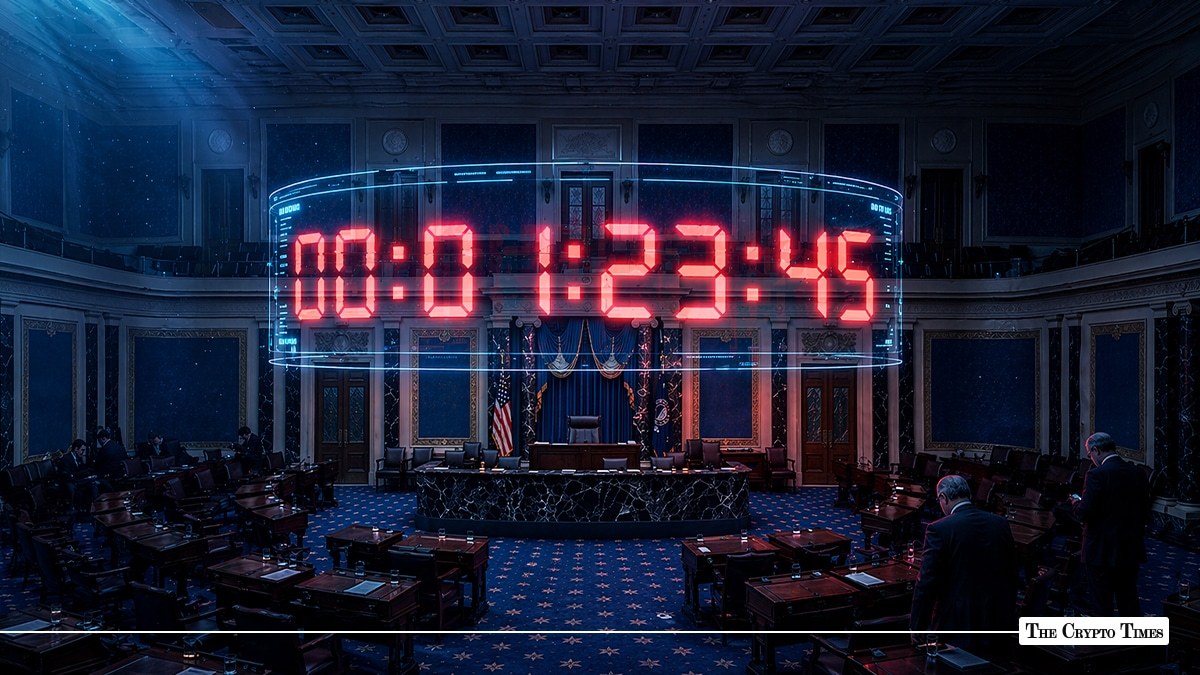
Will the Senate actually move? The 14-day clock explained
The Senate Banking Committee has roughly 14 working days left in its realistic markup window before midterm politics consumes the calendar.
- Best-case scenario: Markup notice this week → committee vote late April → full Senate floor vote by late May.
- Worst-case scenario: No date by April 20–25 → bill slips past midterms and dies.
Even the best case is harder than it looks. After a Banking Committee markup, the bill must be reconciled with the Senate Agriculture Committee version (which passed on January 29, 2026), then survive a full Senate floor vote requiring 60 votes—meaning meaningful Democratic support is mandatory—then be reconciled with the House-passed version before reaching the President’s desk. Each step is a potential veto point.
Sen. Cynthia Lummis and Sen. Bill Hagerty have publicly urged immediate action, echoing our earlier reporting on the pre-midterm urgency. White House pressure (Treasury Secretary Scott Bessent + SEC Chair backing) remains high, but Scott’s silence is the current bottleneck.
The midterm threat: Why May is the “do or die” deadline
The urgency surrounding the CLARITY Act is no longer just about market structure; it’s about electoral survival. If the bill is not marked up by late April and brought to the Senate floor by May, it risks bleeding into the 2026 midterm election cycle. Historically, bipartisan cooperation evaporates entirely by late summer during an election year.
Senator Cynthia Lummis recently urged immediate action, echoing a profound anxiety within the industry. Crypto Super PACs spent hundreds of millions of dollars to secure a pro-crypto administration and friendly majorities. There is a palpable fear that failing to codify these rules now could leave the industry vulnerable if the political winds shift post-midterms, dragging digital assets back into the hostile regulatory environment of the previous administration.
Despite the recent breakthroughs, some legal experts remain cautious. Earlier this month, a pro-XRP lawyer warned that the CLARITY Act could still fail to pass this year, pointing to the glacial pace of the Senate as the ultimate hurdle.
All eyes on Chairman Tim Scott
The fate of the multi-trillion-dollar digital asset market now rests squarely on the desk of Senate Banking Committee Chairman Tim Scott.
Scott controls the committee’s calendar. While he has been broadly supportive of establishing U.S. leadership in digital assets, he must balance the CLARITY Act against a crowded legislative docket. Moving the bill requires navigating residual skepticism from a few traditional banking hardliners who are still wary of the stablecoin yield compromise, even if major institutions have laid down their arms.
Market implications: The danger of delay
While Washington deliberates, the market is already repositioning. Projects like Polymarket and Aster are actively shifting dollar rails in anticipation of the new framework.
A successful markup announcement in the coming days would likely serve as a massive catalyst for tokens seeking CFTC commodity status, such as XRP and SOL, and supercharge the tokenized real-world asset (RWA) sector. Conversely, if April closes without a scheduled committee vote, expect institutional capital to hedge its bets as the reality of a stalled bill sets in.
The table is perfectly set. The industry has mostly compromised. The regulators are on board. But the 60-vote Senate threshold, the reconciliation gauntlet, and an active legislative calendar mean the final stretch is anything but a formality. Now, the Senate simply has to move before the clock strikes midnight on the 2026 legislative session.
The Crypto Files: The Clarity Act Explained