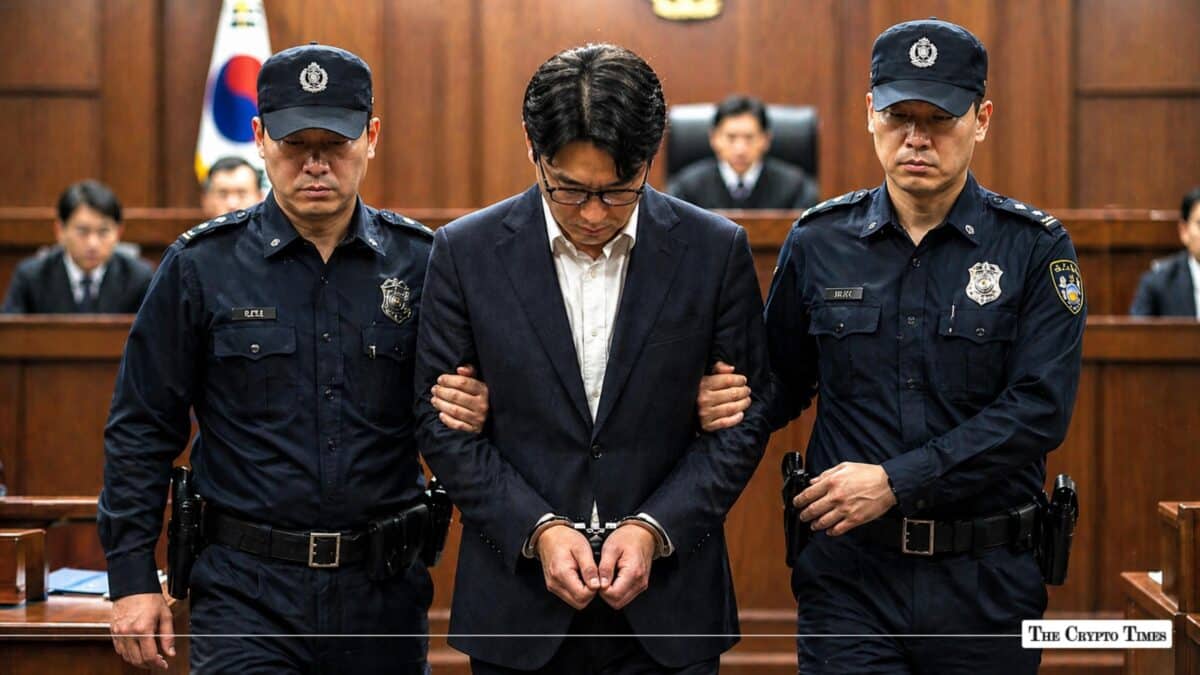
Prosecutors in Seoul have sought a 20-year prison sentence for Jeong Sang-ho, the CEO of virtual asset deposit service operator Delio, over his alleged role in an embezzlement scheme that wiped out massive amounts of customer funds.
During the closing arguments on April 30, 2026, at the Seoul Southern District Court Criminal Division 11, the prosecution charged the CEO under the Act on Specific Economic Crimes.
Highlighting deception and scale of damage
Delio was once a prominent player in the South Korean “crypto-bank” sector, offering high interest yields on Bitcoin and Ethereum deposits. However, the facade crumbled on June 14, 2023, when the platform abruptly suspended withdrawals.
According to prosecutors, Jeong misappropriated approximately 250 billion Korean won (around $180 million) in virtual assets from about 2,800 investors from August 2021 to June 2023.
The prosecution also criticized the defendant’s conduct during the trial, adding that despite victims attending hearings to demand strict punishment, he has “exacerbated their suffering by evading responsibility and maintaining an uncooperative attitude.”
Defence and victim response
In response, Jeong and his legal team expressed “a deep sense of responsibility,” but maintained his innocence regarding criminal intent. His legal team argued that if Jeong were acquitted, he would “do his utmost to compensate for the damages”—a claim that met with vocal resistance from the scores of victims attending the hearing.
The victims have consistently urged the court to treat the case as a benchmark for crypto fraud, particularly following South Korea’s implementation of the Virtual Asset User Protection Act in 2024.
Tightening the regulatory noose
The Delio case has served as one of the key catalysts for the rapid legislative shift in Seoul this year. Beyond the criminal trial, South Korea’s lawmakers have set a strict December 10, 2026, deadline for a comprehensive stablecoin bill.
Furthermore, as of April 8, 2026, the Financial Services Commission (FSC) officially tightened withdrawal rules across all exchanges, removing the “exceptions” that previously allowed accounts to bypass the 24-72 hour waiting period. This move is designed to prevent the exact type of rapid capital flight and embezzlement seen in cases like the Delio collapse.
With the first-instance verdict for this case looming on July 16, 2026, the crypto industry is watching closely. A 20-year sentence would mark the harshest penalty ever handed down to a South Korean crypto executive, signaling the end of the “wild west” era for domestic deposit services.
Also Read: Cartier Heir Sentenced to 8 Years in Massive $470M U.S. Crypto Fraud Case