World Liberty Financial, the DeFi project tied to the Trump family, ignited a firestorm in crypto markets on Wednesday after launching a governance vote on unlocking more than 62 billion locked WLFI tokens.
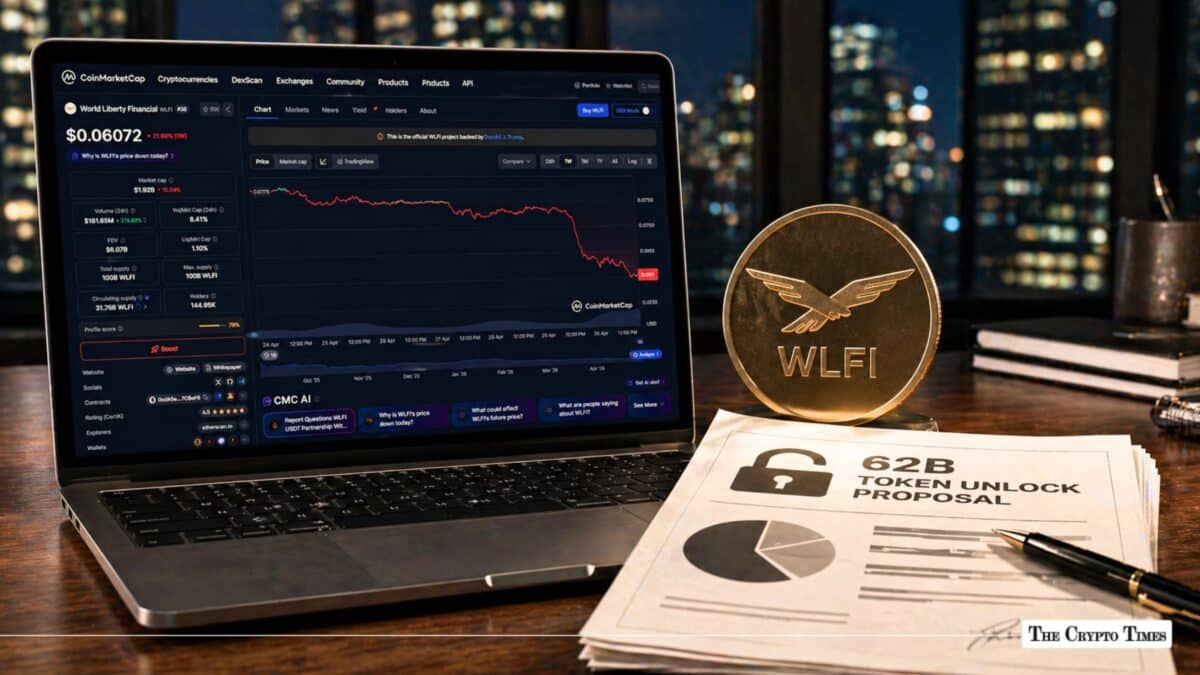
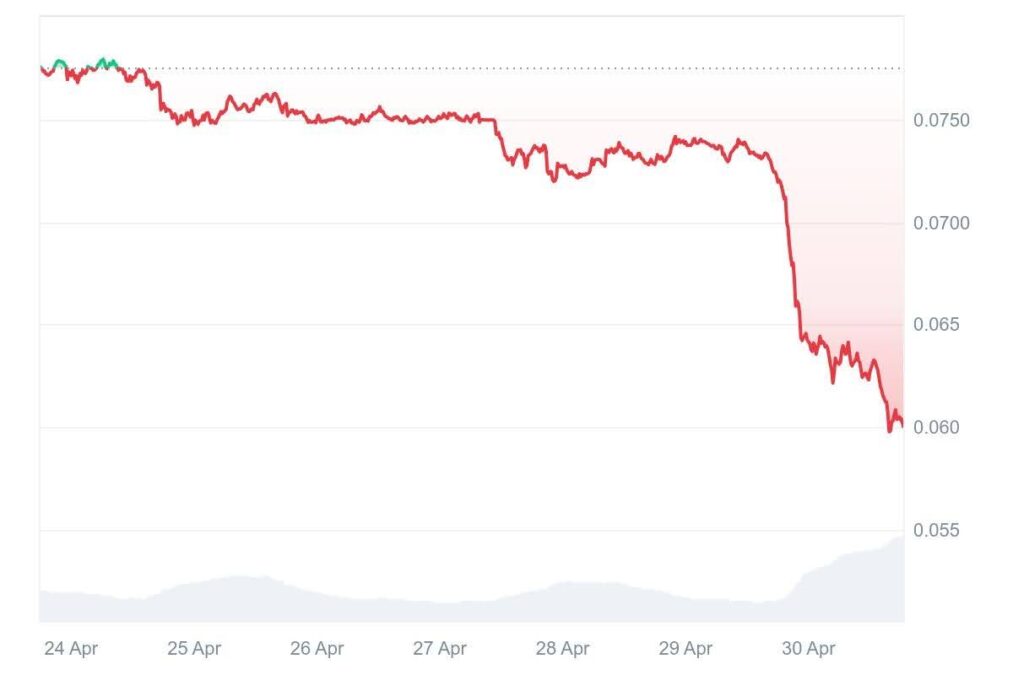
The proposal triggered sharp selling, with the token shedding nearly 20% in value amid accusations of coercive tactics and broken trust.
The vote, which opened on April 29 and runs through May 7, covers roughly 45.2 billion tokens allocated to founders, team members, advisors, and partners, plus 17 billion for early supporters.
If approved—and it’s currently sailing through with over 99.9% “yes” votes and the 1 billion WLFI quorum met in minutes—tokens would face a two-year cliff before any releases.
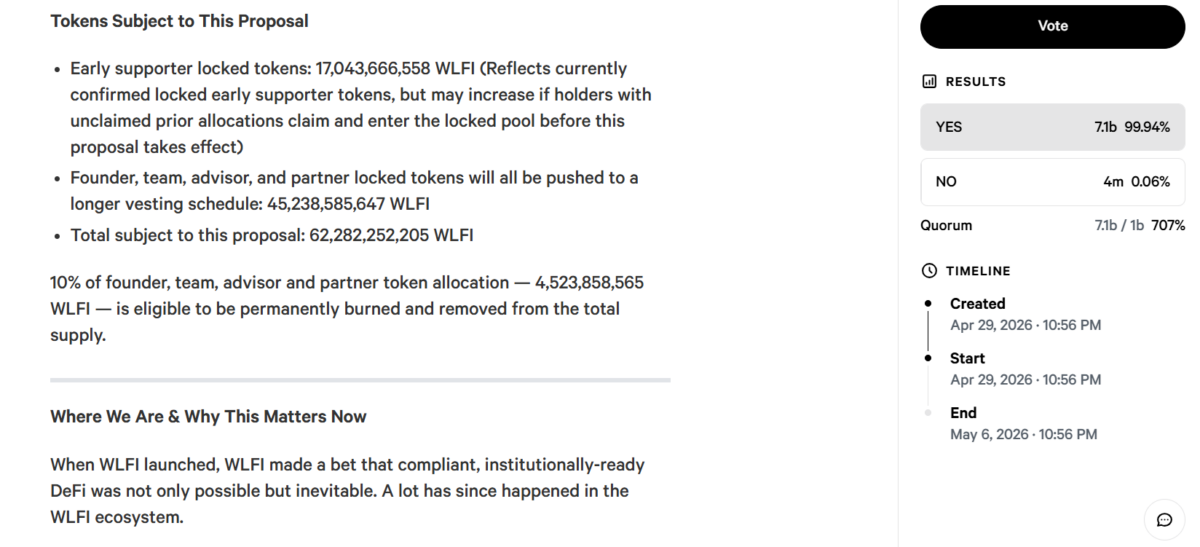
Founders’ portion includes a 10% permanent burn of about 4.5 billion tokens, followed by three-year linear vesting. Early backers get a slightly shorter two-year vest after the cliff, keeping their full allocation.
Token plunges after vote announcement
WLFI, which was already down nearly 86% from its all-time high near $0.46 last year, slid from around $0.074 to as low as $0.060 at the time of publishing. Market watchers argue that the plan brings predictability, burns supply, and prevents immediate dumps that could crush the price further.
To note, none of these tokens would hit the market before at least 2028 under the terms. Yet the backlash highlights deeper fractures.
Another concern hitting up discussions during the vote was token’s unfair holdings. Token’s top wallets reportedly wield outsized voting power, with four addresses controlling about 40% of recent votes. Many early investors, lured by the Trump connection and locked allocations, feel the project has prioritized insiders over community delivery.
Broader controversies around World Liberty Fi
World Liberty Financial (WLFI) has been mired in a string of scandals that have eroded investor confidence and hammered its token price in recent months. The most explosive feud involves Tron founder Justin Sun, a major early backer who invested tens of millions.
Sun has accused the project of secretly embedding a “blacklisting” function in the token contract, allowing insiders to unilaterally freeze or restrict holdings without notice or governance approval.
Read: WLFI Threatens Justin Sun With Lawsuit as $75M Crypto War Erupts
Tron founder claims roughly $900 million to $1 billion of his WLFI tokens were frozen, stripping him of voting rights, and has filed a federal lawsuit in California alleging extortion and coercion.
Compounding the drama, WLFI drew sharp criticism after using 5 billion of its own tokens as collateral on the Dolomite lending protocol (co-founded by a WLFI advisor) to borrow $75 million in stablecoins. The move pushed utilization near 100%, temporarily trapping other depositors and sparking fears of self-dealing and liquidity risks reminiscent of past DeFi failures.
Moreover, World Liberty Financial has struggled with transparency issues, including reports of large token-backed loans and centralization concerns.
Now, this ongoing governance vote to restructure 62+ billion locked tokens—offering a two-year cliff plus extended vesting or permanent locks for dissenters—has fueled accusations of coercive tactics and centralized control. Critics, including Sun, call it a “governance scam” that punishes opposition while top wallets dominate voting power.
As the vote nears certain passage, the real test will come in execution and whether the structured release rebuilds confidence or deepens skepticism in an already battered token.
Also read: Kazakhstan Targets Illicit Crypto Network, Seizes $3.2M in USDT