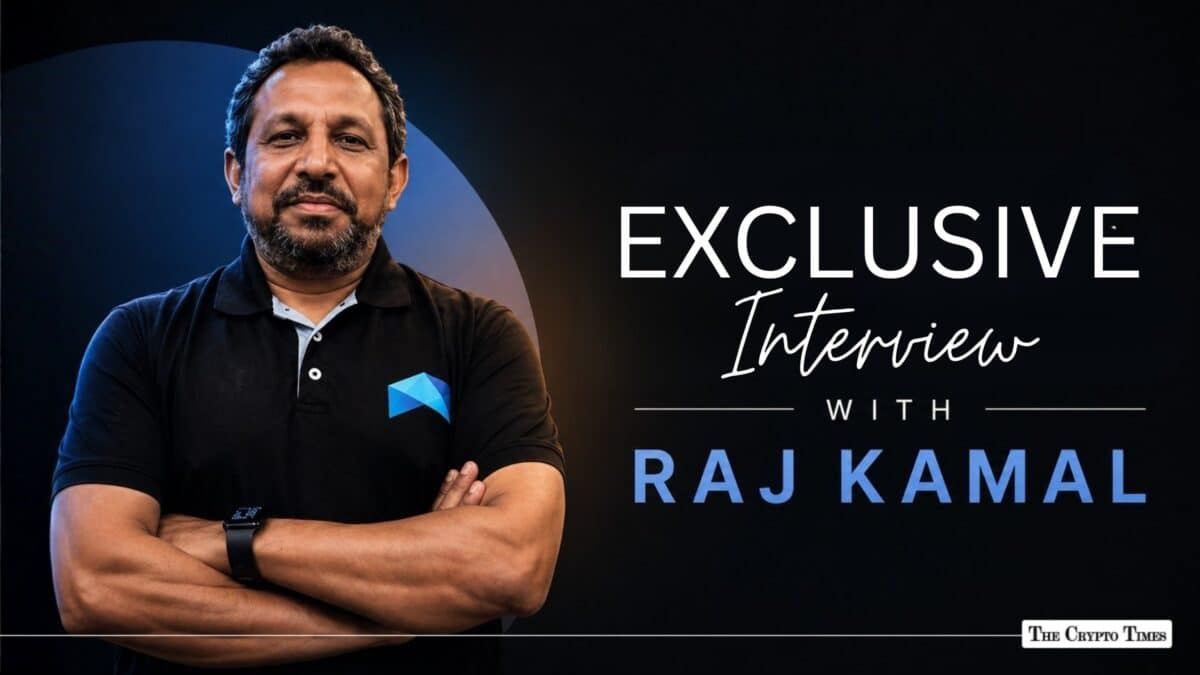
In a candid conversation with The Crypto Times, Raj Kamal, Founder and CEO of TransFi, shared insights about his journey from traditional payments to building a stablecoin-powered infrastructure company.
With over 20 years in the payments industry, including a stint as a McKinsey partner, Kamal shed light on his vision for simplifying cross-border money movement and his bullish outlook on stablecoins.
From McKinsey to Blockchain Pioneer
Gopal: Can you please let us know a little more about yourself and your venture, TransFi?
Raj Kamal: My background is 20 years in payments. I was a partner at McKinsey, running their payments practice across Asia Pacific, based out of Singapore. I got introduced to blockchain and crypto in 2015 while working at Naspers/Prosus, handling investments and M&A. That exposure sparked my interest in using blockchain protocols for payments.
Stablecoins emerged as the most practical application. In 2022, I founded TransFi, a US-incorporated company that facilitates cross-border transfers using stablecoins as rails. We handle fiat-to-stablecoin, stablecoin-to-fiat, and fiat-to-fiat transactions, offering APIs and solutions to institutions and corporates. Our goal is simple: make money movement across borders faster, cheaper, and instantaneous.
Why Stablecoins? Solving Real Pain Points
Kamal emphasized the persistent inefficiencies in traditional cross-border payments, especially for individuals and small businesses in emerging markets.
“Small businesses and individuals struggle to receive money from overseas. It’s expensive and slow — whether it’s remittances to families in India, Philippines, Vietnam, or Africa,” he explained.
“The correspondent banking system and SWIFT create friction. Stablecoins cut through that by settling instantaneously on the internet.”He noted that domestic systems like India’s UPI, Brazil’s Pix, and Singapore’s PayNow are highly efficient, but cross-border remains the biggest challenge. TransFi focuses precisely on these high-friction corridors.
$19 Million Series A: Fueling Global Expansion
Gopal: Can you elaborate on TransFi recently raising a $19 million in Series A funding ($14M equity + $5M stablecoin liquidity facility)?
Raj Kamal: Building a global payments company requires significant capital — for technology, compliance, licenses, and infrastructure across multiple countries. We now have around 10 subsidiaries spanning the US, UAE, Australia, Indonesia, Philippines, Europe, Canada, and more.
The funds will help us scale product development, secure licenses, and expand operations.The company maintains its parent entity in the US while building operational entities worldwide, with a strong presence in the UAE.
Regulatory Tailwinds and Global Outlook
Kamal welcomed recent regulatory progress, particularly in the US.
“The US Clarity Act and Genius Act are positive steps. Because the US dollar and economy are so central globally, clear US regulations will encourage similar frameworks elsewhere,” he said.
He also cited Europe’s MiCA regulation and Hong Kong’s stablecoin licensing as encouraging developments. In emerging markets across Asia, LatAm, and Africa, he sees the strongest adoption. Stablecoins are increasingly used not just as payment rails, but as stores of value in volatile currency environments, especially by freelancers, small businesses, and expatriates for salaries and settlements.
Stablecoin Dominance and the Road Ahead
Gopal: Do you focus only on USD-backed stablecoins like USDT and USDC, or do you see others challenging their dominance?
Ra Kamal: Today, liquidity is overwhelmingly in USD-backed stablecoins (USDT and USDC), which powers most of our transactions. However, we expect more country-specific stablecoins to emerge — including potential INR, AED, or others. Ultimately, the share of different stablecoins will likely mirror global fiat currency usage.
He believes reserve-backed stablecoins (whether privately or centrally issued) will capture the largest volumes due to regulatory preferences. Liquidity and seamless on-chain swapping between chains (Ethereum, Solana, Tron, and potentially XRPL with Ripple USD) will determine winners.
Market Outlook: Stablecoins vs. Bitcoin
While optimistic about stablecoins as a “secular growth” story — predicting rapid expansion (potentially doubling in the next two years) and broader use cases like tokenized bonds and equities—Kamal was more measured on Bitcoin’s short-term price action.
“Bitcoin goes through four-year cycles. We’re in the middle of one now, still cleaning up from last year’s liquidity events. I don’t expect dramatic moves in the next few months, but stablecoin volumes and regulatory clarity will continue advancing regardless.”
Closing Notes
Raj Kamal concluded the interaction with a forward looking statement, “We’re excited about stablecoins—we believe they are the best form of money invented to date. They can solve many real problems in cross-border payments. We look forward to continuing this journey and supporting efficient global finance, including corridors connected to India.”
Also read: CLARITY Act’s April Fugazi: Trump Demands It, Everyone Says Yes, But Where Is It?