Key Highlights
- The pilot targets regions where traditional payout systems are often slow and costly.
- Payments are processed using existing blockchain networks rather than proprietary tokens.
- Creators must rely on external exchanges to convert digital assets into local currency.
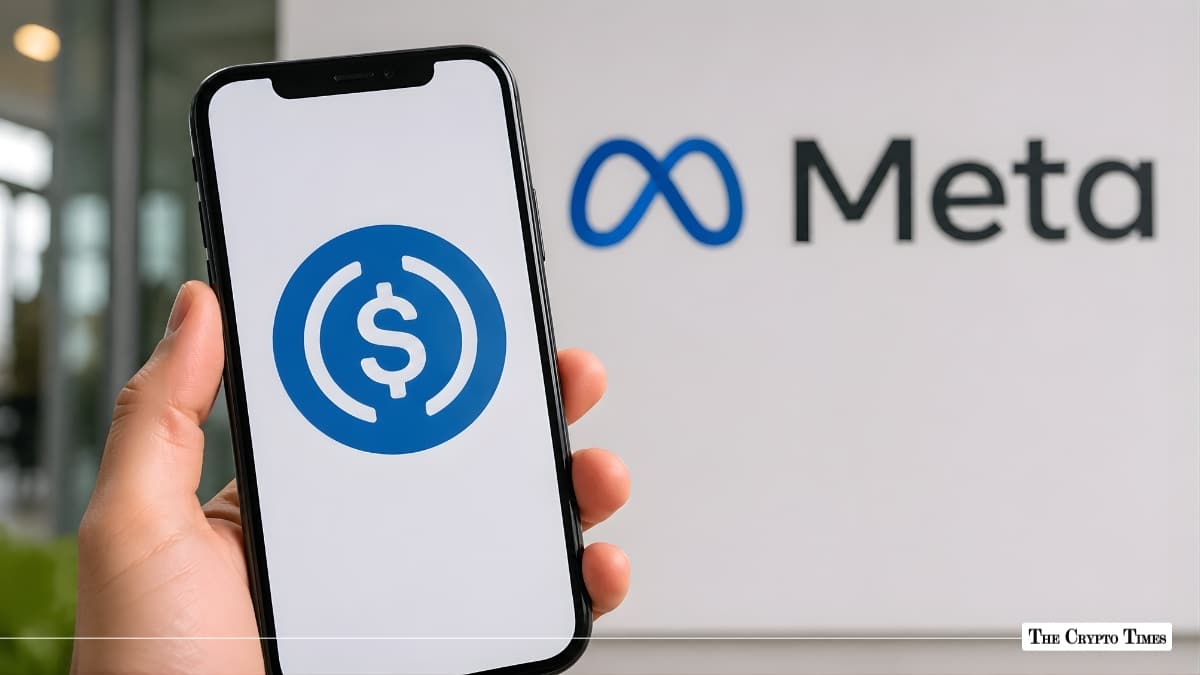
Meta Platforms, a multinational technology conglomerate, has rolled out stablecoin payouts for content creators on its platforms, indicating a cautious return to cryptocurrency integration years after abandoning its own stablecoin project.
As per the official webpage of Meta, the company is partnering with payment infrastructure provider Stripe to facilitate payouts in Circle’s USDC stablecoin. Initially, the initiative aims at creators in Colombia and the Philippines, with plans for wider expansion depending on regulatory approvals and performance.
The creators in these countries will be paid directly in USDC, which will be distributed using the Solana and Polygon networks. To access local currency, users will need to convert their stablecoins through third-party crypto exchanges, as Meta does not provide built-in off-ramp services.
This strategy allows Meta to take advantage of the swift transfer speed and decreased transaction costs offered by blockchain payments without having to issue a digital currency itself.
Stablecoins like USDC, which maintain a 1:1 ratio with the U.S. dollar and are collateralized by assets, enable quick transfers at minimal cost relative to traditional cross-border banking channels, especially for creators in developing nations who often incur steep transaction charges or delayed payments.
No plan for a proprietary stablecoin
Meta confirmed it has no intention of launching its own stablecoin. The company previously shelved its Libra (renamed to Diem) project in 2022 following heavy criticisms and regulatory backlash from global lawmakers and central banks. At the time, concerns were raised over privacy, financial stability, and systemic risk in having a technology giant issue a global currency.
In recent communications, a Meta spokesperson has made it clear that its focus is on facilitating the use of payment networks selected by consumers and merchants, without any plans for creating a token.
Broader stablecoin developments
The rollout comes alongside ongoing developments in the USDC ecosystem. Circle today rolled out the Nanopayments feature on the mainnet using the company’s own Circle Gateway network.
With this new feature, it will be possible for developers, AI bots, and automated systems to perform micro-payments with USDC as small as $0.000001 in 11 different blockchains, which include Ethereum, Arbitrum, Base, Optimism, Polygon, Avalanche, Sei, Sonic, Unichain, HyperEVM, and WorldChain.
The system reduces costs for small transactions by batching them off-chain before settling on-chain, making it suitable for use cases such as API calls, data access, and pay-per-use digital services.
Tech and crypto collab
Meta’s move reflects a broader trend of collaboration between large technology firms and crypto infrastructure providers. Unlike its earlier attempt with Libra, the company is now adopting a more incremental approach by integrating established stablecoins and payment networks.
As the trial period continues, experts will closely monitor the timing of future expansions and any modifications made based on user feedback or regulatory responses. Should this project prove successful, it may serve as a blueprint for the broader adoption of digital assets within Meta’s extensive network of social media and messaging platforms.
Also Read: Sweat Economy Tokens Worth Over $2M Drained in Reported Attack