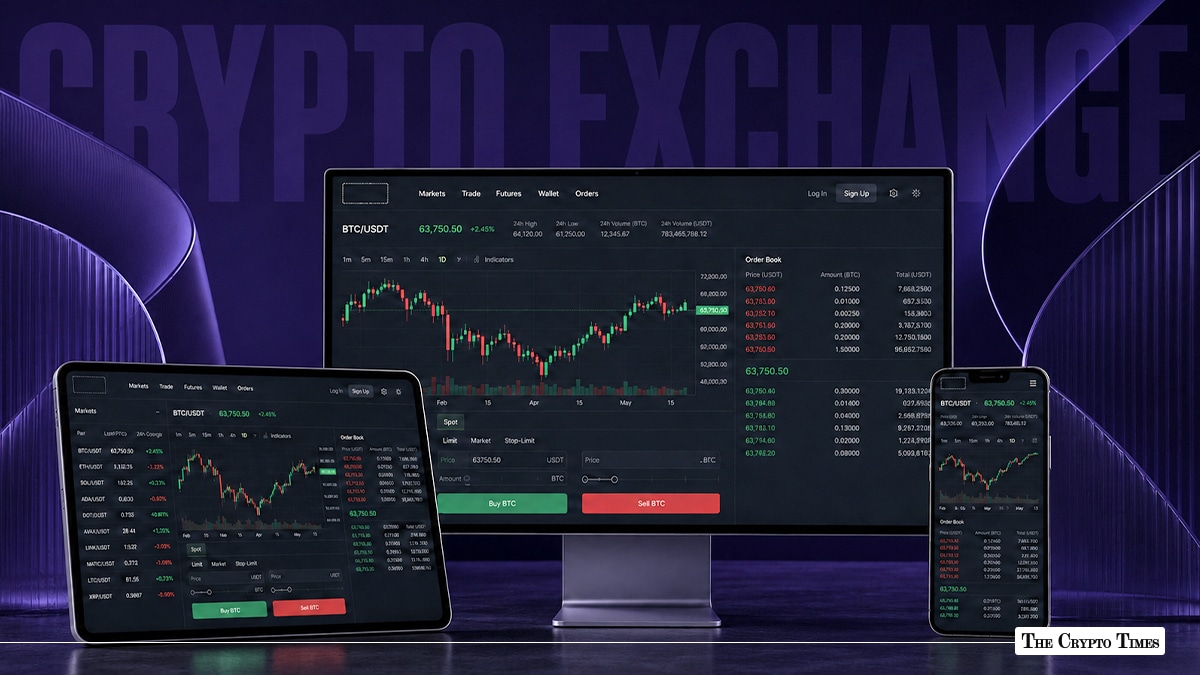
Launching a cryptocurrency exchange no longer necessarily means building a matching engine, wallet infrastructure and trading interface entirely from scratch.
White-label exchange providers offer prebuilt technology that businesses can brand and configure for their own users. Depending on the provider, this may include an order book, trading engine, wallets, administrative tools, liquidity connectivity, KYC integrations and mobile applications.
But buying exchange software is only one part of launching an exchange.
A business that takes custody of customer assets, converts fiat and crypto, matches customer orders or markets trading services in regulated jurisdictions may face licensing, anti-money laundering, custody, capital, market-conduct and reporting requirements.
A white-label provider supplies technology. It does not automatically supply regulatory permission to operate.
Key Highlights
- White-label crypto exchange software allows a company to launch trading infrastructure without developing the complete technology stack internally.
- A white-label licence is not a financial-services licence.
- The operator remains responsible for determining where it can legally offer services.
- Custodial exchanges, non-custodial swap platforms and crypto brokerages have materially different infrastructure and regulatory requirements.
- Security should be evaluated across custody, identity, cloud infrastructure, APIs, administrators, withdrawals and third-party dependencies—not just the matching engine.
- Liquidity advertised by a software provider should be independently verified, including counterparties, spreads, depth, failover arrangements and conflicts.
- Regulatory requirements have tightened significantly: the EU MiCA transition ended in July 2026, while Travel Rule implementation continues expanding globally.
- The cheapest software package is rarely the cheapest exchange to operate once compliance, banking, custody, audits, liquidity and staffing are included.
What is a white-label crypto exchange?
A white-label crypto exchange is prebuilt trading software that another company licenses, brands and operates as its own platform.
Instead of internally developing every component, the operator uses infrastructure supplied by a technology vendor.
Depending on the product, a white-label package may include:
- Matching engine
- Order-management system
- Spot trading interface
- Wallet infrastructure
- Admin dashboard
- User accounts
- KYC integrations
- Liquidity connectivity
- APIs
- Trading charts
- Risk controls
- Mobile applications
- Reporting tools
The exchange operator generally controls the brand, commercial terms, customer relationships and product configuration.
However, the provider may continue operating significant portions of the underlying technology.
That distinction creates vendor and outsourcing risk.
White label vs. turnkey vs. exchange API
These terms are often mixed together even though they can describe very different businesses.
| Model | What the business receives | Typical use case | Key consideration |
|---|---|---|---|
| Full white-label exchange | Branded order book, accounts, wallets and trading infrastructure | Launching a conventional crypto exchange | Operator may have extensive custody and regulatory obligations |
| Turnkey exchange | Technology plus additional integrations such as liquidity, KYC and payments | Faster end-to-end deployment | Greater dependency on one vendor |
| Non-custodial exchange/swap API | Swap routing or conversion embedded into another product | Wallets, media platforms, fintech apps | Different custody and licensing profile from a conventional CEX |
| Crypto brokerage | Users buy or sell against broker or aggregated liquidity | Simple retail trading | Pricing, execution and counterparty obligations differ from an order-book exchange |
| Self-hosted/open-source exchange | Software that the operator deploys or modifies | Technically capable teams seeking greater control | Requires stronger internal DevOps, security and maintenance capabilities |
Do not choose a provider before deciding which business you are actually building.
How does a white-label crypto exchange work?
A typical white-label relationship involves several layers.
Technology provider
The provider may operate or supply:
- Trading engine
- Exchange backend
- Front-end interfaces
- APIs
- Wallet integrations
- Administrative controls
- Monitoring infrastructure
Exchange operator
The branded exchange may remain responsible for:
- Legal entity
- Licensing
- Customer agreements
- Marketing
- Customer support
- Compliance program
- Asset listings
- Fee schedule
- Banking relationships
- Customer complaints
- Regulatory reporting
Custodian or wallet provider
Customer crypto may be held:
- Directly by the exchange
- Through a third-party custodian
- Through a white-label provider
- Using an MPC or multisignature wallet architecture
- Outside the platform entirely in a non-custodial model
The legal and security consequences differ significantly between these arrangements.
Liquidity providers
Liquidity may come from:
- Market makers
- Other centralized exchanges
- OTC counterparties
- Internal order books
- Aggregators
- Decentralized markets
“Built-in liquidity” should therefore never be treated as a simple feature checkbox.
Advantages and disadvantages of white-label exchanges
| Advantages | Trade-offs |
|---|---|
| Less technology development from scratch | Dependence on external vendor |
| Faster technical deployment | Licensing may still take considerable time |
| Existing exchange functionality | Customization may be limited |
| Lower internal engineering burden | Recurring licensing or revenue-share fees |
| Existing integrations | Third-party security and outage exposure |
| Access to liquidity connectivity | Liquidity quality must be independently assessed |
| Vendor maintenance and updates | Migration to another provider may be difficult |
White-label technology can reduce engineering work, but it can simultaneously increase concentration risk if one provider controls trading, custody, liquidity and compliance infrastructure.
What does a white-label crypto exchange actually cost?
There is no meaningful universal price.
The software licence is only one component of the total cost of operating an exchange.
Total cost of ownership
| Cost category | Examples |
|---|---|
| Technology | Setup fee, monthly licence, hosting, APIs, mobile apps |
| Revenue share | Percentage of trading or platform revenue |
| Licensing and legal | Regulatory applications, counsel, corporate structure |
| Compliance | KYC, AML, Travel Rule, sanctions and blockchain analytics |
| Custody | Wallet provider, custodian, key-management infrastructure |
| Liquidity | Market-maker retainers, minimum balances, spreads |
| Banking and payments | Accounts, fiat rails, card processors, on/off ramps |
| Security | Penetration tests, audits, monitoring and incident response |
| Insurance | Cyber, crime, directors and officers or custody cover where available |
| Staff | Compliance, MLRO, operations, finance, support and engineering |
| Data and infrastructure | Cloud, logs, backups, market data and disaster recovery |
| Regulatory reporting | External audit, financial reporting and record retention |
When comparing quotations, calculate three-year total cost of ownership, not just the setup fee.
A cheap software licence paired with expensive revenue sharing, custody and liquidity terms may ultimately cost more than a higher-priced enterprise deployment.
What licences does a crypto exchange need?
There is no global crypto-exchange licence.
Requirements depend on:
- Where the company is established
- Where customers are located
- Whether the platform has custody
- Whether fiat is handled
- Whether the business operates an order book
- Whether derivatives are offered
- Which crypto assets are listed
- Whether the platform acts as principal, agent or broker
- How services are marketed
A licence obtained in one country does not normally provide unrestricted access to customers worldwide.
Major regulatory frameworks in 2026
| Market | Current position |
|---|---|
| European Union | Crypto-asset service providers generally require authorization under MiCA. The EU-wide transition period ended July 1, 2026. |
| United Kingdom | In-scope crypto businesses must currently register with the FCA under the Money Laundering Regulations. The UK’s broader FSMA crypto regime is expected to begin on October 25, 2027. |
| Dubai | Entities carrying out regulated virtual-asset activities in or from Dubai generally require authorization from VARA, except within the DIFC jurisdiction. |
| Singapore | Buying or selling digital payment tokens or operating a platform facilitating DPT exchange falls within regulated payment-service categories under the Payment Services Act. |
| Hong Kong | Virtual-asset trading platforms operating in Hong Kong or actively marketing to Hong Kong investors fall under the SFC’s VATP licensing framework. |
| United States | Requirements can involve FinCEN MSB registration, state money-transmission laws and potentially securities or derivatives regulation depending on services and assets offered. |
| Seychelles | The Virtual Asset Service Providers Act 2024 creates a dedicated authorization framework including exchange service providers. |
| Cayman Islands | Virtual-asset trading platforms and custodians operating in or from Cayman require licensing under the VASP regime. |
| BVI | VASPs operate under the Virtual Asset Service Providers Act, with AML/CFT and Travel Rule compliance receiving active supervisory attention in 2026. |
This table is a high-level overview, not legal advice.
Before selecting software or incorporating a company, obtain advice covering both the home jurisdiction and every market in which customers will be solicited.
What compliance systems does an exchange need?
A credible compliance program extends far beyond a KYC widget.
Customer due diligence
The platform needs processes for:
- Identity verification
- Risk classification
- Beneficial ownership
- Enhanced due diligence
- Source-of-funds checks where required
Sanctions and screening
Screening should address applicable sanctions lists and higher-risk persons or entities.
Transaction monitoring
An exchange should be able to detect patterns requiring investigation, including:
- Rapid movement of assets
- Structuring
- Suspicious deposits and withdrawals
- Exposure to high-risk wallets
- Unusual account behaviour
Blockchain analytics
On-chain screening tools can help assess wallet exposure and transaction history.
They do not replace a complete AML program.
Travel Rule
Travel Rule requirements increasingly require regulated crypto businesses to transmit or obtain specified originator and beneficiary information for covered transfers.
FATF reported in July 2026 that 83% of surveyed jurisdictions had enacted Travel Rule legislation.
Recordkeeping and reporting
A platform may need to maintain:
- Customer records
- Transaction data
- Order records
- Compliance investigations
- Communications
- Suspicious-activity reports
- Financial statements
- Regulatory reports
Exact requirements depend on jurisdiction.
What security features should a white-label exchange have?
Security should be assessed as an architecture rather than a checklist of marketing terms.
Custody and key management
Evaluate:
- Hot/warm/cold wallet design
- MPC or multisignature policy
- Hardware-backed keys
- Signing thresholds
- Separation of duties
- Withdrawal approvals
- Address allowlisting
- Daily withdrawal limits
- Emergency freezes
- Backup and recovery
- Key-rotation procedures
Do not assume that “MPC” automatically means safer.
Threshold cryptography can reduce single-key risk, but the implementation and operational controls still matter. Research presented through NIST has demonstrated that poorly designed threshold wallet implementations can themselves contain exploitable weaknesses.
User authentication
At minimum, support strong multifactor authentication.
For high-risk administrative accounts, phishing-resistant authentication such as hardware-backed FIDO credentials should be strongly considered. Current NIST guidance recommends or requires phishing resistance at higher assurance levels.
Administrative security
Ask:
- Can provider staff access customer funds?
- Can provider staff change wallet settings?
- How are privileged accounts authenticated?
- Are actions logged?
- Can the exchange restrict staff by role?
- Are production changes independently approved?
Application security
Require evidence of:
- Secure development lifecycle
- Independent penetration testing
- Vulnerability management
- Dependency scanning
- Patch-management policy
- Responsible disclosure or bug bounty
- API rate limiting
- DDoS mitigation
Resilience
Ask for tested targets covering:
- Uptime
- Recovery time objective
- Recovery point objective
- Disaster recovery
- Database failover
- Geographic redundancy
- Backup restoration
A provider saying “99.99% uptime” is less valuable than evidence showing how the system behaves during a real failure.
How to evaluate the trading engine
Do not select a matching engine solely because a provider advertises a large “transactions per second” figure.
Ask for:
| Metric | Why it matters |
|---|---|
| Orders per second | Measures order-processing capacity |
| Trades per second | Measures completed executions |
| P50/P95/P99 latency | Shows performance under realistic load |
| Cancel latency | Critical during volatile markets |
| Recovery behaviour | Shows what happens after node/server failure |
| Order sequencing | Determines deterministic market behaviour |
| Load-test methodology | Makes performance claims comparable |
| Audit trail | Necessary for disputes and regulatory review |
A million “transactions per second” in an internal benchmark tells readers very little unless the workload and latency conditions are disclosed.
How should liquidity be evaluated?
Liquidity is one of the most misunderstood elements of white-label exchange software.
Ask the provider:
- Who are the liquidity counterparties?
- Are they disclosed?
- Is liquidity shared with other exchanges?
- What spreads exist during normal conditions?
- How deep is the order book at 10, 50 and 100 basis points?
- Is liquidity available during high volatility?
- What happens if the primary provider disconnects?
- Are multiple providers aggregated?
- Who bears counterparty risk?
- Does the provider trade against the exchange or its users?
Also inspect whether displayed liquidity is real executable liquidity rather than replicated or indicative order-book data.
Also Read: All about Crypto Futures Trading: A Step-by-Step Guide
Custodial vs. non-custodial white-label exchanges
This distinction can materially change the risk profile.
| Custodial exchange | Non-custodial exchange | |
|---|---|---|
| Holds user assets | Usually yes | Generally no |
| Private-key responsibility | Exchange/custodian | User |
| Withdrawal infrastructure | Required | Often limited/not applicable |
| Custody risk | Higher | Lower platform custody exposure |
| UX | Usually simpler for active trading | User retains more wallet responsibility |
| Regulatory impact | Often broader | Still jurisdiction- and service-dependent |
| Liquidity model | Internal/aggregated order book | Often routed to external venues |
Calling both models simply “white-label crypto exchanges” without explaining this difference can mislead readers.
Examples of white-label providers to research
This is not a ranking or endorsement. The Crypto Times has not independently penetration-tested or benchmarked the providers below. Features and commercial terms should be verified directly before procurement.
| Provider | Broad model | Notable positioning |
|---|---|---|
| AlphaPoint | Institutional exchange infrastructure | White-label trading infrastructure, liquidity and regulated-market tooling. |
| HollaEx | Hosted and open-source exchange software | Open-source white-label stack with cloud/self-hosting options and configurable custody integrations. |
| B2Broker | Turnkey exchange/broker infrastructure | Branded exchange stack including trading, KYC workflows and mobile capabilities. |
| ChangeNOW | Non-custodial swap/embedded exchange | White-label and API products oriented toward non-custodial crypto conversion rather than a conventional custodial order book. |
Because the products differ substantially, they should not be ranked using one generic “best provider” score.
White-label provider due-diligence checklist
Before signing a contract, evaluate the following.
| Area | Questions to ask |
|---|---|
| Regulatory compatibility | Can the architecture satisfy the requirements of your intended regulator? |
| Ownership | Who owns the software and customer data? |
| Custody | Who ultimately controls private keys? |
| Security | What independent audits and penetration tests exist? |
| Liquidity | Which counterparties supply executable liquidity? |
| SLA | What uptime and response commitments are contractual? |
| Data residency | Where are customer and transaction data stored? |
| Compliance | Can KYC, sanctions, blockchain analytics and Travel Rule systems be integrated? |
| Market surveillance | Can manipulation and abusive trading patterns be investigated? |
| Scalability | What workload has been independently tested? |
| Customization | What can and cannot be modified? |
| Exit plan | Can data and customers be migrated to another provider? |
| Source-code escrow | What happens if the vendor becomes insolvent? |
| Pricing | Setup, monthly, transaction, revenue-share and integration fees? |
| Support | Is 24/7 production support contractually guaranteed? |
One of the most important questions is rarely asked:
How do we leave this provider?
Migration, data portability and business-continuity rights should be negotiated before launch—not after an outage or commercial dispute.
Step-by-step: How to launch a white-label crypto exchange
1. Define the exact business model
Decide whether the platform will operate as:
- Spot exchange
- Broker
- Non-custodial swap service
- Institutional venue
- Fiat-to-crypto platform
- Derivatives exchange
Do this before choosing software.
2. Define target countries and customers
Specify:
- Countries served
- Retail vs. institutional
- Fiat currencies
- Assets
- Trading products
This determines much of the regulatory analysis.
3. Map regulated activities
Engage qualified counsel to determine which activities require authorization.
Do not incorporate first and then attempt to make the licence fit the product.
4. Build the compliance framework
Determine:
- Customer-risk framework
- KYC
- AML
- Sanctions
- Travel Rule
- Reporting
- Transaction monitoring
- Asset-listing process
5. Issue a provider RFP
Compare at least several vendors using the same requirements.
Do not compare one provider’s marketing page with another provider’s sales pitch.
Use a standardized scoring matrix.
6. Select custody architecture
Decide:
- Self custody by operator
- Qualified/regulated third-party custodian
- Provider-managed wallet infrastructure
- MPC
- Multisignature
Document who can move funds in every scenario.
7. Secure liquidity
Negotiate:
- Spreads
- Depth
- Settlement
- Counterparty exposure
- Failover
- Market-maker obligations
8. Establish fiat infrastructure
Where fiat is supported, secure compliant:
- Bank accounts
- Payment processors
- On/off ramps
- Reconciliation
- Treasury systems
Banking should not be treated as a task to complete after the software is finished.
9. Test the platform independently
Test:
- Deposits
- Withdrawals
- Trading
- KYC
- Account recovery
- Admin access
- Market volatility
- Failed nodes
- Provider outage
- Wallet compromise scenario
- Liquidity disconnect
- Data restoration
- Customer-support escalation
10. Conduct security assessment
An independent security team should review the production configuration before launch.
11. Launch with controlled scope
A limited initial set of assets and markets makes operational monitoring easier than launching dozens or hundreds of tokens immediately.
12. Treat launch as the beginning
An exchange needs continuous:
- Monitoring
- Patching
- Regulatory reporting
- Compliance review
- Security testing
- Customer support
- Liquidity management
The software may be white-label. The responsibility is not.
When is a white-label exchange a good choice?
A white-label platform may make sense where a business:
- Has a clearly defined customer market
- Has a viable regulatory pathway
- Needs faster technology deployment
- Does not need a highly unique trading architecture
- Has internal compliance and operations capability
- Is comfortable relying on external technology
When should a business build its own exchange?
A custom build may be more appropriate where:
- Proprietary execution is a competitive advantage
- Very specific infrastructure is required
- The business needs complete architectural control
- Vendor dependency creates unacceptable risk
- The platform operates at sufficiently large scale to justify a permanent engineering organization
Some organizations ultimately use a hybrid approach—licensing infrastructure initially while gradually replacing selected components internally.
Common mistakes when launching a white-label crypto exchange
Choosing a jurisdiction only because it looks “crypto-friendly”
A low-cost home licence does not automatically provide access to larger foreign markets.
Choosing the cheapest provider
Total operating cost matters more than introductory software pricing.
Confusing technology compliance with regulatory compliance
A vendor may provide KYC integration without making the operator compliant.
Assuming built-in liquidity is guaranteed liquidity
Ask who actually supplies it and under what contractual conditions.
Offering too many tokens at launch
Every asset creates listing, liquidity, wallet, monitoring and potentially legal work.
Allowing one vendor to control everything
Technology, custody, compliance and liquidity concentration can create a major single point of failure.
Ignoring the exit strategy
Migrating users, balances and transaction records can become extremely difficult when the contractual relationship ends.
Conclusion
White-label crypto exchange technology can significantly reduce the engineering required to enter the digital-asset trading market.
It cannot eliminate the difficult parts of running an exchange.
Regulation, custody, liquidity, financial crime prevention, security, banking, market surveillance and operational resilience remain core responsibilities of the business serving customers.
That distinction is even more important in 2026 as crypto regulation becomes more formalized. MiCA’s transitional regime has ended in the European Union, major financial centers maintain dedicated licensing regimes, and Travel Rule implementation continues expanding internationally.
For entrepreneurs and financial institutions, the correct starting question is therefore not:
“Which white-label provider can launch my exchange fastest?”
It is:
“What regulated business are we building, where will it operate, and which technology can support that model safely for the long term?”
Once those questions are answered, white-label technology becomes much easier to evaluate.
Frequently asked questions
1. What is a white-label crypto exchange?
A white-label crypto exchange is prebuilt trading software licensed to another business, which operates it under its own brand. The provider may supply components such as trading, wallets, APIs, liquidity connectivity and administration tools.
2. Is a white-label crypto exchange legal?
White-label software itself is legal technology. Whether the resulting exchange may operate depends on the company’s activities, jurisdiction, customers, assets and applicable financial regulations.
3. Does a white-label provider include a crypto licence?
Not necessarily. A technology licence and a regulatory licence are separate. Unless a specific legal arrangement explicitly permits otherwise, the exchange operator must establish its own authorization pathway.
4. How much does a white-label crypto exchange cost?
There is no universal price. Costs can include software setup, monthly licensing, revenue share, legal fees, regulatory licensing, custody, liquidity, KYC, AML, banking, audits, security, insurance and staff.
5. How long does it take to launch?
The software may be deployable much faster than a custom platform, but full launch time depends on licensing, banking, compliance, custody, testing and other integrations. A technology deployment date should not be confused with regulatory permission to begin serving customers.
6. Are white-label exchanges secure?
They can be secure, but white-label technology is not automatically safer than custom software. Security depends on architecture, implementation, provider controls, custody, configuration, staff access, testing and ongoing maintenance.
7. Is MPC better than multisignature custody?
Not universally. MPC and multisignature systems provide different operational and cryptographic models. The appropriate design depends on the threat model, key distribution, policy controls, recovery requirements and implementation quality.
8. Can I launch an exchange with no KYC?
That depends on the service and jurisdiction, but regulated custodial exchanges commonly face customer-identification and AML obligations. Attempting to avoid compliance by choosing an offshore entity can create significant legal exposure.
9. Can one crypto licence be used worldwide?
Generally no. Authorization in one jurisdiction does not automatically permit a company to market to or serve customers in every other jurisdiction.
10. What is the difference between a white-label exchange and a non-custodial swap platform?
A conventional exchange may hold customer assets and maintain accounts or an order book. A non-custodial swap platform typically routes exchanges while users retain control of their wallets. Their technology and regulatory profiles can differ materially.
11. What should I ask a white-label provider before signing?
Ask about custody, security audits, liquidity counterparties, regulatory compatibility, data ownership, uptime, incident history, disaster recovery, APIs, pricing, compliance integrations and the process for migrating away from the provider.
12. Do I need my own liquidity provider?
Not always. Some white-label vendors provide access to aggregated liquidity or market makers. Operators should still identify the underlying counterparties and independently evaluate depth, spreads and failover arrangements.
13. Is a white-label exchange better than building from scratch?
Neither model is universally better. White-label software can reduce development time and cost, while custom infrastructure provides greater architectural control. The correct choice depends on scale, technical requirements, regulatory obligations and long-term strategy.
Disclaimer: This article is for educational and informational purposes only and does not constitute legal, regulatory, investment or financial advice. Crypto-exchange licensing requirements differ by jurisdiction and business model. Businesses should obtain advice from qualified legal and compliance professionals before launching or marketing services.
Disclaimer:
Some elements of this content may have been enhanced with the help of our artificial intelligence (AI) assistants for purposes such as basic refinement, review, image generation, and translation to deliver high-quality news in a shorter time frame. However, all AI-assisted content is reviewed and approved by our team to ensure accuracy, fairness, and editorial integrity.