Crypto wallets used to have a simple job: hold assets, sign transactions, and connect users to decentralized applications. In 2026, that definition is changing fast.
Swaps, perpetual futures, prediction markets, portfolio tracking, token discovery, staking, and cross-chain tools are moving directly into wallet interfaces. Instead of jumping between wallets, decentralized exchanges, portfolio dashboards, bridges, and trading platforms, users are increasingly doing more from one place.
That does not mean every wallet is becoming an exchange. It means the crypto wallet is becoming the main interface for onchain activity.
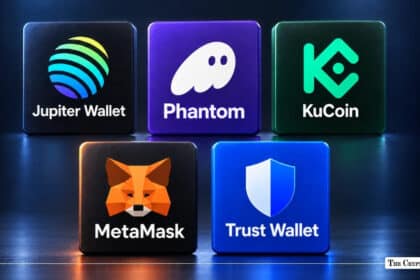
This article is not a ranking of the best crypto wallets; rather, it highlights five wallets that show how the category is evolving from simple self-custody tools into broader trading and portfolio-management apps.
Key Highlights
- Crypto wallets are adding trading features such as swaps, perps, prediction markets, and limit orders.
- Jupiter and Phantom are leaning heavily into Solana trading and market access.
- MetaMask remains a major Ethereum and EVM gateway, but is adding perps and prediction markets.
- KuCoin Web3 Wallet and Trust Wallet are expanding around multi-chain access.
- These tools add convenience, but also introduce risks such as liquidation, slippage, smart-contract exposure, and third-party integration risk.
Quick Comparison
| Wallet | Main Strength | Trading Features | Best Suited For |
|---|---|---|---|
| Jupiter Wallet | Solana execution | Swaps, portfolio tracking, DeFi positions | Active Solana users |
| Phantom | Mobile and desktop trading | Perps, prediction markets, Phantom Terminal | Users who want wallet-native trading |
| KuCoin Web3 Wallet | Multi-chain execution | Swaps, perps, limit orders, tokenized assets | Multi-chain traders |
| MetaMask | Ethereum and EVM access | Swaps, bridging, perps, prediction markets | EVM users and dApp users |
| Trust Wallet | Broad chain coverage | Swaps, staking, perps, dApps | Users who want wide multi-chain access |
How We Selected These Wallets
We selected wallets that show clear movement beyond basic storage into trading, market discovery, portfolio management, or onchain execution. The list focuses on wallets with native or integrated features such as swaps, perpetual futures, prediction markets, cross-chain access, DeFi tracking, limit orders, or tokenized asset support.
This is not an investment recommendation or a security endorsement. Users should review each wallet’s supported regions, fees, risks, and custody model before using any trading feature.
1. Jupiter Wallet
Jupiter Wallet takes a trading-first approach by building around Jupiter’s wider Solana infrastructure.
The wallet is designed for users who want to manage Solana assets, trade tokens, and track onchain positions without constantly moving between separate tools. Jupiter’s ecosystem includes swaps, portfolio views, and DeFi position tracking. Its Jupiter Portfolio tool says users can track holdings, positions, yield, and airdrops across more than 190 Solana protocols.
For active Solana users, this makes Jupiter less of a standalone storage wallet and more of a trading and portfolio interface for the Solana ecosystem. It is especially useful for users who already rely on Jupiter for swap routing and want wallet access tied closely to Solana DeFi activity.
- What changed: Jupiter is positioning the wallet around execution, portfolio visibility, and Solana DeFi access.
- Best suited for: Active Solana users who want integrated trading and DeFi management.
- Risk note: Jupiter is Solana-focused, so users who want broad multi-chain coverage may still need another wallet.
2. Phantom
Phantom began as a Solana wallet but has expanded into a broader trading interface. Users can trade perpetual futures through Phantom, with Phantom’s perps feature powered by Hyperliquid. Phantom also offers prediction markets, allowing eligible users to trade real-world event outcomes from inside the wallet experience.
For more active traders, Phantom Terminal brings Solana token trading, Hyperliquid perps, charts, real-time market data, and desktop execution into a dedicated interface.
The result is a bridge between a consumer-friendly wallet and a more advanced trading terminal. Phantom is not just helping users hold assets; it is helping them discover, trade, and manage market exposure across devices.
- What changed: Phantom has moved beyond Solana storage into perps, prediction markets, and a desktop trading terminal.
- Best suited for: Users who want a streamlined trading experience across mobile and desktop.
- Risk note: Perps are leveraged products and can lead to liquidation. Prediction markets may also be restricted depending on jurisdiction.
3. KuCoin Web3 Wallet
KuCoin Web3 Wallet takes a broader multi-chain approach, combining self-custody with access to crypto-native and tokenized markets.
The wallet brings together cross-chain swaps, market discovery, DApp access, and trading tools inside a self-custodial interface. KuCoin has also expanded the wallet toward tokenized real-world asset access, including support for Robinhood Chain and tokenized asset ecosystems.
A recent KuCoin update added intent-based swaps through UniswapX and PancakeSwapX, along with limit orders powered by 1inch. These tools are designed to help users move from discovery to execution without giving up custody of their assets.
This makes KuCoin Web3 Wallet an example of how exchange-linked Web3 wallets are trying to combine self-custody with broader market access.
- What changed: KuCoin Web3 Wallet is expanding from access and custody into execution, tokenized assets, and advanced order tools.
- Best suited for: Multi-chain users who want broad market access and trading tools while retaining self-custody.
- Risk note: Tokenized assets and advanced trading features may have jurisdiction restrictions and may not provide the same rights as traditional securities or brokerage products.
4. MetaMask
MetaMask remains one of the most recognizable gateways into Ethereum and EVM-based applications. Its role, however, is expanding beyond simply connecting users to decentralized apps.
MetaMask already supports swaps, bridging, portfolio tools, and dApp connectivity. It has also added newer market products, including perpetual futures trading through MetaMask Mobile and Extension. MetaMask’s support page says perps are powered by Hyperliquid.
MetaMask Mobile also integrates prediction markets powered by Polymarket for eligible users. That means users can access certain prediction markets from within MetaMask rather than treating the wallet only as a signing tool.
MetaMask’s advantage is its reach. It remains deeply connected to Ethereum and EVM ecosystems, so adding trading markets inside the wallet could make MetaMask more useful for users who already rely on it for dApps, DeFi, NFTs, and token transfers.
- What changed: MetaMask is bringing more trading and market activity into its established EVM wallet experience.
- Best suited for: Ethereum and EVM users who want dApp connectivity alongside integrated trading tools.
- Risk note: Perps and prediction markets involve additional risk and may not be available to all users.
5. Trust Wallet
Trust Wallet has traditionally stood out for breadth, giving users access to assets across many blockchains. Its feature set now goes well beyond storage.
Users can swap assets, stake tokens, connect to dApps, and manage multi-chain portfolios. Trust Wallet also offers in-app perpetual futures trading through Hyperliquid and Aster, allowing users to access perps without leaving self-custody.
This makes Trust Wallet a useful example of the multi-chain wallet model. Rather than specializing around one ecosystem, it aims to give users broad access across networks and activity types.
For users who hold assets across different chains, that breadth matters. A wallet that can support swaps, staking, dApps, and perps from one interface may reduce the need to constantly switch between tools.
- What changed: Trust Wallet is adding more trading and DeFi tools on top of broad multi-chain support.
- Best suited for: Users who prioritize wide network coverage and built-in trading access.
- Risk note: Multi-chain access adds convenience, but users still face bridge risk, smart-contract risk, approval risk, and perps liquidation risk.
Risks to Know Before Using Trading Wallets
Trading features can make wallets more useful, but they also make wallet security and risk management more important.
Users should understand the following risks:
- Perpetual futures can cause liquidation. Perps are leveraged products and can move quickly against a trader.
- Prediction markets may be restricted. Availability can depend on jurisdiction and eligibility.
- Swaps can involve slippage. Fast-moving or low-liquidity tokens can execute at worse prices than expected.
- Wallet integrations depend on third parties. Features may rely on protocols such as Hyperliquid, Polymarket, 1inch, UniswapX, PancakeSwapX, Aster, or other infrastructure.
- Self-custody requires responsibility. Users must protect seed phrases, private keys, approvals, and transaction signatures.
- Tokenized assets may carry legal limits. A tokenized asset is not always the same as owning the underlying traditional asset directly.
Convenience should not be confused with safety. A wallet can simplify access, but it cannot remove market, contract, custody, or regulatory risks.
How to Choose the Right Wallet
The right wallet depends on what the user wants to do.
A Solana trader may prefer Jupiter Wallet or Phantom. An Ethereum and EVM user may still rely on MetaMask. A multi-chain user may look at KuCoin Web3 Wallet or Trust Wallet. A user focused on perps should check which third-party venue powers the feature, what fees apply, what assets are supported, and whether the product is available in their region.
Users should also ask a basic question before choosing any wallet:
Do I only need storage, or do I need a trading interface?
As wallets add more features, that distinction will matter more.
The Wallet Is Becoming the Interface
These wallets are taking different routes toward the same destination.
Jupiter is building around Solana execution and DeFi. Phantom is expanding into trading across mobile and desktop. KuCoin Web3 Wallet is leaning into multi-chain markets, tokenized assets, and advanced execution. MetaMask is bringing more market activity into its EVM ecosystem. Trust Wallet is using broad chain coverage to become a wider financial interface.
The common thread is clear: the wallet is becoming less of a gateway users pass through and more of the place where onchain activity actually happens.
For crypto users, choosing a wallet may increasingly be less about where they can hold assets and more about what they can do without leaving it.
FAQ
What is an all-in-one crypto wallet?
An all-in-one crypto wallet combines asset storage with tools such as swaps, staking, portfolio tracking, perpetual futures, prediction markets, bridges, and dApp access.
Are trading wallets safe?
Trading wallets can be useful, but they carry risks including private-key loss, phishing, smart-contract bugs, slippage, failed transactions, liquidation, and third-party integration risk.
Can users trade perpetual futures inside crypto wallets?
Yes, some wallets now integrate perpetual futures through third-party venues. These products are high-risk and may not be available in every country.
Which wallet is better for Solana trading?
Jupiter Wallet and Phantom are both strong Solana-focused options, but they serve different needs. Jupiter leans toward Solana execution and DeFi management, while Phantom offers a broader consumer wallet and trading interface.
Also Read: 6 Best Crypto Market Data Platforms in 2026, From Beginner to Advanced