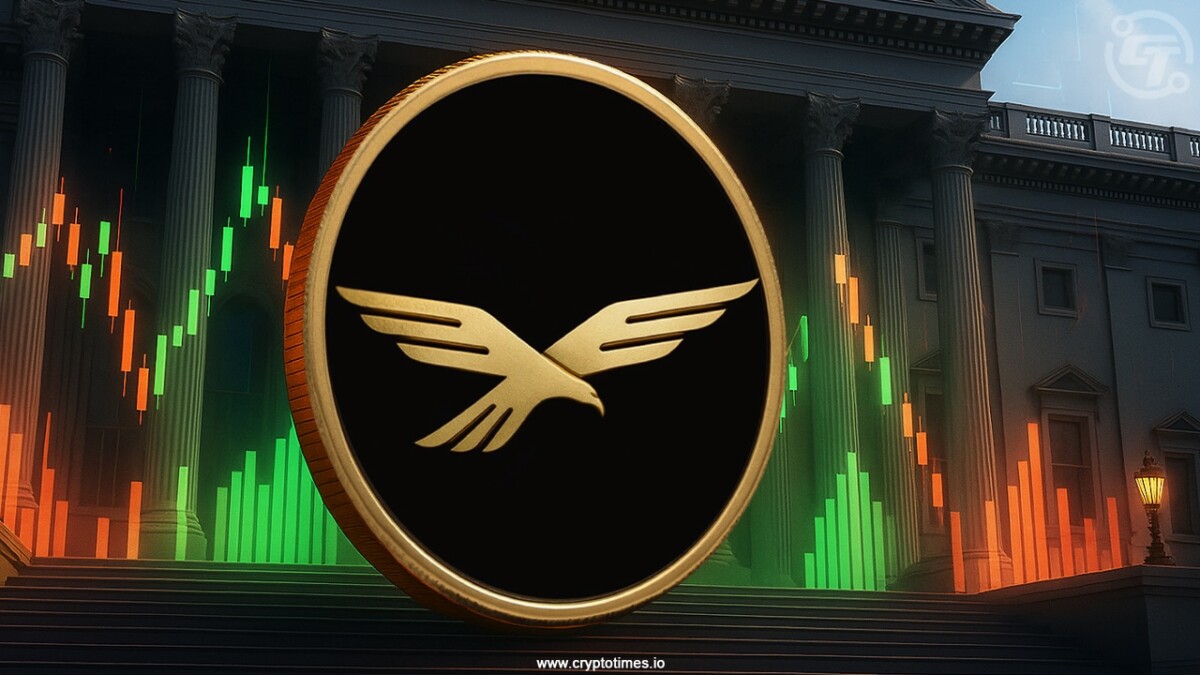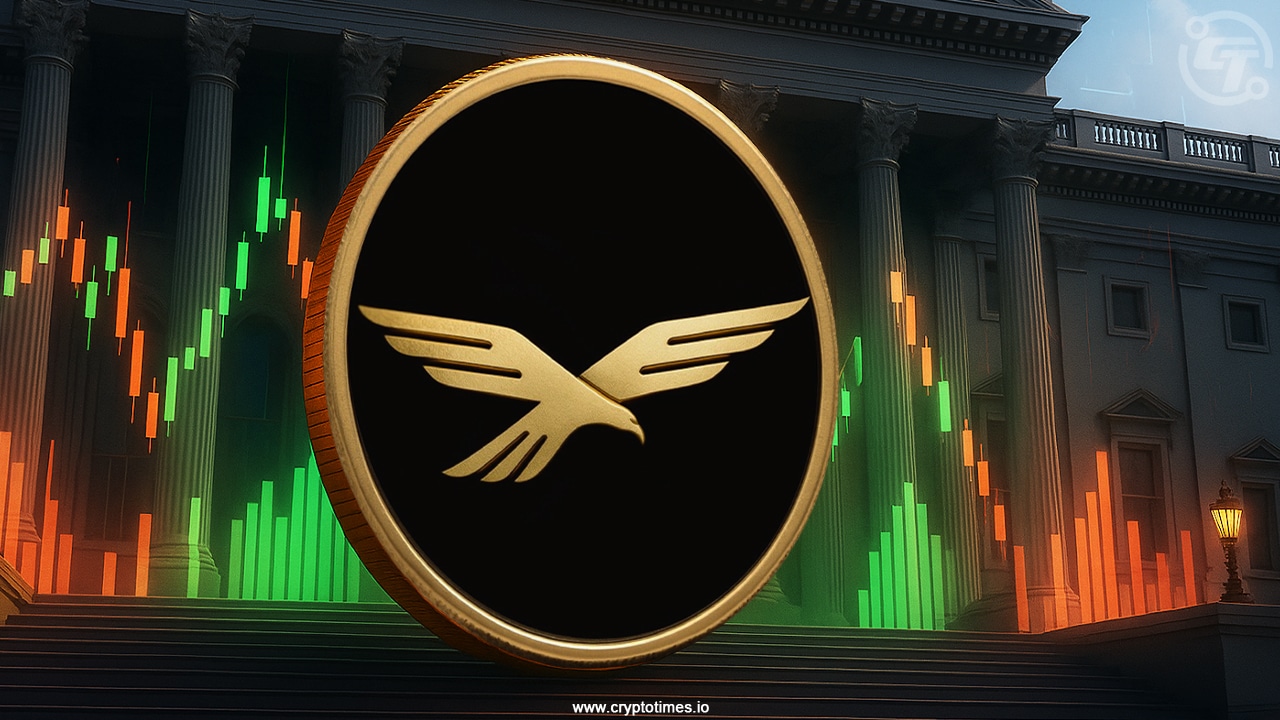
In the relentlessly fast-paced world of cryptocurrency, new trends emerge overnight, often driven by hype and speculation. Recently, the World Liberty Financial (WLFI), a DeFi project closely associated with the U.S. President Donald Trump’s family, has captured the market’s attention with significant trading activity. While it’s easy to dismiss this as another fleeting crypto project, a closer look reveals something far more significant: a prime example of a powerful and growing sector known as Political Finance, or “PoliFi.”
The emergence of tokens like WLFI represents a new frontier where digital assets, political allegiance, and financial speculation converge. This isn’t just about trading charts and market caps; it’s about the fundamental blurring of lines between political support and financial investment.
This article delves into the World Liberty Financial (WLFI) project, explores the broader PoliFi phenomenon it represents, and analyzes the critical questions this trend raises for the future of cryptocurrency, political ethics, and regulatory oversight.
What is World Liberty Financial (WLFI)?
At its core, World Liberty Financial represents itself as a decentralized finance (DeFi) platform. Its stated mission is to create a financial ecosystem that operates outside the control of traditional intermediaries like banks and government institutions, championing principles of financial freedom and censorship resistance. However, what sets WLFI apart from thousands of other DeFi projects is its inextricable link to one of the world’s most recognizable political brands: the Trump family.
The project gained significant media attention due to the direct involvement of Donald Trump Jr., who serves as a key figure and promoter. This connection provides WLFI with a level of name recognition and media exposure that most crypto startups can only dream of. The platform’s narrative is skillfully woven into the broader political message of its backers, appealing to a demographic that is often skeptical of established financial and political systems.
The WLFI token is the native cryptocurrency of this ecosystem. Its primary utility, according to the project’s documentation, is to function as a governance token. This means that holders of WLFI are granted voting rights, allowing them to participate in key decisions regarding the platform’s development and future direction. This model is common in DeFi, intended to foster a sense of community ownership and decentralized control. For supporters, buying and holding WLFI is framed not just as a financial speculation, but as a vote of confidence in the project’s vision and its famous backers.
The project’s profile was further boosted by the involvement of prominent crypto entrepreneur Justin Sun, Founder of the Tron blockchain. Sun’s investment and advisory role lent a degree of crypto-native credibility to the venture, signaling to the market that established players were taking it seriously. The recent listing of the WLFI token on several cryptocurrency exchanges made it accessible to a global audience of traders and investors, and further cemented its status as a significant player in the PoliFi space.
Also Read: Trump’s WLFI Token Starts Trading With $5.4 Billion Market Value
The “PoliFi” Phenomenon Explained
World Liberty Financial does not exist in a vacuum. It is the most high-profile example of the PoliFi trend, a burgeoning category of cryptocurrencies directly inspired by or linked to political figures, ideologies, and events. These tokens transform political support into a tradable, speculative asset.
The PoliFi landscape is diverse. It includes:
- Directly Associated Tokens: Like WLFI, these projects have a formal or informal connection to a political figure or their family.
- Meme Coins: Many PoliFi tokens are meme coins that leverage political imagery and slogans for viral marketing. Tokens with tickers like “MAGA” or those parodying political opponents (such as the Joe Biden-themed “BODEN” or Trump-themed “TREMP” tokens) have seen explosive, albeit volatile, growth. As per CoinMarketCap data, there are a number of political meme coins, which are all combined and valued at over $2 billion.
- Ideological Tokens: Some projects are built around a specific political ideology, such as libertarianism or populism, aiming to build a community of like-minded individuals.
The appeal of PoliFi is multifaceted. For supporters, buying a token is a novel and powerful way to demonstrate allegiance. It’s a digital yard sign, a campaign donation, and a lottery ticket rolled into one. It fosters a sense of belonging to a “digital tribe” united by shared political beliefs and financial interests. For speculators, PoliFi offers an entirely new set of market dynamics. Token prices can surge based on poll numbers, debate performances, election results, or even a single post on X from a political figure. For example, a token named American Party (AP) skyrocketed by over 420% after the billionaire technocrat Elon Musk launched a similar-named political party.
However, this direct link to the chaotic world of politics also makes PoliFi one of the most volatile and high-risk sectors in cryptocurrency. The value of these tokens is not necessarily tied to technological innovation or a viable business model, but to the shifting fortunes of a political campaign. Furthermore, the hype-driven nature of this space makes it a fertile ground for scams and “rug pulls,” where anonymous developers launch a token, pump its price on social media, and then disappear with investors’ funds.
The Blurring Lines: Conflicts of Interest and Regulatory Scrutiny
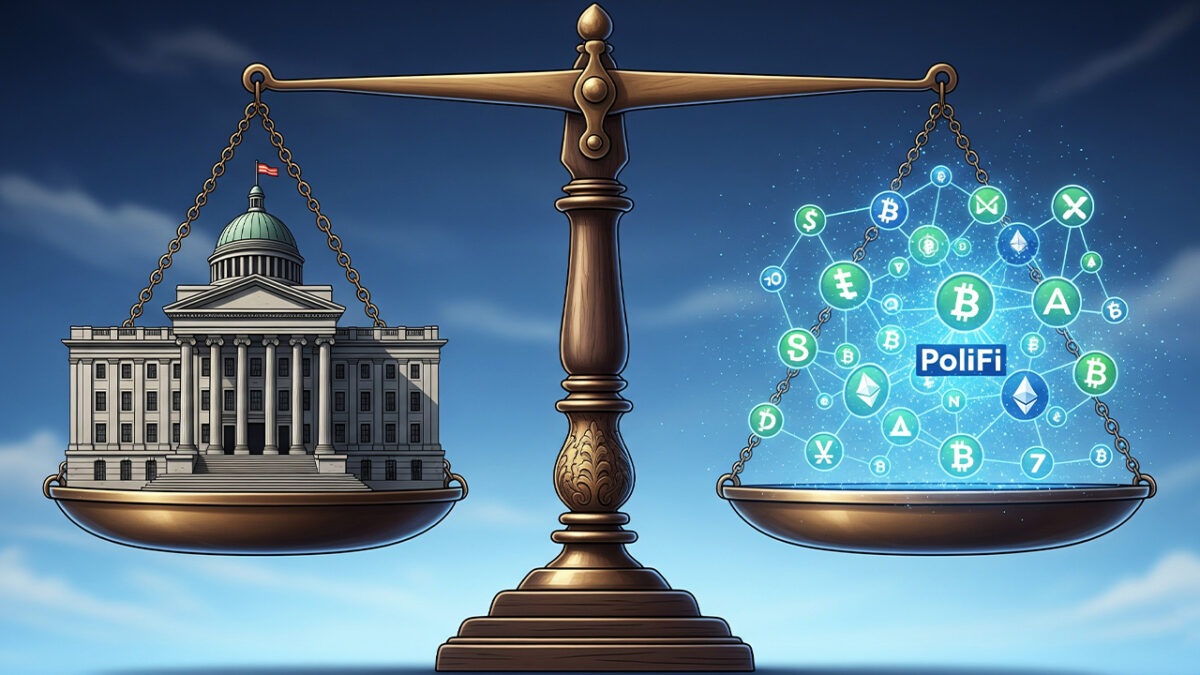
The rise of high-profile PoliFi projects like WLFI brings a host of complex ethical and regulatory challenges to the forefront. When a powerful political family becomes directly involved in a financial product whose value can be influenced by their political actions, it raises immediate and serious questions about conflicts of interest.
Government ethics watchdogs have been quick to point out the potential for abuse. For instance, if a president or their family holds a significant stake in a cryptocurrency, any policy decision, right from executive orders on digital assets to the appointment of regulators, could be perceived as an attempt to manipulate the market for personal gain. This creates a scenario where public office could be used to enrich oneself and one’s associates, eroding public trust in both the political process and the nascent crypto industry.
The central issue is transparency. Traditional financial assets owned by politicians are subject to strict disclosure laws. It is unclear how these rules apply to a decentralized, globally traded cryptocurrency. Can a politician truly divest from an asset if they hold the private keys in a personal digital wallet? How can the public be sure that policy is being made in the national interest, and not in the interest of pumping the value of their family’s token?
This places regulators like the Securities and Exchange Commission (SEC) in a difficult position. The crucial question is how to classify these PoliFi tokens.
- Are they securities? If investors are buying WLFI with the expectation of profit based on the efforts of the Trump family and its promoters, a strong argument can be made that it qualifies as an investment contract under the Howey Test. A security classification would trigger stringent registration and disclosure requirements.
- Are they commodities? This would place them under a different regulatory framework, likely focused on market manipulation.
- Are they simply a new form of political speech or donation? This argument is often made by supporters, but it becomes complicated when the “donation” is a tradable asset that can be sold for a profit.
This regulatory ambiguity creates a gray area that projects like WLFI currently operate within. Until clear rules are established, the risk of ethical conflicts and market manipulation will remain a significant cloud over the PoliFi sector.
The Investor’s Perspective: Opportunity or Minefield?

For traders and investors, the PoliFi space presents a tantalizing but treacherous landscape. The potential for astronomical gains is undeniable, but it is matched by the risk of catastrophic losses.
The bull case for a token like WLFI is built on its unparalleled brand recognition. The Trump name is one of the most powerful brands in the world, capable of commanding immense media attention and mobilizing a loyal base of supporters. This built-in marketing machine can generate a level of hype that drives token prices to staggering heights. A single endorsement, a favorable news event, or a positive election outcome could trigger a massive rally.
However, the bear case is equally compelling. The value of WLFI is inextricably tied to the political fortunes and the public image of a single family. Any political scandal, negative press, or lost election could cause its value to plummet significantly. The token’s utility as a governance tool may be secondary to the political narrative, meaning its long-term value is not supported by a robust technological foundation but by fickle public sentiment. This makes it less of an investment in technology and more of a high-stakes bet on political outcomes.
Investors considering entering the PoliFi arena should exercise extreme caution and conduct thorough due diligence. Rather than getting swept up in the political hype, it is essential to ask critical questions:
- What is the actual utility of the token beyond the political narrative?
- Who is the team behind the project, and are they transparent?
- How is the token supply distributed: Is it concentrated in the hands of a few insiders?
- Is this a long-term project or a short-term marketing ploy?
Ultimately, any allocation to PoliFi tokens should be considered highly speculative and should only represent a small fraction of a diversified investment portfolio.
Conclusion
The surge in interest surrounding the World Liberty Financial token is more than just another crypto news cycle; it is a clear signal that the PoliFi era has arrived. These tokens represent a novel and potent fusion of financial technology, community building, and political activism. They offer new ways for supporters to engage with political movements and for speculators to bet on the outcomes.
However, this innovation comes with profound challenges. The convergence of immense political power and unregulated financial assets creates a minefield of potential ethical conflicts that could undermine faith in both government and the digital economy. As this trend continues to grow, regulators, investors, and the public must grapple with the difficult questions it raises.
The story of WLFI is a landmark case study in this new world. It highlights the immense potential and the significant perils of mixing politics and crypto. As we move forward, the evolution of the PoliFi space will be a critical storyline to watch, not only for its impact on investment portfolios but for what it reveals about the future of political power in the digital age.
Disclaimer: Some elements of this content may have been enhanced with the help of our artificial intelligence (AI) assistants for purposes such as basic refinement, review, image generation, and translation to deliver high-quality content in a shorter time frame. However, all AI-assisted content is reviewed and approved by our team to ensure accuracy, fairness, clarity, and editorial integrity.