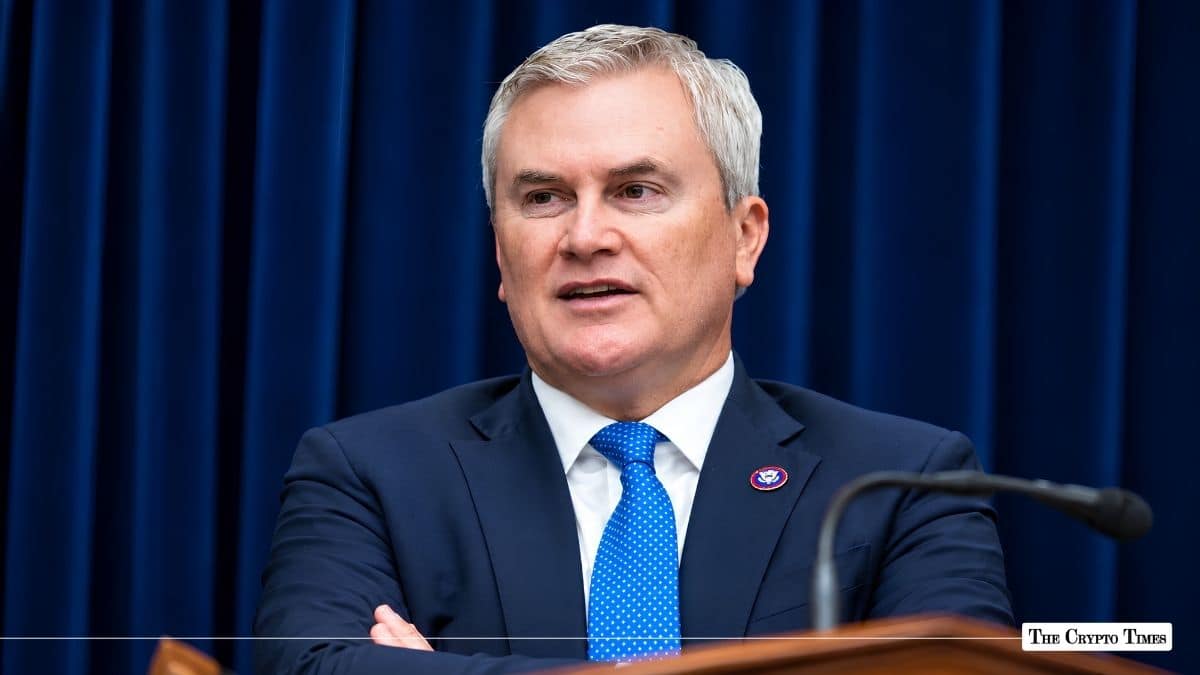
Chairman James Comer, a Kentucky Republican, requested documents and information from the three companies on their identity-verification procedures and systems for detecting, investigating, and reporting suspicious trading.
According to the official release published on Tuesday, the requests broaden a probe that began in May with letters to Kalshi and Polymarket, where the committee is examining whether users have traded on nonpublic information. The earlier investigation remains ongoing, according to the committee.
Comer said the committee is examining whether prediction-market platforms are meeting their legal obligations and taking adequate steps to prevent insider trading.
Hyperliquid trade draws committee scrutiny
In his letter to Hyperliquid CEO Jeff Yan, Comer cited reports of a large leveraged short position on the platform that was opened within minutes of a presidential announcement about U.S. tariff policy in October 2025.
Comer said the timing of the transaction raised questions because the government decision was not publicly known when the position was established. He also questioned the platform’s identity-verification procedures and its ability to refer suspected misconduct to U.S. law enforcement.
The committee’s letter does not establish that the trader had access to nonpublic information or that the transaction constituted insider trading.
The scrutiny of Hyperliquid also comes after the Justice Department charged two former Robinhood engineers in September with allegedly using confidential information about upcoming crypto listings to trade perpetual futures on Hyperliquid. Prosecutors said each defendant made more than $50,000 from the alleged scheme. The charges are accusations, and the defendants are presumed innocent.
Crypto.com and PredictIt owner face similar requests
Comer’s requests to Crypto.com and Aristotle Exchange focus on the same broad areas, including know-your-customer procedures and controls for identifying suspicious trading activity.
The committee is seeking documents and communications explaining how the companies verify users and detect, investigate, and report potentially improper trading.
Crypto.com’s U.S. derivatives business has also been expanding its presence in prediction markets. In September, Prospect Markets said it had agreed with Crypto.com’s derivatives business and OG Prediction Markets to launch a U.S. event-contract offering.
Crypto.com has separately been expanding its U.S. derivatives operations, with its North American Derivatives Exchange registering with the SEC for security futures products in September.
Probe began with Kalshi and Polymarket
The House investigation started in May, when Comer sought information from Kalshi and Polymarket on identity verification, geographic restrictions and systems for monitoring suspicious trading.
The committee said it was examining whether users were exploiting nonpublic information to trade contracts tied to political and other events. It has since received nearly 1,000 documents and five briefings from representatives of the two companies, according to the committee.
The investigation followed several incidents that drew scrutiny over the use of private information in prediction markets.
One involved a U.S. soldier who was arrested in April and accused of using inside information to trade on Polymarket around the ouster of Venezuelan leader Nicolás Maduro. Another involved former U.S. Representative George Santos, who was accused of betting on Kalshi on whether he would attend the State of the Union while publicly discussing his expected attendance. Kalshi later permanently banned Santos and fined him $71,356, according to a CryptoTimes report.
Those cases are part of the broader questions lawmakers are examining around access to nonpublic information and controls at event-contract platforms.
Prediction markets face broader regulatory scrutiny
The House inquiry comes as prediction markets expand beyond traditional political and sports contracts into areas that increasingly overlap with financial markets.
Platforms now offer contracts tied to elections, sports, economic events and other developments. The expansion has brought increased scrutiny from lawmakers and regulators over market manipulation, insider trading and the regulatory treatment of event contracts.
The issue also extends beyond Congress. The CFTC has been examining aspects of prediction-market activity, while disputes between platforms and state regulators have raised separate questions over the extent of federal and state authority. Recent litigation involving Polymarket in New York is one example of that broader regulatory conflict.
The House committee’s latest requests add three more platforms to its review as lawmakers examine how prediction markets verify users and respond to trading that may involve nonpublic information.
Also Read: Hester Peirce’s SEC Exit on Oct. 2 Leaves Agency With Just Two Commissioners