Key Highlights
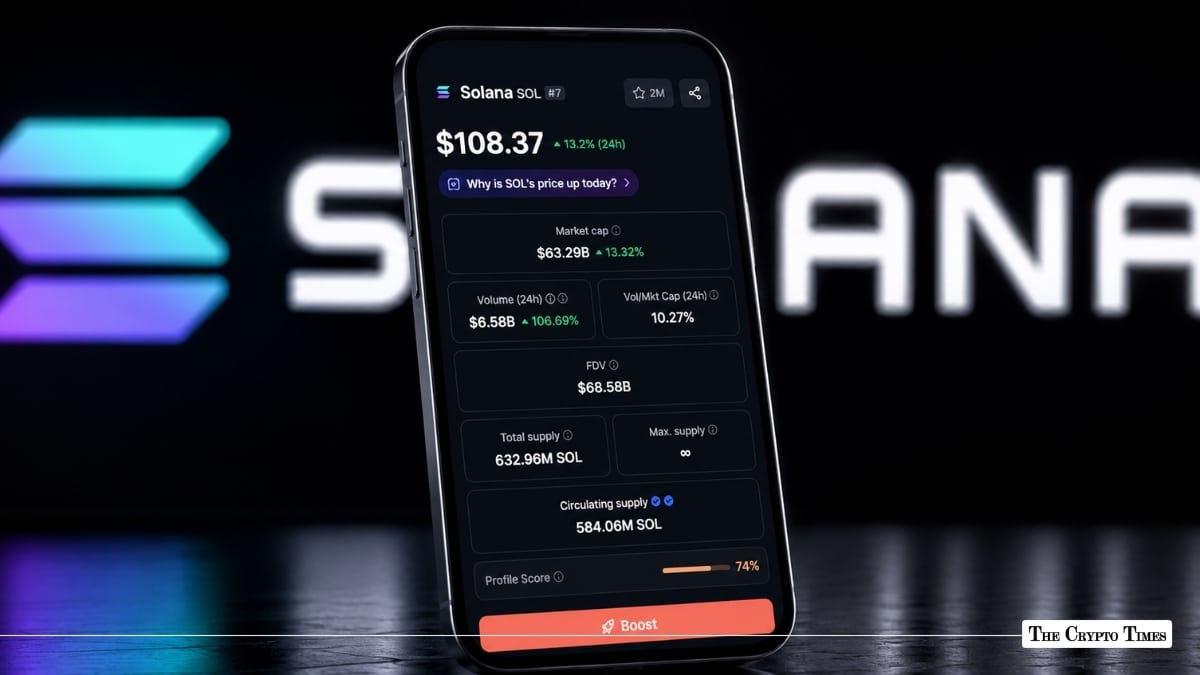
- SOL jumps 11.56% in 24 hours, trading around $107 after rising from a daily low near $95.
- Solana’s governance vote could reduce new SOL supply, with SIMD-550 and SIMD-553 targeting lower emissions and higher token burns.
- ETF inflows and higher trading activity support the rally, with Solana-linked ETFs recording $104 million in inflows over seven days.
Solana (SOL) price jumped on Thursday as traders reacted to a major vote that could reduce the number of new SOL tokens entering the market.
At 5:29 pm UTC on August 27, $107.20, the token is up 11.56% in 24 hours, trading for $107.15 after a push from its daily low around $95.
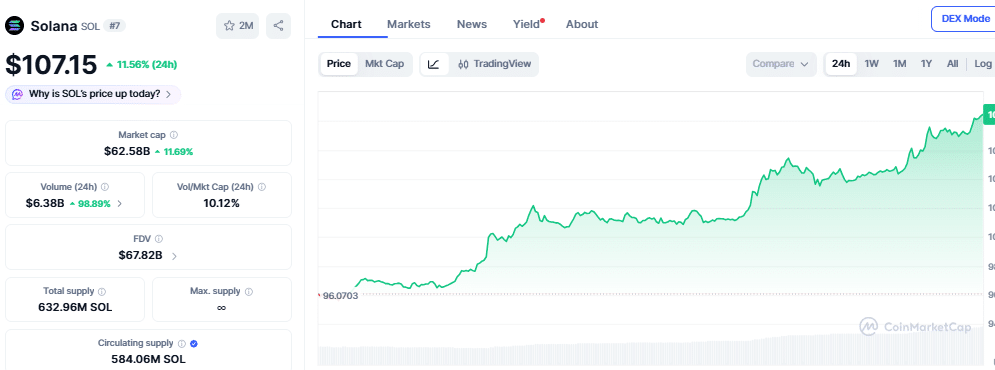
This push added to more than 24% gain over the past week and over the past week and about 44% over the past month, according to CoinMarketCap data. This is the first time the token will move above $105 since January.
Despite the recovery, SOL remains about 45% below its 2026 high, showing that the recent jump has not fully recovered its earlier losses.
Why is the price of Solana up today?
The biggest event behind Thursday’s move is Solana’s ongoing governance vote. The vote is taking place as validators decide on changes that could reduce new SOL issuance and increase the amount of SOL removed from circulation through burns.
The voting process is being carried out through Solana Governance Proposals, giving validators and people who delegate SOL to them a role in the decision.
One proposal, SIMD-550, would increase Solana’s yearly reduction in new token issuance from 15% to 30%. This would allow Solana to reach its long-term inflation rate of 1.5% in 2029 instead of 2032. Helius, which proposed the change, estimates that about 18.9 million fewer SOL could be created over six years.
The second proposal, SIMD-553, would increase SOL burning by adding a burn fee to certain requested computing units linked to financial activity.
A 21Shares report published on August 26, said daily SOL burns could rise from around 600–800 SOL to roughly 7,500–9,000 SOL. Together, the two changes could cut SOL emissions by about $1.4 billion to $1.5 billion over six years.
The possible supply changes are also important for people who stake SOL. Solana’s staking yield was around 5.25% as of August 24, according to the 21Shares report. Under the proposed changes, that yield could fall to about 4.34% in the first year, 3% in the second and 2.25% in the third.
Schwab brings more access
While the vote has drawn attention, SOL is also getting support from growing access in traditional finance. Just earlier today, Charles Schwab announced plans to add Solana, along with Avalanche and Chainlink to its Schwab Crypto platform. The new assets are expected to become available to clients in the coming months, joining Bitcoin and Ethereum on the platform.
Solana investment products are also seeing steady demand. According to data from SosoValue, Solana-linked ETFs recorded seven straight days of positive net inflows, with about $74.88 million entering the products during that period.
Trading activity adds more fuel
At the same time, trading activity has also picked up sharply. Data from CoinMarketCap shows that the token’s trading volume surged nearly 100% within just 24 hours.
At the same time, about $38 million worth of SOL positions were liquidated within this period. According to data from Coinglass, around $35.24 million, which belongs to traders who had bet on the price going up, was lost to the market, while the rest, $3.52 million came from long position traders.
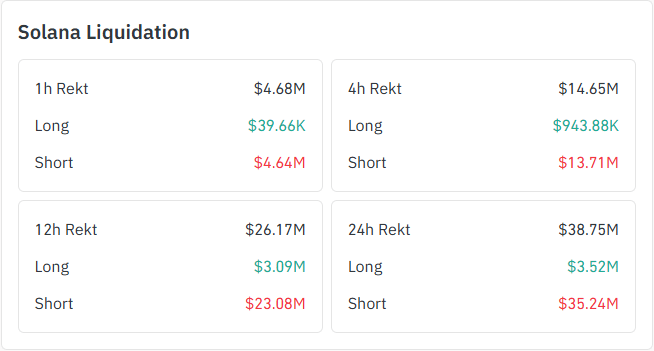
These liquidations happen when traders betting on a price drop are forced to close their positions as the market moves higher.