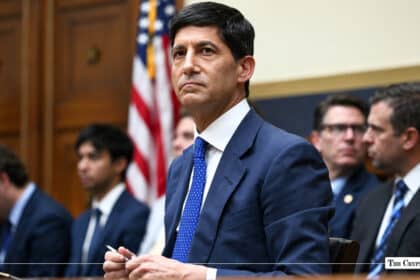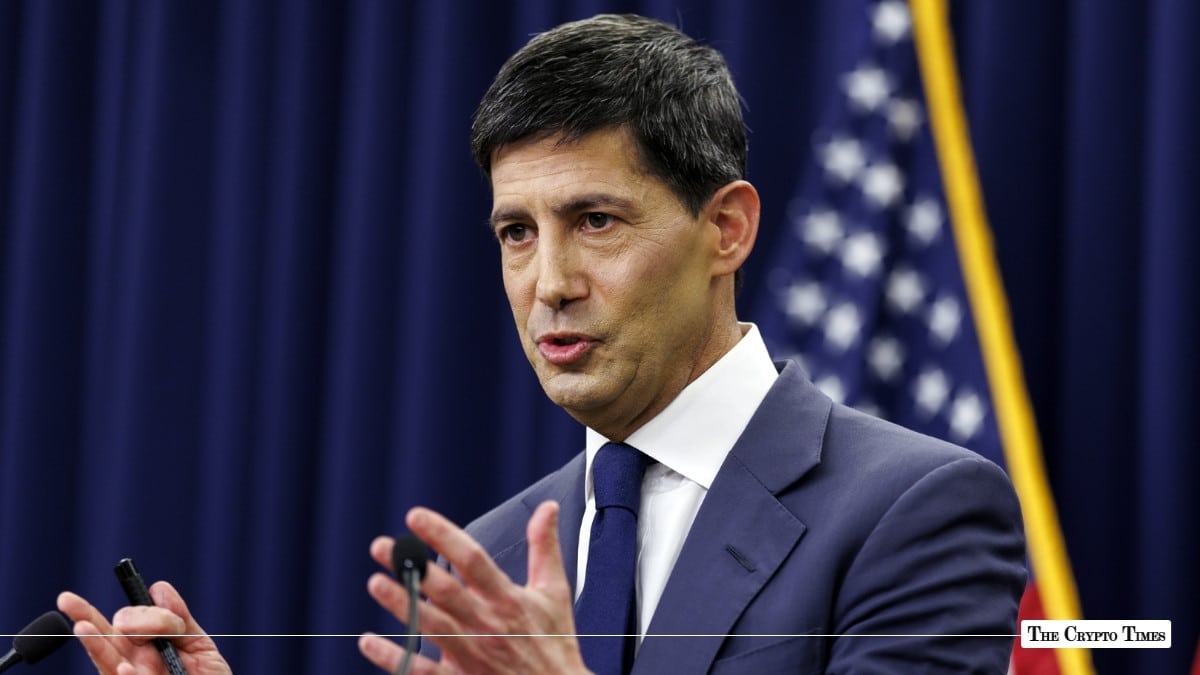
Federal Reserve Chair Kevin Warsh has raised the idea of reducing how often the central bank’s rate-setting committee meets, a change that would reshape the calendar of decisions that crypto markets react to most.
According to a New York Times report, citing four people with knowledge of the discussion, Warsh floated cutting the number of regularly scheduled Federal Open Market Committee (FOMC) meetings, currently eight a year, while presiding over only his second meeting as chair this week. Rather than open a full debate on the calendar, he asked officials to send him their views, and left the impression a revised schedule could be decided before the September 15–16 meeting, even if any change took effect later. As of publication, the Fed declined to comment officially.
For a 24/7 asset class where Fed days routinely spike volatility, fewer, and less-predictable meetings could change when, and how sharply, crypto moves on macroeconomic news.
What Warsh actually proposed
The Fed has held eight scheduled meetings a year since 1981, when Paul Volcker was chair, roughly one every six weeks, excluding emergency sessions in crises. Before then, the committee met far more often: 19 times in 1956, and 12 full meetings plus emergency calls in 1978, at the height of that era’s inflation. By statute, under the Banking Act of 1935, the FOMC must meet “at least four times each year,” and the chair can call additional meetings. At his April confirmation hearing, Warsh signaled he did not favor going all the way down to the floor, saying four meetings were “not enough” and that “having more meetings than that is appropriate,” so any reduction would likely land somewhere between four and eight.
No change has been decided. The Fed has already published its schedule for the rest of 2026, with meetings in September, October and December, and for 2027, though it notes each date is tentative until confirmed at the prior meeting, so any new cadence would most plausibly begin in 2027. The report frames this as a proposal Warsh raised internally, not a finalized policy.
Why the Fed calendar matters to crypto
Crypto is unusually sensitive to Fed policy because rate expectations drive it through several channels at once: risk appetite, dollar strength, market liquidity, and the opportunity cost of holding assets that pay no yield. When the Fed leans hawkish, capital tends to rotate toward cash and bonds, and away from volatile assets like Bitcoin; dovish signals tend to do the reverse.
That makes each FOMC decision a scheduled catalyst that traders position around. As The Crypto Times reported heading into the July 29 meeting, Bitcoin’s average daily volatility has historically run 50% to 100% above normal on Fed decision days, and the price can move several percentage points within minutes of the announcement, where tone and guidance are set, often the bigger mover than the decision itself. At that meeting, the Fed held its target range at 3.50%–3.75% for a fifth straight time on a 9–3 vote, with Bitcoin trading around $64,000 and the Crypto Fear & Greed Index in “fear” territory. Fewer such events would mean fewer of these scheduled inflection points across the year.
Warsh’s low-guidance style already changed the game
The proposal lands on top of a shift Warsh has already made. Since taking over as the 17th chair in May, he has campaigned on what he called “regime change” at an institution he has long criticized, spinning up five task forces on issues ranging from how the Fed communicates to which data it prioritizes. He has sharply shortened the post-meeting policy statement, dropping much of its standard language, and provided far less detail about how he reads the economy or where he thinks rates should go. He has also floated scaling back the post-meeting press conferences the Fed has held since January 2019, a detail that matters directly to crypto, because that 2:30 p.m. ET press conference is frequently a bigger market mover than the rate decision itself. At the July meeting, investors reacted uneasily when he declined to spell out the reasoning behind the decision or commit to a direction for September.
Analysts say that approach raises the stakes of each meeting for risk assets. Because markets can no longer pre-price the Fed’s next move from its guidance, a surprise decision hits harder when it comes. Ahead of the July meeting, Bank of America argued that an unexpected move could break a market-pricing pattern that had held for three decades, and one analysis warned the no-guidance stance left Bitcoin more exposed to a surprise. Reducing the number of meetings would layer onto that: fewer opportunities to adjust, and less signaling between them.
What fewer meetings could mean for crypto traders
The net effect is genuinely two-sided, and worth laying out as possibilities rather than forecasts.
On one hand, fewer meetings would concentrate market-moving decisions into a smaller number of higher-stakes events, potentially making each remaining meeting a larger volatility event for crypto, and lengthening the stretches of uncertainty in between, during which traders would lean more heavily on economic data such as inflation and jobs reports for direction. Combined with Warsh’s minimal guidance, that could leave crypto more prone to sharp, surprise-driven repricing.
On the other hand, some market participants argue that fewer meetings could reduce the constant, meeting-to-meeting whipsaw that comes from markets over-reading every statement, potentially smoothing out some short-term noise. Which effect dominates is unknown, and would depend on how far the cadence is reduced and how Warsh handles communication around it. This is analysis of a proposal that has not been adopted, not a prediction of price direction.
The bigger backdrop
The idea also feeds into two larger themes crypto investors are already tracking. The first is Fed independence and transparency: Warsh was appointed under President Trump, who has pressed for looser policy and has separately sought to remove Governor Lisa Cook, and critics have framed both the reduced guidance and any cut to meetings as a step away from the central bank’s decades-long move toward openness.
The second is the “hard money” narrative that some crypto proponents attach to Bitcoin; the argument that reduced central-bank transparency and lingering inflation strengthen the case for a fixed-supply asset as a hedge. Both are contested framings rather than settled conclusions, and are presented here as the debates in play, not endorsements.
What’s next
No decision has been announced, and any change to the meeting schedule would most likely apply from 2027. For now, the near-term calendar is unchanged, with the next FOMC decision set for September 15–16, an event crypto traders will watch both for the rate call and for any signal on how the Fed’s own rhythm might change.
Also Read: $4B Iran Crypto Operation Exposed Through Dubai Exchange