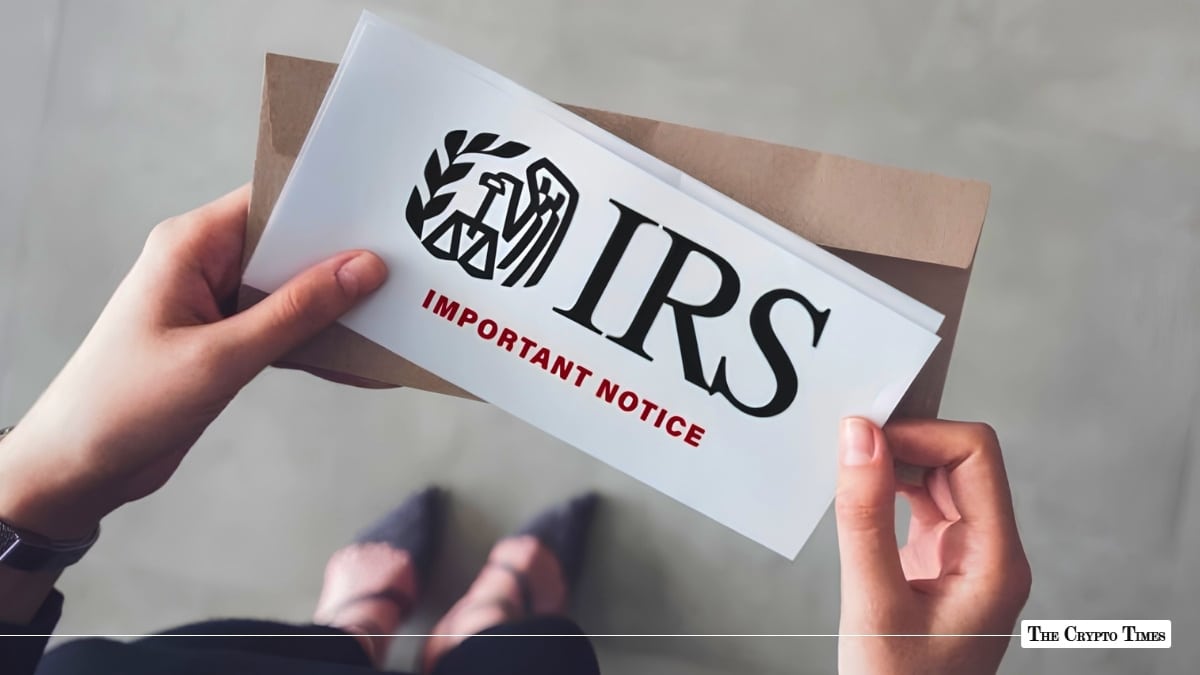
The U.S. Internal Revenue Service (IRS) has warned crypto holders about a new scam in which fraudsters are mailing counterfeit tax letters designed to steal digital assets or sensitive personal information. The warning marks a shift from traditional phishing campaigns by bringing crypto scams into physical mailboxes.
According to a Bloomberg report, the IRS said Thursday some recipients have received letters instructing them to register through a supposed “Digital Asset Compliance Portal.” The agency said no such portal exists and urged taxpayers not to scan QR codes, click related links, or respond to calls requesting payments or personal information.
Instead of directing users to an official government website, the QR code leads to a fraudulent page that closely resembles IRS.gov. The phishing website is designed to collect sensitive financial and cryptocurrency-related information that criminals can use to steal identities or gain access to digital assets.
IRS Criminal Investigation (IRS-CI) Chief Jarod Koopman said fraudsters continue to exploit public trust in government agencies by creating convincing fake websites and official-looking correspondence. He urged taxpayers to verify unexpected requests for personal information before responding and report suspected fraud to law enforcement.
IRS reporting fuels scam
The scheme appears to capitalize on the IRS’s increasing oversight of digital assets. As cryptocurrency reporting has become a routine part of U.S. tax filings, official IRS correspondence related to crypto has become more common, making fraudulent letters appear more believable.
The fake notices say the recipients must enroll in a “Digital Asset Compliance Portal” by a certain date. When victims scan the QR code, they are taken to a phishing site that asks for sensitive information.
The fraudulent website may ask users to provide:
- Personal identification details
- Cryptocurrency wallet information
- Exchange account credentials
- Wallet recovery phrases or private keys
- Other sensitive financial information
The IRS said the scam creates a false sense of urgency to pressure recipients into revealing information that can be used to steal identities or access crypto holdings.
The agency reiterated that it does not operate a Digital Asset Compliance Portal and advised taxpayers to verify any unexpected IRS communication through official channels. Anyone who has already shared credentials should stop communicating with the scammers, change passwords immediately, contact their financial institution or cryptocurrency exchange, preserve evidence, and report the incident to IRS Criminal Investigation.
Crypto crime continues to evolve
The IRS warning comes as crypto-related fraud remains widespread across the digital asset industry.
Earlier this week, blockchain security firm Blockaid reported that crypto projects lost more than $1.1 billion to hacks during the first half of 2026. The company described it as the most-hacked six-month period on record based on the number of security incidents.
Meanwhile, crypto-related crime is increasingly moving beyond online attacks. CertiK reported 52 verified “wrench attacks” during the first half of 2026. These physical assaults and extortion attempts targeted cryptocurrency holders and accounted for more than $124 million in financial exposure. Europe recorded the highest number of reported cases.
The IRS has not disclosed how many counterfeit letters have been distributed or whether the campaign has resulted in confirmed financial losses. However, the agency continues to investigate the operation and is urging crypto holders to verify any unexpected tax-related communication through official IRS channels before sharing personal information, cryptocurrency credentials, or digital asset wallet details.
Also Read: Hyperliquid Faces Selling Pressure From VCs, Funds and Technical Weakness