Strategy Inc. (NASDAQ: MSTR), the world’s largest corporate Bitcoin holder formerly known as MicroStrategy, has drawn fresh attention from Wall Street after expanding its U.S. dollar cash reserves to $3.75 billion while pausing Bitcoin purchases for five straight weeks.
In a private note sent to clients, Benchmark Equity Research analyst Mark Palmer has reiterated a Buy rating and $570 price target on the stock, arguing that the liquidity buildup represents disciplined capital allocation that ultimately strengthens the company’s long-term Bitcoin acquisition strategy rather than signaling any retreat from it.
As of the latest SEC filing covering the week ended July 26, 2026, Strategy sold nearly 5.43 million Class A common shares through its at-the-market program, generating $544.5 million in net proceeds. Those funds, combined with earlier raises, lifted the dedicated USD Reserve to $3.75 billion—enough to cover roughly 2.1 years of preferred stock dividends and interest expenses, which currently run about $1.76 billion annually.
The company made no Bitcoin purchases during the period and kept its holdings steady at 843,775 BTC, acquired at an average cost of roughly $75,476 per coin for a total cost basis near $63.69 billion.
At recent Bitcoin prices around $63,400, the treasury is valued near $53.57 billion, leaving the position with unrealized losses of approximately $9 billion.
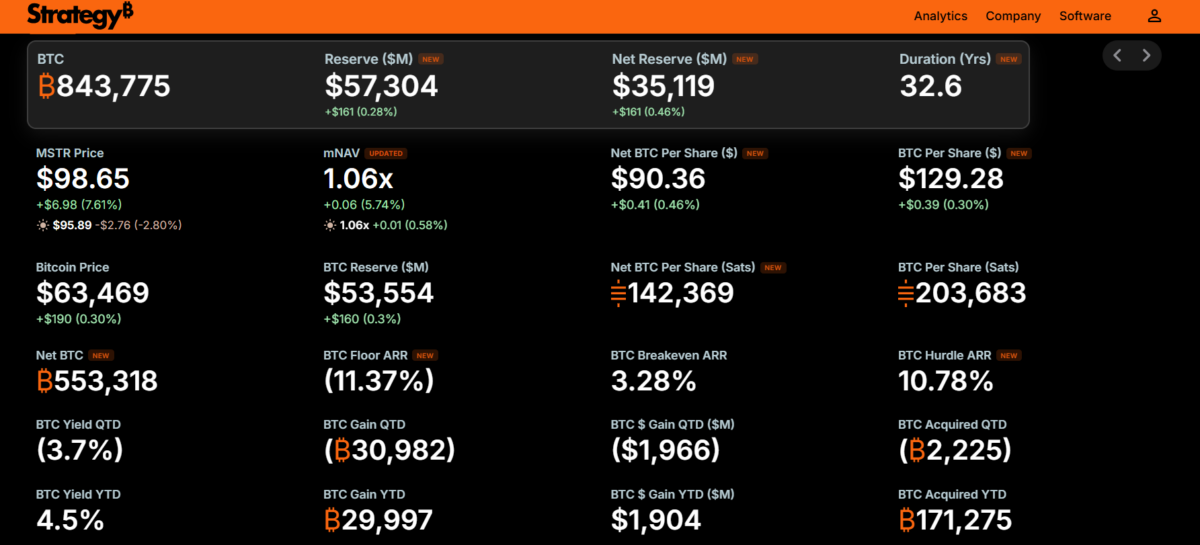
Strategy shares closed around $98.65 on July 27, meaning Palmer’s $570 target implies more than 470% upside from current levels and remains the highest on the Street among the roughly 15 analysts covering the name, whose average target sits near $300.
Building Liquidity Without Abandoning Bitcoin
Palmer emphasized that management has been clear about remaining a long-term buyer of Bitcoin while simultaneously fortifying the balance sheet. The larger cash cushion provides flexibility to meet preferred dividend obligations and debt interest without being forced into opportunistic or disorderly Bitcoin sales during periods of market stress.
Strategy introduced its formal USD Reserve Policy and broader Digital Credit Capital Framework in late June 2026. Under the board-approved rules, the reserve is ring-fenced primarily for preferred dividends and interest payments, with a minimum coverage target of 12 months.
The company also authorized up to $1.25 billion in Bitcoin monetization capacity specifically to replenish the reserve if needed, plus share-repurchase programs for both common and preferred securities.
Over the past five weeks Strategy has raised more than $2 billion through equity sales and completed a modest Bitcoin sale earlier in the period, directing the proceeds squarely into liquidity rather than new coin purchases. Palmer views this pause not as a change in philosophy but as prudent timing: management is waiting for more attractive entry points while ensuring the capital structure can withstand volatility.
Analyst Case for Significant Upside
Benchmark’s $570 target rests on the thesis that a stronger liquidity position reduces perceived risk around Strategy’s preferred-stock financing model and its ability to continue expanding the Bitcoin treasury over multi-year horizons.
Palmer has previously described the company’s capital framework as a shift from one-way issuance toward active two-way capital management—allowing share repurchases when the stock trades near or below net asset value and preserving the option to resume aggressive Bitcoin buying when conditions improve.
Consensus among other firms remains constructive, with a Strong Buy tilt and average targets implying 150–200% upside, though most have dialed back earlier, more aggressive forecasts as Bitcoin has consolidated.
Palmer’s outlier target reflects confidence that the combination of a fortified cash reserve, the existing 843,775 BTC position (more than 4% of total supply), and eventual resumption of accumulation will restore the premium valuation investors once assigned to Strategy as a leveraged Bitcoin proxy.
Market reaction to the latest reserve update was modestly positive, with shares rising in pre-market and early trading as Bitcoin stabilized near the mid-$60,000s. Preferred series such as STRC also showed gains, reflecting improved confidence in dividend coverage.
Balancing Dilution Concerns and Long-Term Strategy
Critics like Peter Schiff have noted that repeated equity issuance at levels near or below 1.0–1.2 times mNAV dilutes existing common shareholders, especially while the Bitcoin position sits underwater relative to cost basis. Strategy had previously indicated greater restraint around dilution once the premium compressed, yet the company continued to sell shares to prioritize the cash buffer.
Read: Peter Schiff Slams Strategy CEO As Retail Sold STRC at Loss
Palmer counters that the near-term dilution is outweighed by the reduction in refinancing and dividend-payment risk. A more resilient balance sheet, in this view, positions Strategy to capitalize on future Bitcoin upside without the overhang of forced sales or distressed capital raises.
The $3.75 billion reserve, paired with authorized Bitcoin monetization capacity, effectively extends coverage well beyond the previous runway and gives management multiple tools to navigate the current environment.
Strategy is scheduled to report second-quarter results later this week, on July 30, which will provide further clarity on digital-asset accounting, preferred dividend trends, and any updates to capital-allocation priorities.
For now, Benchmark’s reiteration of the $570 target underscores one analyst’s conviction that the cash-reserve shift is a constructive step on the path toward substantially higher share prices—if Bitcoin recovers and the company resumes its hallmark accumulation strategy from a position of greater financial strength.
Also read: Hyperscale Data’s Bitcoin Is Now Worth More Than the Entire Company