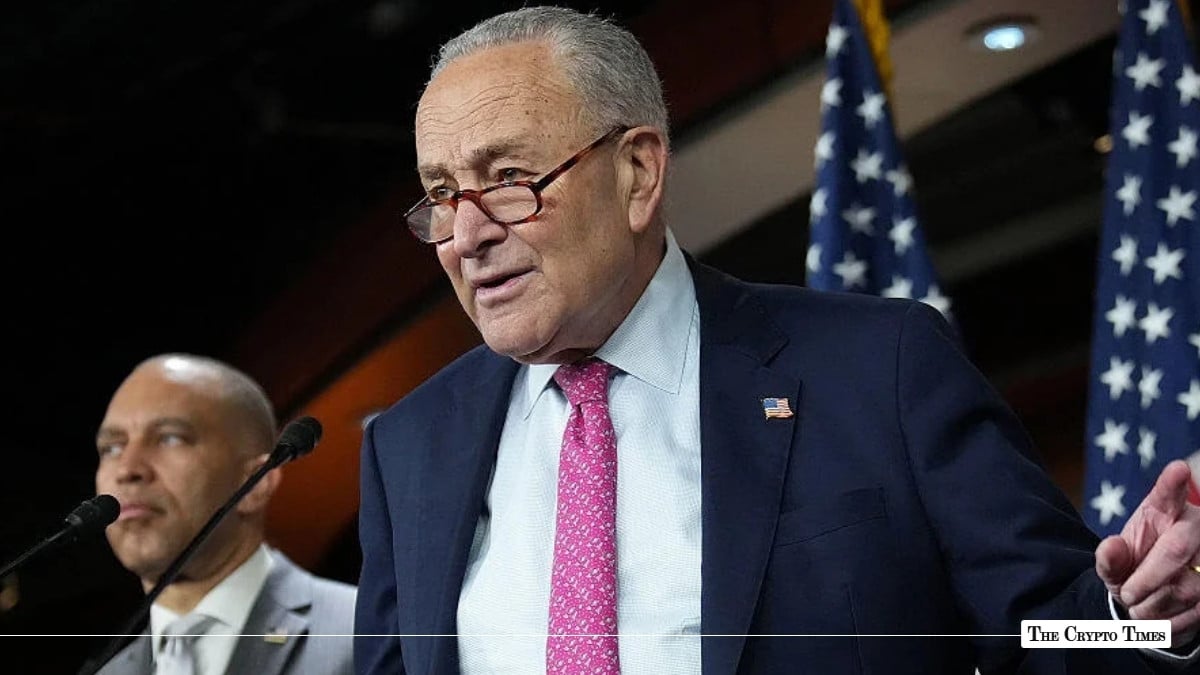
The staffing fight that has shadowed America’s crypto market-structure bill may be easing. Senate Minority Leader Chuck Schumer has sent the White House two names each for the vacant Democratic seats at the Securities and Exchange Commission (SEC) and Commodity Futures Trading Commission (CFTC), according to a report from Semafor White House economics reporter Eleanor Mueller.
The submission, described by people familiar with the move, follows months of finger-pointing over the empty seats that had become tangled up in Senate negotiations over the CLARITY Act. The nominees’ identities remain unclear. “Nobody wants any of these nominees to get flamed before they get a fair chance,” one person told Mueller.
Why The Empty Seats Matter So Much
The vacancies are not a side issue. Both the SEC and CFTC would gain sweeping new responsibilities under the CLARITY Act, which divides oversight of digital assets between the two agencies. Yet, neither currently has a single Democratic commissioner. The SEC is run by three Republicans following the January 2026 departure of Democrat Caroline Crenshaw, while the CFTC is down to just one member, Republican Chair Michael Selig, out of five seats.
For a commission designed to be bipartisan, that imbalance became a political flashpoint. Minority-party commissioners cannot set the agenda, but they shape rulemaking through votes, dissents and public pressure, functions that carry added weight when the agencies are about to write the rulebook for a market as contested as crypto.
Resolving a Procedural Impasse
The submission follows months of debate over the nomination pipeline. Senate Republicans and CFTC Chair Selig had urged the minority leader to put forward formal recommendations, noting that statutory requirements and proposed legislation emphasize consultation with minority leadership when filling open seats.
For sponsors of the CLARITY Act, including Senator Cynthia Lummis, establishing a clear pathway to fill these seats fulfills a key procedural request raised by lawmakers seeking balanced agency oversight.
Broader Obstacles Remain
While submitting candidate names resolves one procedural hurdle for the CLARITY Act, the legislation confronts significant obstacles before the Senate’s August recess. Senate Majority Leader John Thune has indicated that tight scheduling makes a floor vote before the break improbable. Additionally, the bill needs 7 to 10 Democratic cross-over votes to clear the 60-vote filibuster threshold, and ongoing ethics disputes over public officials’ crypto holdings and executive profit bans remain unresolved among negotiators.
With candidate names now submitted to the administration, focus has shifted toward formal White House nominations and upcoming Senate confirmation hearings. Lawmakers will use this period to assess the wider regulatory framework surrounding the act.
For the crypto industry, the development is a modest but real piece of progress. A market-structure law that hands enormous authority to the SEC and CFTC is a harder sell while both agencies sit half-empty and one-sided. Whether it translates into momentum for CLARITY before the recess, or simply removes a talking point without changing the vote math, will become clear in the days ahead.
Also Read: New York AG Warns Senate Against Passing CLARITY Act