Key Highlights
- Coinbase Vice Chairman Ryan VanGrack said BlackRock now supports the CLARITY Act.
- The comments followed a Politico report citing BlackRock’s support for the crypto market structure bill.
- BlackRock said the legislation would strengthen investor protections while supporting innovation.
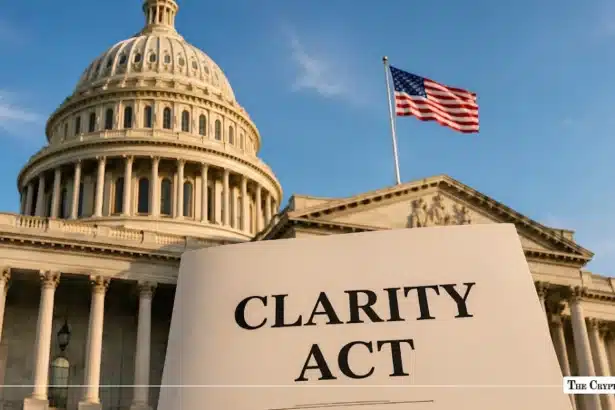
Coinbase Vice Chairman Ryan VanGrack took X to highlight BlackRock’s endorsement of the CLARITY Act, calling on Congress to advance the legislation as Senate negotiations continue.
Sharing a post from a16z crypto communications executive Paul Cafiero, VanGrack wrote, “We got our answer. BlackRock is officially on board.”
He added that BlackRock joins Charles Schwab, Fidelity, and Goldman Sachs in backing the legislation before ending the post with Congress’ turn. The comments followed a report that cited BlackRock’s official position on the legislation.
Support for the CLARITY Act keeps growing
Following VanGrack’s post, Patrick Witt, Executive Director of the President’s Council of Advisors for Digital Assets, responded to criticism surrounding BlackRock’s endorsement by writing, “The largest asset manager in the world just endorsed the Clarity Act, and you’re blackpilling?”
Witt was responding to a post which noted that BlackRock had joined Charles Schwab, Fidelity, Goldman Sachs, and Grayscale in backing the legislation.
His response added to the growing number of public endorsements from both the crypto industry and traditional finance, reinforcing support for clearer digital asset regulation.
Why BlackRock is backing the CLARITY Act
BlackRock has publicly endorsed the CLARITY Act, becoming the latest major financial institution to back legislation designed to establish a comprehensive regulatory framework for digital assets in the United States.
In a statement provided to Politico, BlackRock Senior Managing Director and Global Head of Market Development Samara Cohen described the legislation as an important milestone for U.S. capital markets. Cohen said, “The CLARITY Act is an important step toward establishing a regulatory framework for digital assets that puts investors first.”
Cohen added that the legislation would help preserve U.S. leadership in financial markets while supporting responsible innovation.
“It would help the United States shape the next era of market structure supporting innovation while preserving the transparency, resilience and investor protections that keep the U.S. the global leader in capital markets.”
The comments mark BlackRock’s clearest public endorsement of the legislation as lawmakers continue debating the future of crypto regulation.
Senate still faces vote challenge
Despite growing institutional support, the CLARITY Act still faces a difficult path through the Senate. Current projections indicate the legislation still needs at least nine additional Senate votes to clear the 60-vote threshold required to advance.
According to earlier reporting, Republican lawmakers are expected to hold another round of discussions with the White House as negotiations continue over Democratic concerns surrounding ethics provisions and conflict-of-interest rules.
Those negotiations have become increasingly important as lawmakers work to finalize the bill before a Senate floor vote.
Support extends beyond crypto firms
BlackRock’s endorsement comes as support for the CLARITY Act expands across both the crypto industry and traditional finance.
Earlier this week, Coinbase executives argued that clearer market structure rules would benefit investors regardless of their views on cryptocurrency. Around the same time, Chainlink executive Andrew McCormick urged Democratic Senators Cory Booker and Andy Kim to back the legislation, reflecting continued efforts to build bipartisan support.
Against that backdrop, VanGrack’s post on X highlights growing support for the bill from both crypto-native firms and major financial institutions as lawmakers continue negotiating its final provisions ahead of a Senate vote.
Supporters say the CLARITY Act would establish clearer rules for digital asset markets and define regulatory responsibilities between the Securities and Exchange Commission (SEC) and the Commodity Futures Trading Commission (CFTC). Whether that growing support translates into enough votes for passage remains one of the key questions facing U.S. crypto legislation.
Also Read: Crypto Council Releases ‘Myth vs. Fact’ Defense of CLARITY Act