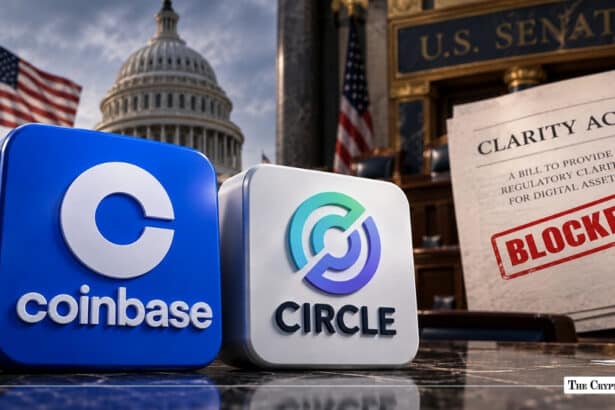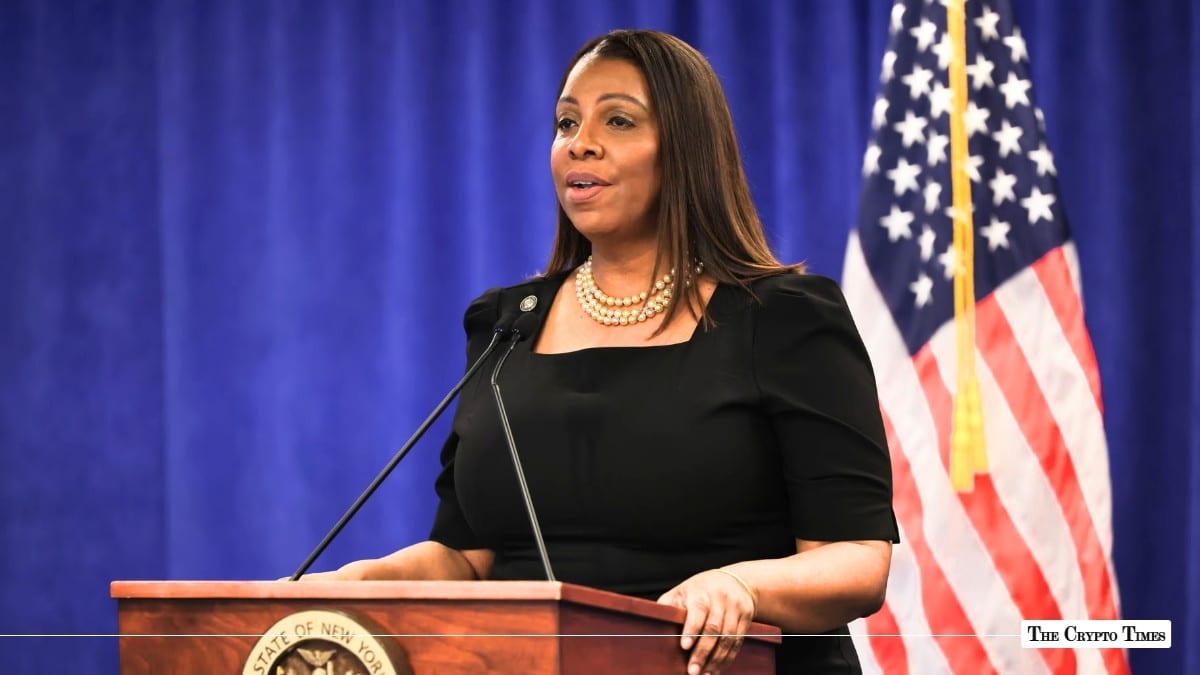
New York Attorney General Letitia James has delivered one of the sharpest institutional attacks yet on the CLARITY Act, telling a US Senate panel that the crypto market-structure bill would strip state and local enforcers of the power to police a market awash in fraud.
In a written testimony submitted Monday to the Permanent Subcommittee on Investigations, James argued the bill would “reduce the number of cops on the beat” precisely as scam losses reach record levels. The timing is pointed. Her testimony arrives as the bill fights for a Senate floor vote before the chamber’s early-August recess. It reframes a debate the industry has cast as a fight for “clarity” into one about who gets to prosecute crypto crime.
The Scale of Losses
James grounded her argument in numbers. Cryptocurrency fraud complaints to her office have nearly tripled over three years, and losses reported to the OAG total close to half a billion dollars over five years. Nationally, she cited FBI data showing $11.4 billion in crypto-related losses in 2025, up 22% year-on-year, alongside an estimated $158 billion in illicit crypto volume tracked by TRM Labs, a near-145% jump from 2024.
The victims she described are not speculators. Her testimony pointed to pig-butchering and romance scams, a multilevel-marketing fraud that used Bible study and prayer groups to target Haitian churchgoers, and schemes aimed at Russian-speaking New Yorkers through Facebook ads. Her office has a long enforcement record here, having brought the first and only action against stablecoin issuer Tether in 2021 and secured settlements from Gemini, Genesis, KuCoin, and Coin Café.
The Preemption Controversy
James’s central claim is a structural one. State and local agencies, she noted, make up roughly 99% of US law enforcement bodies and handle about 99.5% of criminal prosecutions, yet CLARITY, by preempting state registration and diluting state authority, would sideline exactly the enforcers doing most of the work.
That gap matters more, she argued, because federal enforcement is retreating. She cited the Justice Department’s April 2025 decision to stop prosecuting crypto platforms and mixing services “for the acts of their end users,” and its disbanding of the National Cryptocurrency Enforcement Team. She added that the SEC has dismissed seven crypto cases since February 2025, five after federal judges had already found securities-law violations, and logged its fewest enforcement actions in a year. In her framing, CLARITY would remove state cops from the beat at the same moment the federal ones are walking off it.
Anonymity, Ethics, and the Trump-Family Question
The testimony went further than enforcement mechanics, tying crypto’s traceability gap to national security and political corruption. James warned that wallet-level anonymity makes it impossible to verify officials’ financial disclosures, detect bribes, or enforce the Constitution’s emoluments clause, and pointed to reporting that Iran moved billions through Binance, the same exchange that holds 87% of the USD1 stablecoin issued by the Trump-family-linked World Liberty Financial.
On that basis she urged Congress to bar elected officials and recent government employees from regulating any industry they or their families profit from. She dismissed CLARITY’s own ethics provision, which lets officials use a blind trust and delays for a year, as inadequate, and called instead for mandatory penalties and state enforcement power.
Proposed Legislative Alternatives
Rather than opposing regulation outright, James also laid out an alternative: mandatory KYC and anti-money-laundering compliance for platforms including DeFi front-ends, a closed-loop market barring noncompliant actors, a ban on converting fully untraceable “mixer” crypto to dollars, and liability for platforms that fail to protect users, modeled on the Electronic Funds Transfer Act. Crucially, she asked Congress not to preempt state antifraud laws and to preserve a cooperative federal-state framework.
Her intervention sharpens a divide that has dogged the bill for weeks. State securities regulators through NASAA and the National Sheriffs’ Association have raised similar preemption and illicit-finance concerns, and those objections are among the reasons Senate Democrats have withheld the votes CLARITY needs.
Industry Pushback: “Read the Bill”
Industry leaders and law enforcement quickly challenged James’s characterization. Rebecca Rettig, Chief Legal and Operating Officer at Jito Labs, argued James’s opposition stems from protecting New York’s BitLicense monopoly rather than a reading of the bill, noting that CLARITY expands law enforcement tools rather than shrinking them.
That view is shared by the National Organization of Black Law Enforcement Executives (NOBLE), which endorsed the bill for strengthening enforcement capabilities. Specifically, CLARITY classifies crypto intermediaries as financial institutions, mandating strict AML, KYC, and suspicious activity reporting; expands sanctions authority and asset forfeiture powers; and introduces dedicated oversight for crypto ATMs/kiosks, a major fraud vector.
The debate reveals the true fault line: James opposes replacing state investor-protection laws with a centralized federal framework, while supporters argue a unified national standard eliminates the regulatory patchwork that allows bad actors to forum-shop. Both sides claim to protect fraud victims, but disagree on whether state or federal cops are best suited to do it.
Also Read: Franklin Templeton Backs CLARITY Act as Senate Deadline Nears