A House hearing ostensibly about sports betting turned, repeatedly, into a hearing about the agency that crypto’s biggest legislative priority would empower. On July 21, the House Agriculture Subcommittee on Commodity Markets, Digital Assets, and Rural Development convened to examine “Customer Protections and Market Integrity in Sports Event Prediction Markets,” but beneath the debate over Kalshi and Polymarket ran a deeper question with direct stakes for the entire digital-asset industry: is the Commodity Futures Trading Commission (CFTC) actually equipped to be crypto’s top cop?
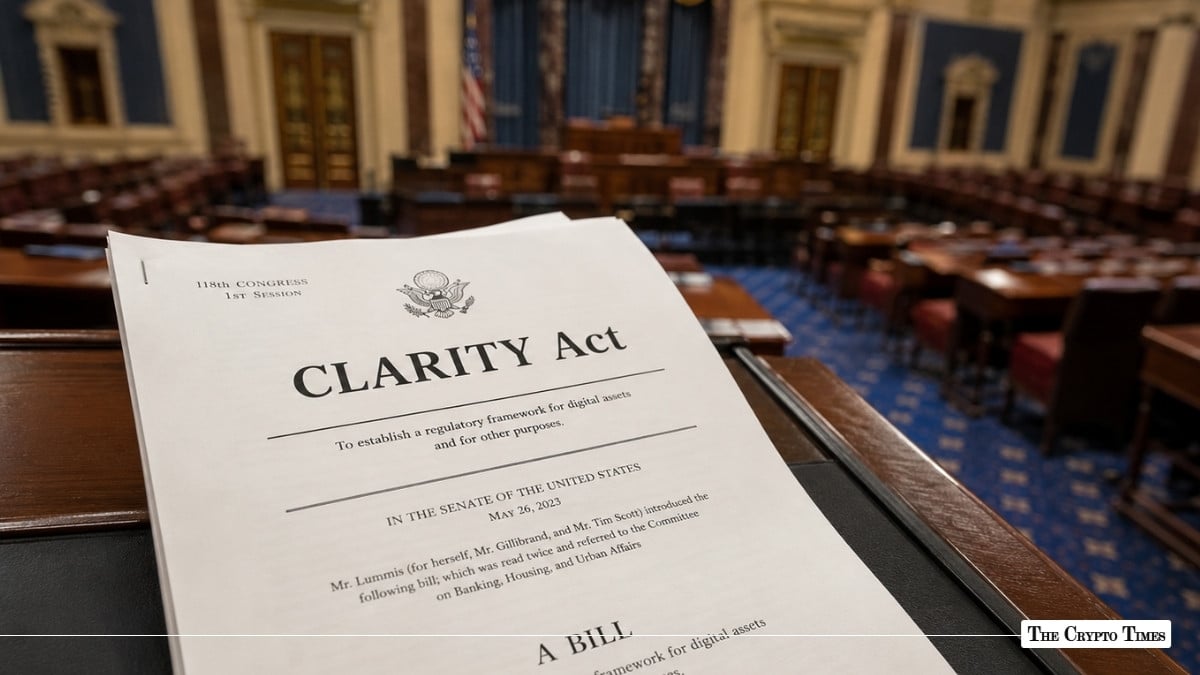
The CLARITY Act would make it exactly that. And the testimony suggested the answer is far from settled.
The Warning: A Bigger Mandate Than The Agency Can Carry
The most pointed intervention came from Carl Kennedy, a partner at Katten Muchin Rosenman and a former CFTC attorney. Kennedy argued that the CFTC may simply lack the resources to properly regulate and enforce rules across the explosively growing prediction-market sector, and that the problem compounds sharply if the agency’s remit expands.
The CLARITY Act, he noted, could broaden the CFTC’s jurisdiction well beyond prediction markets to encompass the far larger universe of digital-commodity trading. His core point was that legal authority and operational capacity are two different things: even if Congress hands the CFTC clear jurisdiction, a “short-staffed” agency cannot meaningfully oversee what it is given. For an industry that has spent years demanding the regulatory certainty CLARITY promises, it was an uncomfortable reminder that clarity on paper means little without an enforcer able to deliver it.
Why This Hearing Was Really About CLARITY
Under the CLARITY Act’s framework, most digital commodities, Bitcoin chief among them, would fall under CFTC oversight rather than the SEC’s, making the commodities regulator the primary federal authority for the bulk of the crypto market. Prediction markets are, in effect, a live preview of that future: event contracts already sit under the CFTC, and the jurisdictional brawl playing out around them is a smaller-scale version of the fight CLARITY is meant to settle for crypto writ large.
That is why lawmakers kept circling back to the bill. As several witnesses framed it, CLARITY is the potential source of both clearer authority and additional funding for a CFTC being asked to do more each year, from digital commodities to a booming event-contract market whose largest platform, Kalshi, has reported trading volume of roughly $111 billion in the first half of 2026, more than 80% of it sports-related.
The Capacity Problem Is Real and Structural
The concern is not abstract. The CFTC is currently operating under a single sitting commissioner, Acting Chairman Michael Selig, an extraordinarily thin leadership structure for an agency on the verge of a major expansion of duties. It has requested a $410 million budget for fiscal year 2027 to build out the operational capacity its growing mandate requires, a request that must survive an appropriations process with no guarantee of full funding.
The math is stark. The CLARITY Act would layer oversight of a multi-trillion-dollar digital-asset market onto an agency that already struggles, by its former lawyers’ own account, to keep pace with prediction markets alone. Handing a regulator sweeping new authority without the staff and budget to exercise it risks producing the appearance of regulation without its substance — a rulebook enforced by an agency stretched too thin to read it.
The Jurisdictional Fault Line CLARITY Inherits
The hearing also surfaced the federal-versus-state conflict that CLARITY would inherit and, its backers hope, resolve. Acting Chairman Selig has taken the position that the CFTC holds “exclusive jurisdiction” over prediction-market platforms, on the theory that their event contracts qualify as swaps under the Commodity Exchange Act. That stance has triggered a wave of litigation, with numerous states suing Kalshi and Polymarket over what they view as unregulated sports gambling, and many Democratic senators characterizing the CFTC’s posture as an “assault” on states’ rights to regulate.
It is the same tension The Crypto Times has tracked in the standoff between Michigan’s courts and the CFTC over Kalshi, where a registered exchange found itself caught between a state order and a federal one. CLARITY’s promise of a single federal rulebook is meant to end exactly this kind of conflict, but only if the federal regulator it empowers can actually administer it.
The Clock, Again
Subcommittee Chairman Dusty Johnson (R-SD) closed the hearing with a message that resonates well beyond prediction markets: while the courts or the CFTC may eventually clarify the rules, Congress “should not be silent,” and there is work for lawmakers to do. Agriculture Committee Chairman Glenn “GT” Thompson has separately signaled that Congress will weigh new legislation if statutory gaps in the CFTC’s authority are confirmed.
The timing sharpens the point. The hearing unfolded as Senate negotiators race to release updated CLARITY Act text before the August recess, with lawmakers still deadlocked over ethics enforcement and the bill’s 2026 odds sliding to around 35% on Polymarket. Republicans pushing for a vote before the August work period said they expect to release the bill’s text soon, though its treatment of prediction markets, and of CFTC funding, has not been made public.
Why It Matters
For all the attention paid to which regulator gets crypto, SEC or CFTC, the House Agriculture hearing raised a question the market-structure debate has largely skipped: whether the winning regulator can handle the job.
The CLARITY Act is designed to give the crypto industry a clear, single federal home at the CFTC. But a home is only as functional as the agency that keeps it. If CLARITY passes and the CFTC arrives underfunded and understaffed, one commissioner, a contested budget, and a mandate stretching from Bitcoin to Super Bowl contracts, the industry could win the regulatory clarity it fought for and still find enforcement patchy, slow, and overwhelmed. Clear rules and a capable enforcer are not the same thing, and Tuesday’s hearing was a reminder that crypto needs both.
Also Read: GENIUS Deadline Missed, CLARITY Act Stalls on Ethics: USA’s 2 Crypto Laws Stuck