Key Highlights
- House lawmakers held a hearing examining customer protections and market integrity in sports-related prediction markets.
- Chairman Dusty Johnson said prediction markets have expanded far beyond what regulators anticipated just two years ago.
- Johnson questioned whether sports event contracts should be viewed as financial products or gambling.
The U.S. House Agriculture Subcommittee on Commodity Markets, Digital Assets, and Rural Development has reopened the debate over sports-related prediction markets as lawmakers examine whether existing federal laws are sufficient to regulate one of the fastest-growing sectors in financial markets.
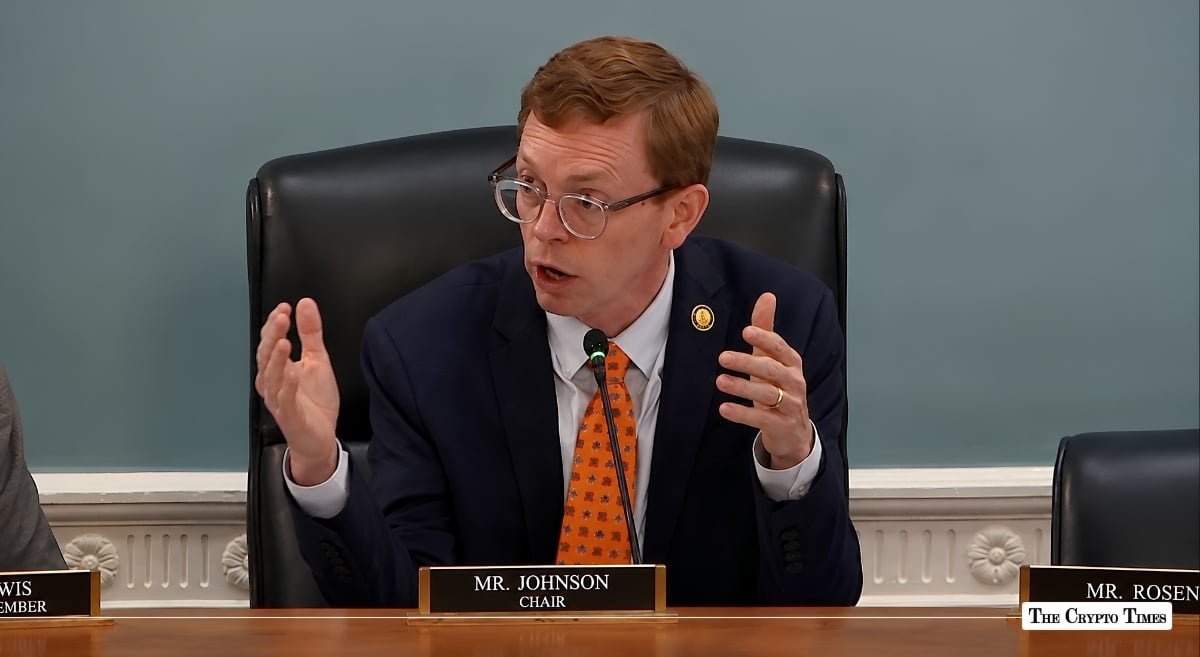
During Tuesday’s hearing, “Examining Customer Protections and Market Integrity in Sports Event Prediction Markets,” Subcommittee Chairman Dusty Johnson (R-S.D.) said the expansion of prediction markets has raised legal and regulatory questions that Congress can no longer ignore.
While emphasizing that prediction markets have existed for decades, Johnson noted that technological advances have dramatically changed both their scale and public visibility.
Who should regulate prediction markets?
Johnson acknowledged that public opinion remains divided over whether sports prediction markets should be treated as regulated financial instruments or as a form of gambling.
According to Johnson, drawing that distinction has become one of Congress’s most important regulatory challenges. “As with many emerging technologies, our laws are being asked to answer questions that were unknown when they were written,” he said.
A major focus of the hearing was the Commodity Futures Trading Commission (CFTC), which currently oversees federally regulated event contracts. Johnson stressed that derivatives markets are intended to serve practical financial purposes rather than function as gambling products.
The chairman said lawmakers are now evaluating whether the agency has adequate authority and resources to oversee prediction markets as they continue expanding into sports and other real-world events.
Johnson also emphasized that protecting consumers remains the committee’s top priority. He said the hearing is intended to determine whether current law adequately protects participants while ensuring prediction markets maintain market integrity.
Industry faces growing political pressure
The hearing comes as prediction market operators face increasing legal and political scrutiny in Washington. Several lawmakers have recently questioned whether sports-related event contracts resemble gambling products rather than financial derivatives.
Earlier in June, Senators John Curtis and Adam Schiff urged the CFTC to investigate Polymarket following reports alleging that it ran deceptive influencer marketing campaigns targeting U.S. users.
Separately, blockchain advocacy group The Digital Chamber recently filed an amicus brief supporting the CFTC’s authority over federally regulated event contracts, arguing that allowing states to override federal oversight could disrupt U.S. derivatives markets.
State regulators have also intensified legal challenges against prediction market platforms, particularly over sports-related contracts.
The market keeps expanding
Despite the growing regulatory debate, Johnson noted that prediction markets still represent only a relatively small portion of overall derivatives activity regulated by the CFTC. However, their rapid growth has placed them firmly on Congress’s agenda.
With billions of dollars in monthly trading volume flowing through both regulated and offshore platforms, lawmakers are increasingly examining whether existing commodities laws remain suitable for a market that barely existed in its current form just a few years ago.
Also Read: CLARITY Act Talks Hit Fresh Roadblock Over Ethics Enforcement