Key Highlights
- A BIS study says stablecoin dollarisation is driven by many of the same economic pressures as traditional dollarisation.
- Researchers found stablecoin use is highly persistent and difficult to reverse once established.
- Unlike foreign-currency bank deposits, stablecoin flows appear largely unaffected by capital controls.
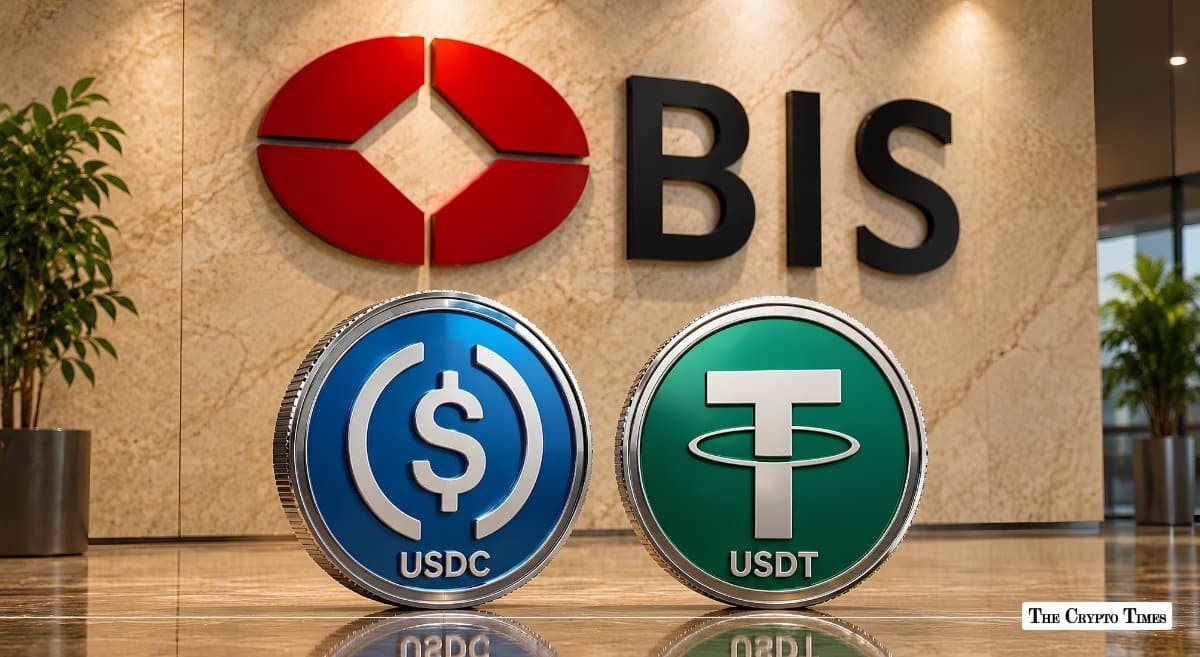
The Bank for International Settlements (BIS) has warned that stablecoins are becoming a new and increasingly resilient form of dollarisation in emerging markets, potentially making it harder for governments to manage monetary policy and regulate cross-border capital flows.
In a working paper published on Tuesday titled Dollarisation and Monetary Control: What Lessons for the Rise of Stablecoins?, BIS economists analyzed foreign-currency deposits alongside dollar-backed stablecoin inflows across more than 130 economies.
The researchers found that while stablecoins and traditional bank dollar deposits often emerge under similar economic conditions, stablecoins are significantly more difficult for policymakers to control because they operate partly outside the traditional financial system.
Why BIS is concerned
According to the study, stablecoin adoption tends to accelerate during periods of financial stress, including sovereign debt crises, banking instability, and sharp currency depreciation.
The BIS noted that these are the same conditions that have historically driven households and businesses to shift savings into U.S. dollar bank deposits. However, researchers argue that stablecoins have become an additional channel for accessing dollar liquidity rather than replacing traditional foreign-currency deposits.
The study found little evidence that stablecoins substitute for dollar bank deposits, suggesting both forms of dollar exposure can grow simultaneously.
The report also concluded that once dollarisation takes hold, whether through bank deposits or stablecoins, it tends to persist even after economic conditions improve. According to the BIS, this could make it more difficult for governments, particularly in emerging markets, to restore confidence in domestic currencies and regain control over monetary policy.
Why capital controls struggle
The report identifies one major difference between traditional dollar deposits and stablecoins. While governments have historically relied on foreign exchange restrictions and capital controls to influence dollar flows, the BIS found those measures appear to have little effect on stablecoin activity. The researchers attribute this to the fact that stablecoins circulate partly outside regulated financial infrastructure.
The finding suggests stablecoins could weaken one of the key tools governments have traditionally used to manage capital movements during periods of financial instability. The BIS also examined whether greater dollarisation weakens monetary policy. Historical evidence showed moderate levels of deposit dollarisation have generally been associated with somewhat higher inflation risks.
However, the researchers found little evidence that either deposit dollarisation or stablecoin adoption has significantly weakened the transmission of monetary policy through interest rates. They argued that the greater long-term risk is the gradual erosion of governments’ influence over domestic money supply and cross-border capital flows as stablecoin adoption continues to grow.
Warning adds to growing central bank concerns
The report is the latest in a series of warnings from central banks and international financial institutions about the growing role of dollar-backed stablecoins.
In April, BIS General Manager Agustín Carstens argued that although stablecoins had reached hundreds of billions of dollars in circulation and trillions in transaction volume, they still behave more like financial instruments than money and could create risks for banking systems and global credit markets.
A separate BIS report published in June warned that privately issued dollar stablecoins could accelerate dollarisation in emerging economies by weakening local banking systems and reducing monetary sovereignty.
The European Central Bank has also raised similar concerns. In June, Executive Board member Isabel Schnabel warned that while stablecoins could improve payments, widespread adoption of dollar-backed tokens may reinforce the international dominance of the U.S. dollar while reducing the effectiveness of domestic monetary policy.
The latest BIS research builds on those concerns by providing empirical evidence that stablecoins are increasingly behaving as a long-term source of dollar exposure rather than a temporary crypto asset.
Stablecoins move beyond crypto trading
The findings come as stablecoins continue expanding beyond cryptocurrency markets into payments, remittances, savings and cross-border settlement.
For policymakers, the BIS argues that this shift means stablecoins should no longer be viewed solely as digital payment tools but as part of the broader phenomenon of dollarisation.
As adoption continues to grow, the report suggests central banks may need to rethink how monetary policy, capital controls and financial regulation operate in an increasingly tokenised financial system.
Also Read: CLARITY Act Talks Hit Fresh Roadblock Over Ethics Enforcement