In a pointed exchange on X, community member Just Hopmans questioned the Polygon Foundation’s accountability to $POL token holders, highlighting a widening gap between the network’s operational success and the token’s market performance.
Polygon Labs, the for-profit arm, has been reshaping itself into a blockchain-enabled payments company, but holders argue they lack direct stakes in that upside. The debate, that began to unfold on July 19, 2026, underscores ongoing tensions in crypto projects between corporate strategy and decentralized token economics.
Hopmans noted that Polygon Labs CEO Marc Boiron has clearly outlined the company’s direction: building a profitable entity focused on stablecoin payments and regulated money movement.
Recent moves, including the acquisition Coinme and Sequence, signal an aggressive push toward revenue generation. Labs aims for profitability by 2027, a shift accompanied by multiple rounds of layoffs as the organization streamlines operations.
Yet for $POL holders, the picture is different. The token does not confer equity in Polygon Labs, nor any claim on its future profits. Instead, value accrual depends on network activity, fee mechanisms, and the Community Treasury, which receives 1% annual POL emissions.
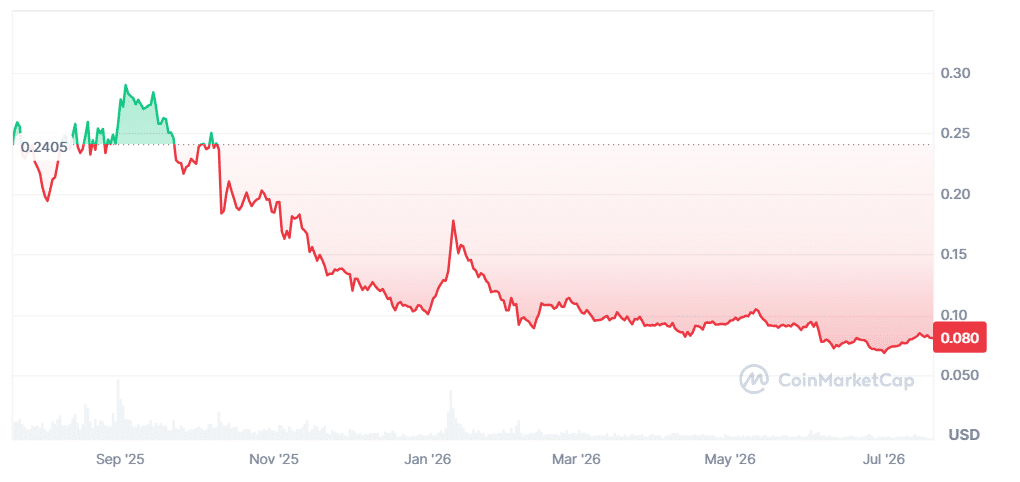
Hopmans pointed out that POL traded near $0.156 on January 9, 2026, when the Foundation promised greater transparency around treasury strategy. By July 19, the price hovered around $0.081, a roughly 48% decline, even as the chain reported record transaction volumes and stablecoin activity.
Holders’ Concerns Over Transparency and Sustainability
The core issue raised centers on the Foundation’s reporting commitments. In January, officials stated the Foundation would set treasury strategy while Labs handles execution, with biannual reports measuring results against stated goals.
As of mid-July, the H1 2026 report had not been published, and no public 2026 strategy, budget, or measurable targets were readily available, according to Hopmans.
This matters because lower token prices reduce the real purchasing power of emitted POL allocated to builders, infrastructure, security, and development. With validators and ecosystem projects relying on these funds, sustained dilution without clear outcomes risks weakening long-term network health.
Hopmans asked whether the Foundation is still actively building a sustainable future for both Polygon and $POL beyond any single company’s success. “Holders cannot demand guaranteed returns,” the post acknowledged, “but they can reasonably expect clear information, delivery on public commitments, and an explanation of how progress strengthens the economic model for $POL.”
The concerns reflect broader challenges in layer-2 and scaling ecosystems. Many projects have transitioned from community-driven foundations to venture-backed companies, creating misalignments when token prices diverge from on-chain metrics. Polygon has seen explosive growth in payments use cases, with stablecoin supply exceeding $3 billion and leading market share in certain USDC transaction volumes. Yet token holders feel the benefits accrue primarily to the Labs entity rather than distributed through tokenomics.
Foundation Emphasizes Fundamentals and Long-Term Vision
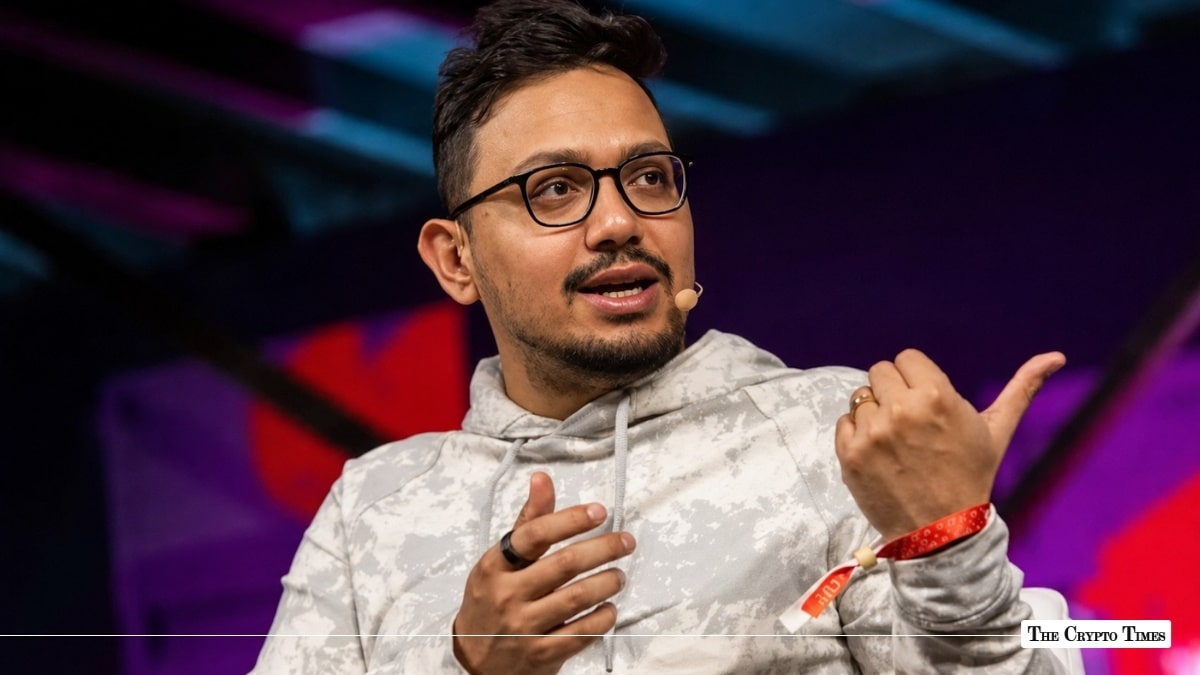
Sandeep Nailwal responded early on July 20, pushing back against price-focused criticism. He argued that comparing POL in isolation ignores category performance; relative to peers such as ARB, OP, STRK, and SCR, POL has held up similarly or better amid broader Ethereum ecosystem weakness.
Nailwal urged an “intellectually honest” assessment of fundamentals: transaction counts, gas fees generated, annual chain revenue flowing to holders, reorg rates, and capacity metrics—all of which he said have grown exponentially.
Chain revenue reportedly increased roughly 10x compared to 2025 levels, driven by high-volume payments activity. Nailwal noted that at leadership levels, neither he nor Boiron can directly control token price. Their mandate is building protocol and ecosystem sustainability. A profitable Labs, he explained, reduces reliance on the POL treasury for funding tech and growth initiatives, freeing resources for core network development.
The CEO emphasized time horizons. Having spent years on Polygon, Nailwal and colleagues are committed to decisions that ensure survival and thriving over the next decade, not short-term price relief. He acknowledged difficulty explaining these realities to retail participants fixated on daily charts versus builders focused on infrastructure.
Independent data supports parts of both sides. On-chain analytics show Polygon processing billions in payment volume, with low fees and high throughput making it attractive for stablecoin transfers. Meta’s recent USDC creator payouts on Polygon and partnerships with traditional finance players underscore real-world adoption. However, token unlocks, emissions, and macro market conditions continue pressuring price.
The exchange highlights a maturing phase for Polygon. Labs’ pivot to a revenue-generating payments stack, leveraging regulated ramps, wallets, and settlement layers, positions the company for traditional finance integration. Foundation officials maintain this indirectly benefits the chain through increased activity and reduced treasury burn rate. Yet the lack of timely reporting has fueled skepticism among holders who feel sidelined in the transition.
As Polygon navigates this dual structure, the conversation may prompt renewed focus on governance. Clearer communication on treasury allocation, measurable milestones, and mechanisms for token value capture could help bridge the divide. Whether the Foundation delivers the overdue H1 report and 2026 strategy with concrete targets will likely influence community confidence heading into the second half of the year.
The episode serves as a case study in crypto’s evolution: companies professionalize while token holders demand skin in the game. For Polygon, balancing corporate agility with decentralized accountability remains the central challenge. Observers will watch whether improved fundamentals eventually translate into sustained token performance or if structural changes are needed to better align incentives.
Also read: Cardano Activates Van Rossem Hard Fork, First Approved Fully On chain