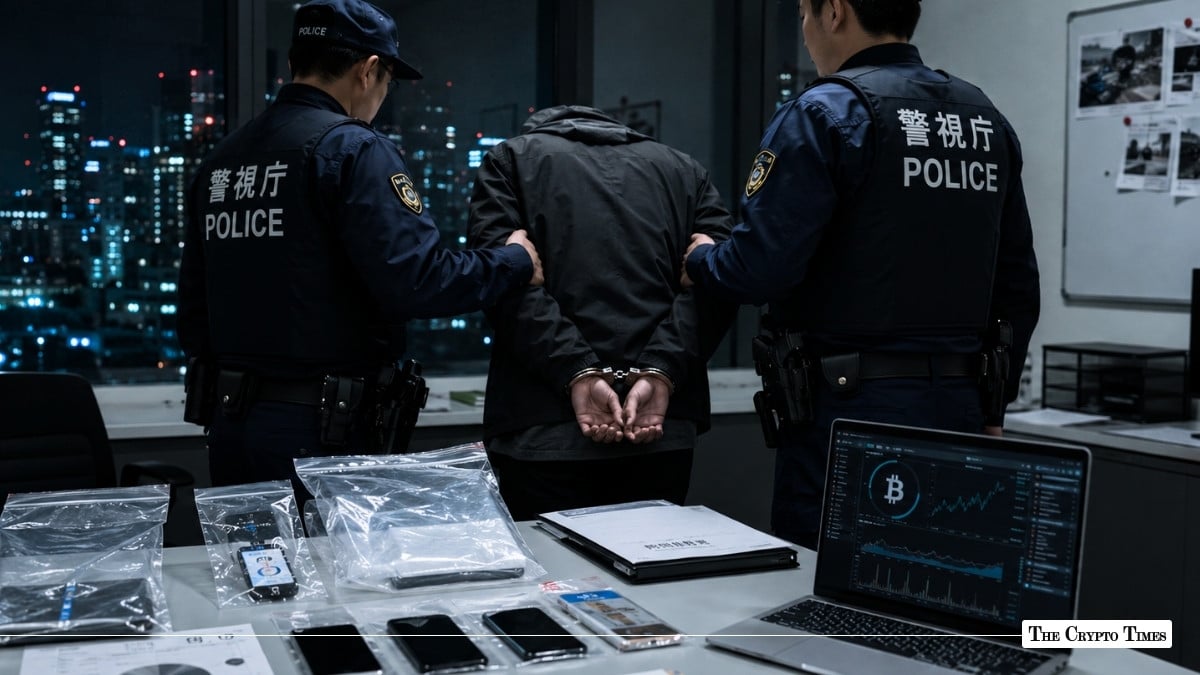
The Tokyo Metropolitan Police Department has arrested Hu Xiaowei, a 44-year-old Cypriot national suspected of being a high-ranking executive within the Prince Group—a massive, transnational criminal syndicate accused of laundering billions in illicit cyber-fraud proceeds.
According to investigative sources, Hu was traced to Osaka using security camera footage and hotel registry records. He was taken into custody alongside a 31-year-old Chinese national, Li Yin Hong, and a third accomplice, on charges of violating immigration and residency laws by submitting a fraudulent move-in notification to a Tokyo ward office.
The arrest marks an unprecedented escalation in Japan’s involvement in the global crackdown against Southeast Asian “pig-butchering” networks, signal-boosting Tokyo’s intent to deny safe haven to heavily sanctioned international fugitives.
The Path to Permanent Residency Fraud
According to police reports, Hu and his co-conspirators submitted a false residency notification to Tokyo’s Chuo Ward office. During initial interrogation, Hu admitted to transferring his residency registry on paper specifically to secure a permanent Japanese visa, though he claimed he left the exact logistical steps to a localized visa agent.
However, corporate and real estate records paint a far more complex picture of Hu’s operations in Japan. Investigators revealed that a Tokyo-based shell company under Hu’s direct leadership has been operational since 2023, quietly expanding its capital base from 8 million yen to 50 million yen.
Investigative journalists at the OCCRP previously revealed that Prince Group insiders have been aggressively funneling capital into prime Tokyo real estate. Hu himself is linked to private jet flights into Japan and extensive global assets, including over $44 million in frozen London properties.
A Multibillion-Dollar Cyberfraud Empire
The Prince Group, formerly led by chairman Chen Zhi (who was quietly deported to China from Cambodia earlier this year), has been under intense global scrutiny. In late 2025, the U.S. Treasury Department issued sweeping sanctions against 146 individuals and entities tied to the conglomerate.
U.S. and U.K. authorities allege the Prince Group operates as a front for a multi-billion-dollar transnational criminal organization. The network allegedly utilizes fortified compounds in Cambodia, reliant on forced labor and human trafficking, to scale specialized online financial fraud and cryptocurrency laundering operations globally. Hu has been identified by international regulators as a key financial architecture associate within this ecosystem.
Japan Sharpens Its Regulatory Teeth
The high-profile arrest lands as Japan aggressively remodels its financial architecture to combat digital asset exploits and close cross-border loopholes.
Earlier this year, the Financial Services Agency (FSA) signaled its zero-tolerance approach by ordering Moomoo Securities to freeze new account creations following severe internal control gaps. Simultaneously, Japanese lawmakers are moving forward with milestone legislation to formally reclassify digital assets as traditional financial instruments, a compliance migration designed to clear the path for institutional spot Bitcoin and XRP ETFs while subjecting the broader ecosystem to strict anti-money laundering (AML) protocols.
Tokyo police have seized multiple smartphones and laptops from Hu’s Osaka hideout. Data forensics teams are currently auditing the devices to map out the broader financial networks, wallet addresses, and local entities the Prince Group used to plant its roots in the Japanese financial sector.
Also Read: Fentanyl Ring Tied to $1M zkSync Token Scam Run From Japan