Base is making a calculated bet on the next phase of crypto’s institutional buildout, and it has little to do with the token its community keeps asking for. The Coinbase-incubated Ethereum Layer 2 will activate its Beryl upgrade on mainnet on June 25, introducing a native token standard purpose-built for the stablecoin and real-world-asset issuers now flooding onchain finance.
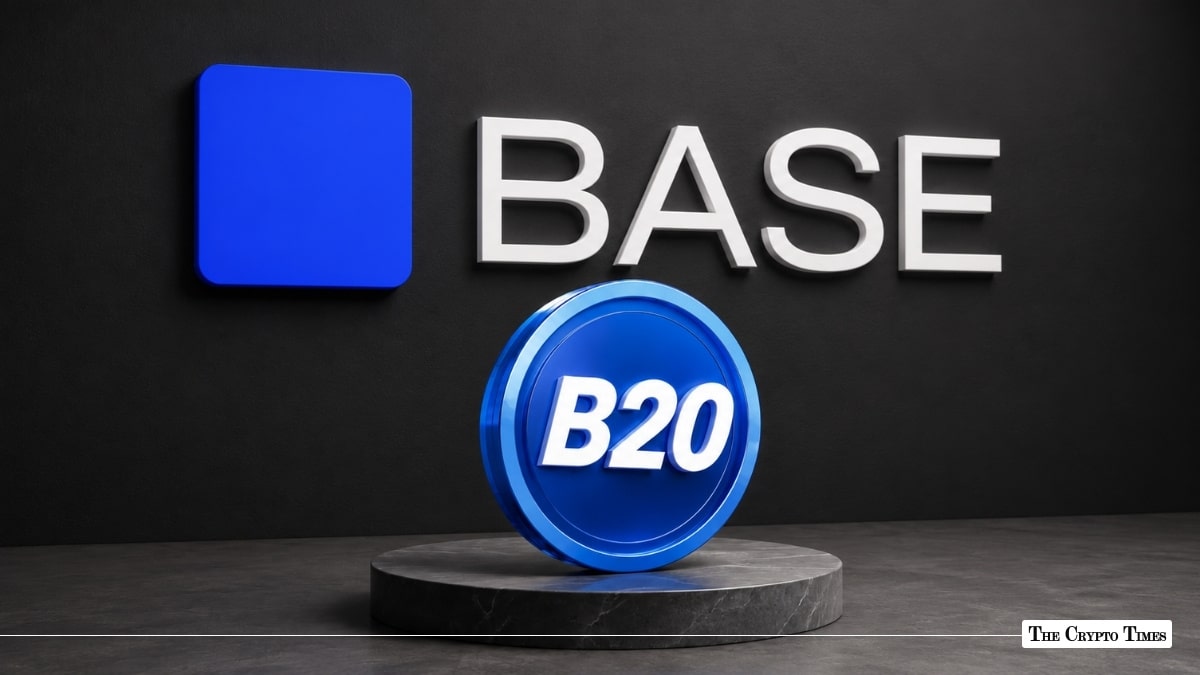
Beryl is Base’s second independent network upgrade, following Azul, which reached mainnet in May. Its centerpiece is B20, a protocol-level token standard that lets issuers create stablecoins and other assets directly within Base’s node software through custom precompiles, rather than through conventional smart contracts. According to Base’s engineering team, that native execution can cut transfer costs by roughly half.
Crucially, B20 is designed to be invisible to the rest of the ecosystem: it supports the full ERC-20 specification and adds ERC-2612 permit functionality for signature-based approvals, so the tokens behave as standard ERC-20s in existing wallets, exchanges, and apps with no special integration.
It ships in use-case variants, an “Asset” version for general issuers and a “Stablecoin” version tuned for that category, and the code has been audited by Base alongside security firms Spearbit and Cantina. A future update is expected to let issuers pay transaction fees in their own B20 tokens rather than ETH.
The upgrade also delivers two quieter wins. Base is cutting the standard withdrawal period to Ethereum from seven days to five for the canonical bridge route most providers use and shipping Reth V2, an execution-client update that reduces node storage and resource consumption while improving throughput. Base’s next upgrade, Cobalt, is targeted for September and is expected to bring native account abstraction.
A Bet on the Tokenization Boom
The strategic logic behind B20 is the institutional tokenization race. Base describes the upgrade as making the chain a “first-class issuance platform,” and the compliance-oriented Stablecoin variant signals exactly who it is courting: stablecoin providers, asset managers, and tokenized-RWA platforms that need native controls rather than bolted-on smart-contract logic.
That ambition tracks a fast-growing market. Tokenized real-world assets recently reached roughly $34 billion in value, with the broader stablecoin market above $300 billion, and the Ethereum ecosystem, Layer 1 plus its L2s, accounts for the large majority of RWA value on-chain, making EVM networks the default home for institutional issuance.
Base is already deep in that push: Coinbase has positioned the chain at the center of its tokenization and stablecoin strategy, hosting tokenized money-market funds and treasuries and capturing the majority of agentic stablecoin payment volume. B20 is the protocol-level infrastructure meant to consolidate that lead, lowering the cost and friction of minting compliant assets directly on Base.
It also arrives as the GENIUS Act formalizes how stablecoins must be issued and reserved in the United States, pulling regulated issuers onchain and intensifying competition among networks to host them.
Why It Isn’t the “Base Token”
Here is where expectations need a correction. B20 is a standard for issuers to create their own tokens, stablecoins, RWAs, and other instruments, not a native Base token or a governance asset for users. Despite headlines framing the upgrade as a step toward a token launch, B20 does nothing to confirm one.
The conflation is understandable because the Base-token question is genuinely live. Base lead Jesse Pollak openly invited community input on a potential Base token back in October 2025, and speculation flared again this week after observers spotted a “Sybil-Resistant Airdrop” claim contract in an official Base GitHub repository, which others argued was simply a developer demo for anti-bot token-claim infrastructure. None of that has been confirmed as a token launch, and B20 is unrelated to it. The accurate read is that Base is building issuance rails for businesses while the question of its own token remains exploratory.
The Competition, and the Caveats
Base is not building in a vacuum. Rival chains are chasing the same issuers: Solana introduced a developer platform with a GENIUS-compliant issuance module for stablecoins and RWAs, and major EVM networks already host the bulk of tokenized assets. Winning institutional issuance will come down to cost, compliance tooling, and distribution as much as raw technology.
There is also a sober counterpoint to the tokenization narrative. Research from a16z Crypto has noted that much tokenized value sits idle on-chain, billions in tokenized bonds and assets that are issued but barely used in DeFi, suggesting that issuance infrastructure alone does not guarantee activity. B20 is new and unproven at scale, and embedding a token standard at the protocol level raises its own questions about issuer flexibility and lock-in.
For now, Beryl is best read as Coinbase methodically turning Base into tokenization infrastructure, one upgrade at a time. The steady cadence from Azul to Beryl to Cobalt is the real signal: a chain being engineered for regulated, large-scale issuance rather than retail speculation. Whether issuers adopt B20, and whether a Base token ever follows, are the open questions Beryl leaves on the table.
Also Read: Coinbase CEO Unveils Its Biggest Overhaul With AI and Tokenized Stocks