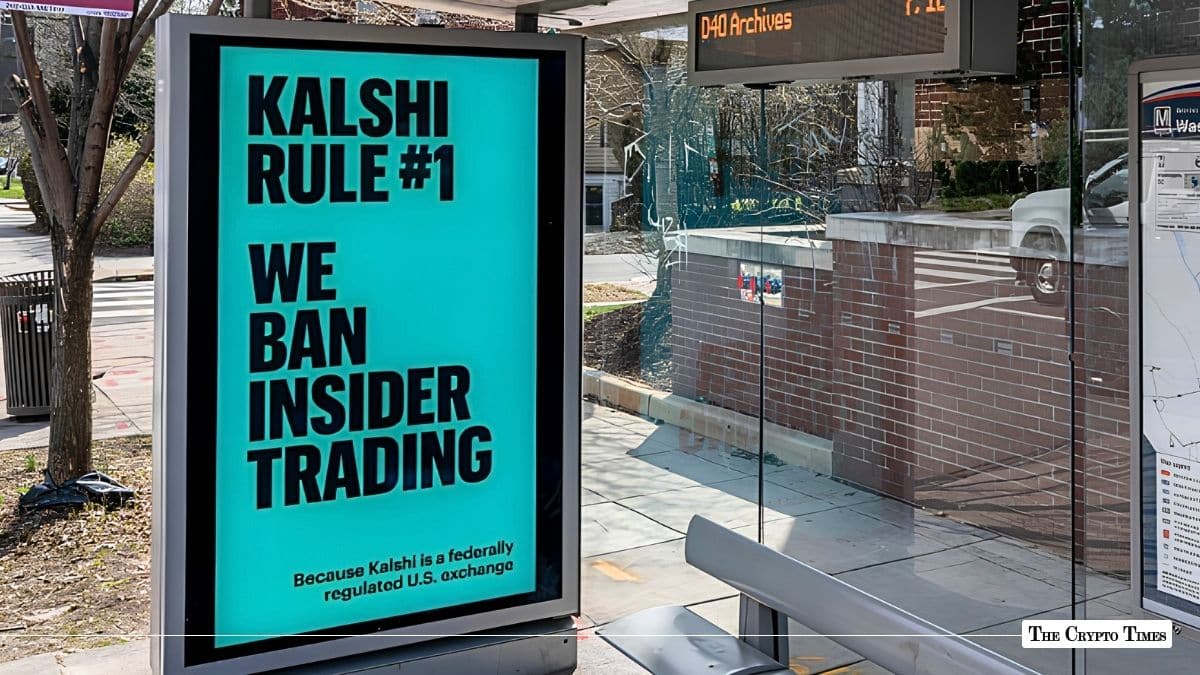
Kalshi will start requiring some traders to disclose their employer before placing bets in markets it deems high-risk for insider trading, a significant tightening of identity rules for the largest U.S. prediction-market platform. The change was confirmed by Kalshi in a Tuesday blog post outlining a broader package of market-integrity measures.
The requirement does not apply to every trade. It is triggered only in markets Kalshi’s new risk-scoring system flags as carrying elevated potential for insider activity or manipulation — contracts tied to corporate performance and earnings, new product launches, national security, and major geopolitical events such as the Iran war. Affected users will be asked to submit employment details through an online form before they can trade.
What the Employer Check Actually Does
Kalshi says the goal is to identify “presumptive insiders” — traders holding material, non-public information about a market’s outcome — and screen them out before a trade is placed rather than chasing them afterward. The company offered a concrete example: a Google employee attempting to trade a Google-related contract could be blocked based on their disclosed employer.
Notably, Kalshi says it will not verify the employment information users submit unless an investigation is warranted. That leaves a self-reported system as the first line of defense, with verification reserved for cases that already look suspicious. Until now, Kalshi collected addresses, dates of birth, phone numbers, identity documents, and partial Social Security numbers, but not employer data.
The Scandals Driving the Change
The crackdown lands after a run of insider-trading cases that have dogged the prediction-market sector, most of them at Kalshi’s chief rival. In May, U.S. prosecutors charged a Google engineer who allegedly used confidential internal search data to place winning trades on Polymarket, reportedly netting more than $1 million. A month earlier, prosecutors charged a soldier with using classified information to bet on Polymarket ahead of the capture of former Venezuelan President Nicolás Maduro.
Kalshi has had its own issues closer to its core business: earlier this year it fined and suspended three political candidates for trading on their own elections, conduct it labeled political insider trading. The pattern has drawn Washington’s attention, with the House Oversight Committee opening an investigation into both Kalshi and Polymarket over user verification and suspicious activity tied to military and political events.
A Broader Market-Integrity Package
The employer rule is one piece of a wider set of changes Kalshi says are effective immediately, recommended by an independent Surveillance Audit Committee the company established in February. Alongside the disclosure requirement, Kalshi is rolling out the risk-scoring framework that decides which markets are sensitive enough to trigger screening, and in-platform whistleblower tools that route user reports of suspicious trading straight to its surveillance team.
The company also disclosed enforcement figures for the first quarter: more than 150 investigations conducted, over 100 potential insider trades blocked, and more than 20 referrals to law enforcement and regulators. The measures extend an escalating compliance effort that began in March, when Kalshi moved to block athletes and politicians from trading on events they could influence.
Positioning as the Compliant Player
For Kalshi, which leads the sector with roughly 52% of prediction-market volume, the integrity push doubles as positioning. As a CFTC-regulated venue, it has consistently framed itself as the rules-following alternative to offshore and crypto-native rivals, and tighter screening reinforces that pitch as Congress weighs bills targeting the industry. Rival Polymarket has tightened its own insider rules but pushed back on mandatory identity requirements, highlighting a strategic split over how much friction each platform is willing to add.
The open question is whether self-reported, unverified employer data can meaningfully stop a determined insider or whether it mainly creates a paper trail to act on after the fact. For now, it raises the cost of casually trading on information you shouldn’t have—and signals to regulators that the industry leader is willing to ask its users a question exchanges rarely have: where do you work?