Key Highlights
- Kalshi is deploying new technological guardrails to preemptively block political candidates and athletes from trading on their own campaigns and sports they are involved in.
- The platform is also adding a whistleblower functionality directly to its market pages, allowing users to flag potential violations as they review public trading data.
- Polymarket also instituted its own set of bans to prohibit users from trading on contracts where they might possess confidential information or could influence the outcome of an event.
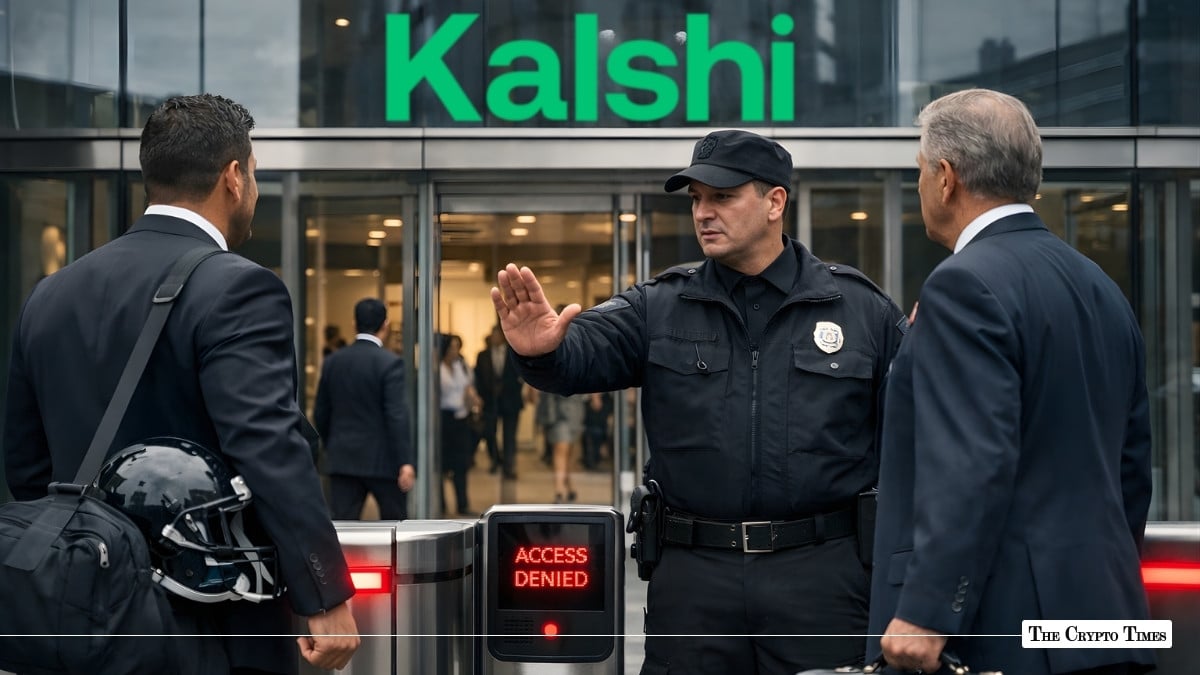
Kalshi, the largest prediction market operating in the United States, announced a sweeping expansion of its insider trading and market manipulation defenses, deploying new technological guardrails that preemptively block politicians, athletes, and other insiders from trading on markets where they hold informational or outcome-influencing advantages.
The announcement, published via the company’s blog, introduces two major screening mechanisms, a new whistleblower feature, and signals Kalshi’s bid to get ahead of a regulatory environment that has turned sharply hostile in a matter of weeks.
The timing is not coincidental: the guardrails were unveiled the same day Sens. Adam Schiff (D-CA) and John Curtis (R-UT) introduced the bipartisan Prediction Markets Are Gambling Act, which would ban CFTC-regulated exchanges from listing contracts tied to sports and casino-style games.
From reactive to preemptive
Kalshi’s new measures target two categories of insider risk: political insiders and sports participants.
On the political side, the platform has launched tools designed to preemptively block political candidates from trading on their own campaigns. Kalshi’s policies have always prohibited such trades, and the platform already blocks elected officials like members of Congress. The new system extends that enforcement layer to candidates before they can place a trade.
Kalshi cited a recent enforcement action against a candidate who traded on his own election in violation of exchange rules as the catalyst. That case involved former California gubernatorial candidate Kyle Langford, who wagered approximately $200 on his own candidacy and posted about it on social media. Langford was slapped with a five-year ban from Kalshi and a financial levy equivalent to 10 times his wager size.
On the sports side, Kalshi is implementing a new policy in which individuals involved in college and professional sports—including athletes, team personnel, and referees—will be preemptively blocked from trading on markets associated with the sports in which they are involved.
These trades have always been banned but previously required post-trade investigation. After months of collecting and developing screening lists for both collegiate and professional sports leagues, in partnership with integrity compliance firm IC360, known athletes, officials, and employees will now be blocked at the point of trade.
Robert DeNault, Kalshi’s head of enforcement, told Axios that the company will have a better shot at blocking illicit efforts with preemptive bans. “You’ll never stop all illicit activity everywhere. That’s just an impossible standard. But you shouldn’t make the perfect the enemy of the good either,” DeNault said.
The platform is also adding a whistleblower functionality directly to its market pages, allowing community members to flag potential violations as they review public trading data—an acknowledgment that no screening system is foolproof against motivated bad actors.
Polymarket rewrites its integrity rules on the same day
Kalshi was not alone in scrambling to shore up its defenses. Polymarket simultaneously instituted a broader set of bans, rewriting its rules to clearly state that users cannot trade on contracts where they might possess confidential information or could influence the outcome of an event. The prohibition extends beyond athletes to include company officials, policymakers, or anyone with enough influence to affect the outcome of an event or access advance information.
Polymarket’s updated rules also announced “enhanced market integrity rules” that clarify three categories of insider trading: trading on illegal tips, trading on stolen or private data, and trades placed by individuals who can influence outcomes. The platform also introduced Market Integrity pages that clarify these rules and allow users to report suspicious activity.
The coordinated timing of both announcements—on the same day as the Schiff-Curtis bill—underscores the urgency the industry feels. Both platforms are attempting to demonstrate self-regulatory capacity before Congress imposes restrictions that could fundamentally restructure their business models.
Why self-regulation may not be enough
The new guardrails address insider trading and manipulation, but they do not resolve the fundamental classification dispute that has put the industry on a collision course with state regulators and federal lawmakers.
The Prediction Markets Are Gambling Act introduced by Schiff and Curtis on Monday would ban prediction markets from creating contracts related to sports entirely. If enacted, the bill would substantially destroy much of Kalshi and Polymarket’s future business prospects, given that sports contracts account for up to 90% of volume on these platforms.
Kalshi’s blog post explicitly frames the new measures as proactively addressing “the CFTC’s guidance and Congressional bill proposals to prevent insider trading.” But the Schiff-Curtis bill does not merely seek to prevent insider trading—it seeks to eliminate sports contracts from prediction markets altogether, regardless of how well those markets are policed. The distinction between regulating bad actors within a market and banning the market itself is one that Kalshi’s new guardrails cannot bridge.
A pattern of enforcement actions
The new screening tools build on a track record Kalshi has been constructing to demonstrate regulatory seriousness. On February 25, Kalshi announced it had reported two insider trading cases to the Commodity Futures Trading Commission (CFTC). One involved the Langford candidacy trade; the other involved an editor for YouTube creator MrBeast who traded on insider knowledge about content decisions.
The athlete screening announcement also follows Milwaukee Bucks star Giannis Antetokounmpo becoming a Kalshi investor, a development revealed roughly six weeks earlier that sparked concern about athletes potentially trading event contracts where they can influence outcomes.
Kalshi’s partnership with IC360, the integrity compliance firm that works with state-regulated sports betting platforms, gaming regulators, and sports leagues, was first announced in March 2025. The company says it has spent the past year building the screening lists and technological infrastructure announced today.
The regulatory pressure driving the response
The self-regulatory push comes amid an unprecedented wave of legal and legislative action against prediction markets. Nevada secured a temporary restraining order against Kalshi on March 20. Arizona filed criminal charges against Kalshi’s parent companies on March 17. Massachusetts and Michigan have filed separate lawsuits. Officials in at least 11 states have sent cease-and-desist orders to prediction market companies.
At the federal level, at least seven bills targeting prediction markets have been introduced in 2026, covering everything from sports contract bans (Schiff-Curtis, Moore-Carbajal, Titus) to war and death contract bans (DEATH BETS Act, BETS OFF Act) to insider trading restrictions for federal officials (Klobuchar-Merkley, Torres).
Kalshi stated that “ensuring market integrity is not just a goal — it is a cornerstone of our business model,” adding that the company will “continue to innovate and improve our systems to protect consumers.” Whether that innovation is enough to satisfy lawmakers who view the platforms as fundamentally incompatible with state gambling frameworks remains the central question facing the prediction market industry in 2026.