Crypto Times Logo Black
Google News Follow Banner
  • News
    • Market
    • Bitcoin
    • Ethereum
    • Altcoins
    • Regulations & Policies
    • DeFi News
    • Blockchain News
    • Industry
  • Exclusive
    ExclusiveShow More
    CLARITY Act Fails 49-50 in US Senate as SEC & CFTC Move Ahead on Crypto Rules Within 48 Hours
    CLARITY Act Fails 49-50 in US Senate as SEC & CFTC Move Ahead on Crypto Rules Within 48 Hours
    Illustrated collage featuring diverse people surrounded by crypto symbols and a corporate boardroom backdrop.
    Quiet Racism in Crypto Gets “Obvious” During Circle’s Arc Mainnet Launch
    3D Liquid Network logo with a hooded hacker shadow and computer code overlays in the background
    Liquid Network Exploit Explained: Unbacked L-BTC and the $320M Peg-Out
    Clarity Act bill with a September 15 calendar and Senate chamber in the background.
    Can the Senate Pass the CLARITY Act on September 15? Here’s the Vote Math
    Simon Gerovich, CEO and President of Metaplanet
    Inside Metaplanet’s Floating Option Pool: How a 2023 Option Clause Followed Its Bitcoin Treasury Era
  • Opinion
    OpinionShow More
    Jackson Hole 2026: Crypto Is No Longer Outside the Fed’s Door
    Jackson Hole 2026: Crypto Is No Longer Outside the Fed’s Door
    The Architecture of Trust Same Routes, New Risks in Global Tokenisation
    The Architecture of Trust: Same Routes, New Risks in Global Tokenisation
    The Architecture of Trust What 4,000 Years of Trade Teach Us About RWA Tokenisation
    The Architecture of Trust: What 4,000 Years of Trade Teach Us About RWA Tokenisation
    One P2P Trade, Months of Limbo Why Innocent Indian Crypto Users Keep Paying the Price
    One P2P Trade, Months of Limbo: Why Innocent Indian Crypto Users Keep Paying the Price
    CLARITY Act The Bill Exists, the Deal Does Not, Trump Has to Wait
    CLARITY Act: The Bill Exists, the Deal Does Not, Trump Has to Wait
  • Learn
    • Explained
    • How To
    • Insights
  • IndicesNew
    • India USDT Premium Index
    • India USDC Premium Index
  • Videos
  • More
    • About Us
    • Our Authors
    • Contact Us
    • Editorial Policy
    • Daily Crypto Puzzles
The Crypto TimesThe Crypto Times
  • All News
  • Market
  • Bitcoin
  • Ethereum
  • Altcoins
  • Regulations & Policies
  • Blockchain
  • DeFi
  • Industry
  • Exclusive
  • Opinion
Search
  • News
    • Market
    • Bitcoin
    • Ethereum
    • Altcoins
    • Regulations & Policies
    • Blockchain
    • DeFi
    • Industry
    • Exclusive
    • Opinion
  • Learn
    • Explained
    • How To
    • Insights
  • IndicesNew
    • India USDT Premium Index
    • India USDC Premium Index
  • Quick Links
    • About Us
    • Our Authors
    • Contact Us
    • Editorial Policy
    • AI Policy
    • Sponsored & Advertorial Policy
    • Daily Crypto Puzzles
  • Videos
  • Glossary
Follow US
© 2026 By Crypto Times. All Rights Reserved.
Exclusive

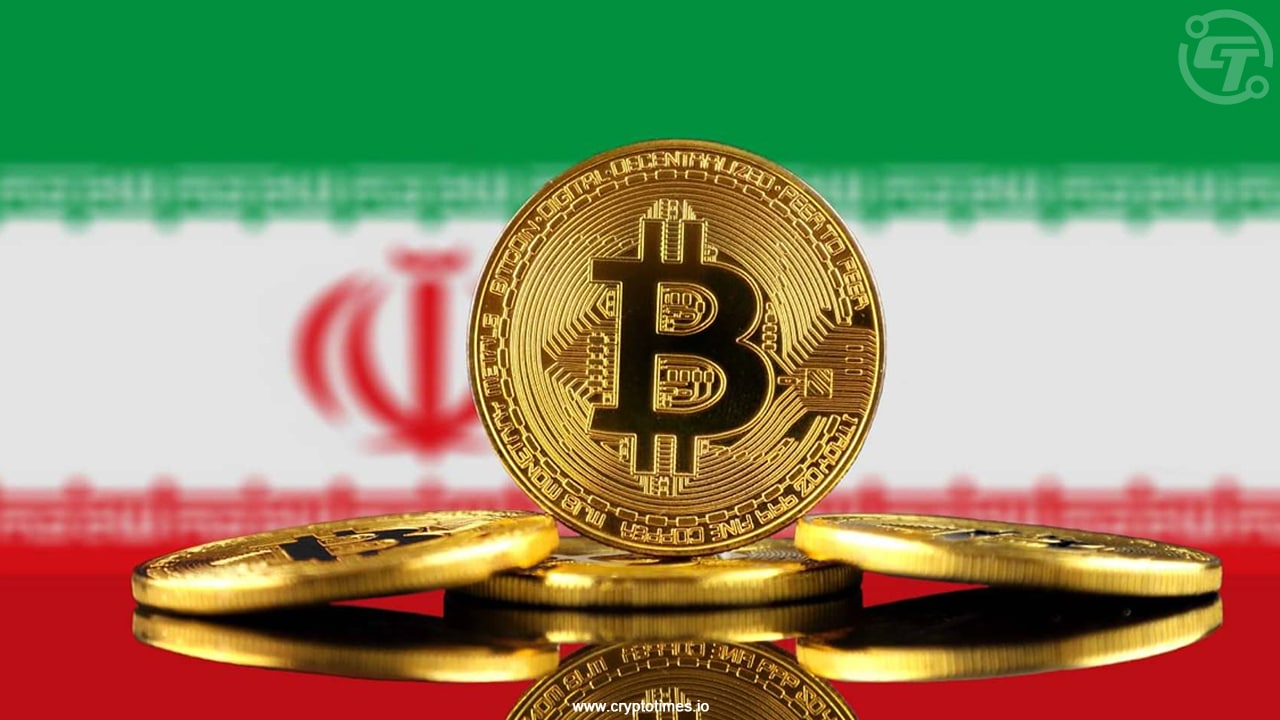
How does Iran Avoid U.S. Sanctions and Sell Oil Using Cryptocurrencies?

Iran accounts for about 4.5% of Bitcoin mining, generating hundreds of millions in crypto assets to buy imports and evade sanctions.

Written By Ronak Kumar
Fact Checked by Dhara Chavda
Published 2024-10-02·Updated 2 years ago
Make The Crypto Times preferred on GoogleGoogle
How does Iran Avoid U.S. Sanctions and Sell Oil Using Cryptocurrencies

Iran and Israel are in a tense conflict that escalated last night when Iran launched a missile attack on October 1, 2024, firing about 200 missiles. Israel successfully intercepted most of these with its Iron Dome defense system, aided by nearby U.S. naval destroyers. This conflict intensified after Israel killed Hassan Nasrallah, the leader of Hezbollah, on September 27.

This the the 2nd time when Iran attacked Israel this year, after firing hundreds of missiles and drones at it in April. Amid this Iarn-Israel conflict, the U.S. continued its sanctions on Iran for supporting terrorist organizations. The US imposed strict sanctions on Iran in 2018 over concerns about its nuclear program, sparking fears of potential weapon development. In response to the resulting severe recession and plummeting oil exports, Iran has turned to Bitcoin mining to address its economic challenges.

However, the country is leveraging its abundant energy resources to mine cryptocurrency, which provides a new source of income. This strategy not only helps Iran navigate sanctions but also ties its financial future to the evolving world of digital currencies.

Mining Bitcoin to Bypass Sanctions

Bitcoin mining is a very demanding process that involves a lot of electricity to run specific computers. For this, miners are rewarded with Bitcoins, which means that energy is exchanged for digital money. For Iran, which is rich in oil and natural gas but poor in cash, this process is a god-sent.

Experts believe that Iran controls about 4.5% of the Bitcoin mining network and earns hundreds of millions of dollars in digital currencies. These funds can then be used to buy imports in a way that sanctions limit the ability to do so financially. 

Iran Turns to Bitcoin Mining to Overcome Economic Sanctions
Source: Elliptic Research

This has almost become a policy for the Iranian government, with reports from the think tanks affiliated with the presidential office talking about using cryptocurrencies to bypass the sanctions.

The Role of Chinese Businesses

Iran’s Bitcoin mining industry has also enjoyed investments from China, the leading country in the global mining industry. In July 2019, Iran legalized cryptocurrency mining but demanded that miners had to obtain a license and pay a higher electricity rate. 

Recently, Iran even offered bounties of up to $24 for tips on illegal crypto mining as the country grapples with power shortages amid a severe heatwave. Temperatures reaching 113°F (45°C) have strained the electricity grid, which officials blame, in part, on unauthorized crypto mining.

However, this has not deterred many unlicensed operations who are still in the business, some of them using free electricity from mosques. 

Chinese firms have also invested in mining in Iran and have tended to provide cover for links with the Iranian military. One of the identified facilities is situated in the area of Rafsanjan Special Economic Zone, where large-scale mining activities have been set up.

Energy Conversion: From Oil to Crypto

The energy used by Iranian miners is off the charts. Accounts show that this mining activity consumes approximately 600MW of electricity, which is equivalent to 10 million barrels of crude oil per annum. 

This is equivalent to about 4% of Iran’s total oil exports in the year 2020. In effect, by mining Bitcoin, Iran is exporting its energy and bypassing trade sanctions at the same time.

Implications for Financial Institutions

This approach causes a lot of concern for financial institutions that deal with cryptocurrencies. With Iran mining Bitcoin, there is a 4.5% likelihood that any Bitcoin transaction will involve fees paid to Iran miners. 

For the financial institutions providing the crypto services, this is a significant sanctions risk because any association with the Iranian entities is likely to attract severe legal consequences.

As the US is thinking about the possibility of rejoining the nuclear deal, the place of Bitcoin mining in Iran’s economy could emerge as a major point of discussion. 

Sanctions violations are a growing concern for financial institutions and they have to be very careful and establish the right measures. This also involves surveillance and banning of crypto transactions from Iranian miners.

Managing Sanctions Risks

However, there are solutions that financial institutions can take to mitigate the sanctions risks of Iranian Bitcoin mining. Some of the blockchain analytics tools can be used to identify and prevent deposits from Iranian entities. Through such approaches, financial institutions can avoid any violation of sanctions through their services.

Iran’s Bitcoin mining as a way to bypass sanctions and turn its oil into cash shows how cryptocurrencies intertwine with international trade restrictions. Since the crypto environment is still developing, financial organizations must be more cautious and timely address sanctions risks. 

Bitcoin Price Reaction to the Iran-Israel Conflict

The missile attack by Iran on Israel has triggered fear in global markets, causing Bitcoin’s price to dip to $60,000 as investors flee to safer assets like gold and crude oil. Following this escalation, Bitcoin plummeted from $64,000 to $60,315 before recovering slightly to $61,800, according to CoinMarketCap.

A shocking 154,000 traders faced liquidation during the $4,000 drop, resulting in total losses of $521 million. While the psychological support at $60,000 holds, further negative geopolitical developments could push the price lower.

Thus, the integration of innovative blockchain analysis and highly restrictive compliance measures can prevent the risks of functioning in a constantly evolving

Also Read: Middle East Tensions: Bitcoin Descends But Gold and Oil Rise

Disclaimer: The information researched and reported by The Crypto Times is for informational purposes only and is not a substitute for professional financial advice. Investing in crypto assets involves significant risk due to market volatility. Always Do Your Own Research (DYOR) and consult with a qualified Financial Advisor before making any investment decisions.

Follow The Crypto Times on Google News to Stay Updated!      Google News

Daily Crypto Puzzles
Tickerdle Tickerdle Crypto Connections Crypto Connections Crypto Crossword Crypto Crossword
TAGGED:United States
Share This Article
Whatsapp Whatsapp LinkedIn Telegram Copy Link

Daily Crypto Puzzles

Tickerdle crypto game Tickerdle Crypto Connections game Crypto Connections Crypto Crossword game Crypto Crossword

Latest News

SoFi Launches Stablecoin Settlement With Mastercard
Ondo Brings 20 Tokenizcks and ETFs to NEAR Blockchain 
Ondo Brings 20 Tokenized Stocks and ETFs to NEAR Blockchain 
Bitcoin ETFs Draw Nearly $1 Billion as Rally Pushes BTC Above $86K
Infosys and Chainlink Explore Blockchain Infrastructure for Finance 
Kalshi Seeks CFTC Approval to Let Institutions Trade Prediction Markets on Margin

Find Us on Socials

You may also like

A smartphone displaying the European Central Bank Eurosystem logo placed over Euro banknotes and coins.

ECB & EU Central Banks Urge Brussels to Scrap MiCA’s 60% Stablecoin Deposit Rule

Smartphone displaying Binance app logo held in front of the U.S. Department of Justice wall seal

Binance Faces US DOJ Probe Over Alleged Iran Sanctions Violations: Bloomberg

Portrait of SEC official with U.S. Securities and Exchange Commission seal and American flag in background

First Tokenized Stock Venues Could Launch Next Quarter, SEC Officials Say

Agora Gets Preliminary OCC Approval for National Trust Bank

Agora Gets Preliminary OCC Approval for National Trust Bank

The Crypto Times Logo PNG

News

All News
Market News
Bitcoin News
Ethereum News
Altcoin News
Regulations & Policies
DeFi News
Blockchain News
Industry News

Sections

Exclusive
Opinions
Learn
Insights
Videos
Glossary

India Premium Indices

Stablecoins
USDT
USDC

Play

Daily Crypto Puzzles
Tickerdle
Crypto Connections
Crypto Crossword

Company

About Us
Our Authors
Editorial Policy
AI Policy
Advertorial Policy
Contact Us
Career

Follow Us

X-twitter Linkedin Telegram Youtube Instagram

© 2026 The Crypto Times | A BITROCK TECHNOLOGIES L.L.C. Company.

DMCA.com Protection Status
  • Terms and Conditions
  • Disclaimer
  • Privacy Policy
  • Cookie policy
Do Not Sell or Share My Personal Information