Key Highlights
- U.S. banks are lobbying to ban stablecoin rewards to stop deposit flight to crypto platforms.
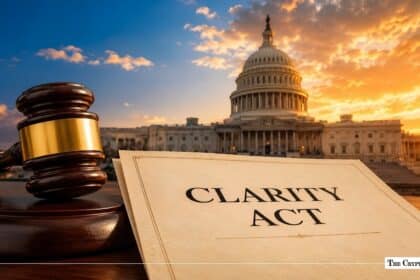
- The CLARITY Act has become a legislative battlefield between banks and crypto exchanges.
- Coinbase withdrew support after Senate amendments targeted stablecoin rewards.
- The American Bankers Association openly labeled stablecoins as deposit substitutes.
- This conflict is about controlling idle capital, not consumer protection.
Look at me. And listen carefully because I’m only going to say this once. You see what’s happening in D.C. right now with this CLARITY Act? It is a beautiful, high-stakes, Shakespearean tragedy.
Yes this whole “banks vs Coinbase” thing?
It’s not a misunderstanding. It’s not “policy nuance.”
It’s a street fight in a Senate suit.
Because at the core, this isn’t about consumer protection, investor safety, or regulatory clarity.
Let’s look at the players. On one side, you’ve got the American Bankers Association (ABA). These are the old lions. They’ve had the monopoly on your deposits for a century. They pay you 0.01% interest on your savings and then lend it out for 7%, pocketing the difference while drinking 30-year-old scotch.
Then comes crypto exchanges. They’re the new wolves on the block. They tell you, “Hey, park your money in USDC with us, and we’ll give you 5% ‘rewards’.” The banks are terrified. Why? Because they know if you realize you can earn 5% on a digital dollar instead of 0.01% in a dusty vault, you’ll move your money faster than a Ferrari on the Long Island Expressway. They call it “deposit flight.” I call it a bank run in slow motion.
And the banks, through the most powerful lobby network in Washington, have decided that with this, crypto is getting too close to the one thing they will never surrender quietly.
For the banks, stablecoin rewards aren’t a technical issue. They’re a competitive threat.
Because if users can hold dollars on crypto platforms and earn something—anything—banks lose their monopoly on idle capital.
And idle capital is their oxygen. Lose deposits, you lose cheap funding. Lose cheap funding, you lose the business model.
So they’re lobbying hard to slam this door shut.
How This Turned Into a Legislative War
This fight didn’t start in 2026. It started quietly, in 2025, when Congress tried to draw lines around crypto for the first time.
On July 18, 2025, the U.S. President Donald Trump signed the GENIUS Act into law (Public Law 119-27). Short for the Guiding and Establishing National Innovation for US Stablecoins, it was sold as a landmark moment for innovation. It set up the first official rulebook for stablecoin payment in the United States. They were formally declared not securities, removing a massive cloud of legal uncertainty.
But the compromise was embedded in the fine print. The law explicitly banned issuers from paying interest on stablecoins.
That line mattered. It was the line banks insisted on, as it ensured that stablecoins could exist, but not compete directly with savings accounts.
At the time, crypto firms accepted it. Because exchanges were not stablecoin issuers. Circle was. Tether was. And they are not moving around to give freebies. They didn’t care much. And Coinbase was a distributor. A platform. A marketplace.
And that distinction mattered—until the banks decided it shouldn’t.
Later that same month, the House passed the Digital Asset Market CLARITY Act with bipartisan support. It was the long-awaited market structure bill that would define whether the Securities and Exchange Commission (SEC) or Commodity Futures Trading Commission (CFTC) had authority over different crypto assets. It was meant to end years of regulatory ambiguity.
The bill moved to the Senate. And that’s where the tone changed.
The Letter That Changed Everything
On December 18, 2025, the American Bankers Association, joined by 52 state banking associations, sent a joint letter to Congressional leadership.
The language was technical, but the intent was blunt.
They argued that stablecoin rewards offered by exchanges were a “loophole”. They said rewards were functionally interest. They also warned of “deposit flight” from community banks to crypto platforms.
This was not a theory. This was lobbying triggered by flows. Because money had started moving.
And when money moves, the system reacts.
From that moment, the CLARITY Act was no longer a neutral framework. It became a battlefield.
January 2026: When the Bill Was Rewritten
So, how do the banks fight? They go to their buddies in the Senate. They have the Banking Committee Chairman Tim Scott (R-SC) Scott to drop a 137-page “amendment” into the CLARITY Act. This thing was a masterpiece of legislative sabotage.
- The Hit: It didn’t just ban interest; it banned “rewards.”
- The Goal: To make sure Coinbase can’t offer you a better deal than JP Morgan.
It’s a classic Wall Street move: If you can’t beat the competition, make the competition illegal.
Coinbase saw it instantly.
According to news reports that same day, the company warned it would withdraw support for the bill if the reward ban stayed in place. Stablecoin rewards weren’t a marketing gimmick for the exchanges; they were a core part of user acquisition, retention, and revenue.
Removing them would hollow out the platform’s ability to compete with banks.
Two days later, Coinbase stopped whispering.
Armstrong Goes Public
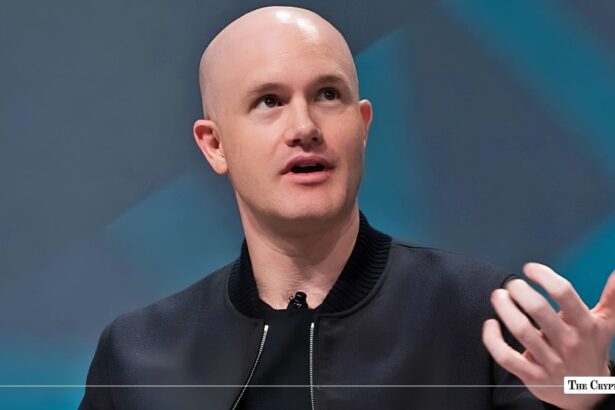
On January 14, Coinbase CEO Brian Armstrong Brian Armstrong looked at the bill, realized it was a total fugazi, and walked away. He saw the banks trying to turn the crypto industry into a regulated petting zoo.
Armstrong published a public statement on X and the Coinbase blog.
He didn’t hedge.
- He said the bill had been captured by the banking lobby.
- He said it introduced a de facto ban on tokenized equities.
- He said the new DeFi privacy rules were invasive and unworkable.
- And he said the stablecoin reward ban was anti-competitive by design.
That afternoon, the Senate Banking Committee postponed the markup indefinitely.
Official reason: continued bipartisan negotiations.Real reason: the bill just lost its biggest industry backer, and nobody wanted to vote on a corpse.
That doesn’t happen in Washington unless something breaks. And something did.
When the Fight Went Nuclear
On January 15, House Financial Services Committee Democrats sent a letter to SEC Chair Paul Atkins accusing the agency of retrenching from crypto enforcement.
They alleged a “pay-to-play” dynamic, claiming enforcement cases against Coinbase and Kraken were dropped after industry donations to the administration.
The White House Reacts
On January 17, journalists reported that White House officials felt blindsided by Coinbase’s withdrawal. The word used internally was “rug pull.”
Because the administration had brokered the CLARITY Act as a compromise to give crypto clarity, give banks safety, give regulators authority and Coinbase walked away at the last moment.
Someone from the White House told the reporters that, “This is President Trump’s bill at the end of the day, not Brian Armstrong’s”.
The trust among everyone has collapsed.
The ABA Stops Pretending
Three days later, on January 20, 2026, the American Bankers Association released its 2026 Blueprint for Growth.
This time, there was no euphemism as the ABA Targets Stablecoin Yields point blank now.
One of the top priorities was listed plainly: “Protecting local lending by stopping payment stablecoins from becoming deposit substitutes.”
That sentence is the entire story. It’s not about safety. It’s not about fraud. It’s not about innovation.
It’s about making sure dollars stay where they’ve always stayed.
Why This Matters
Because if stablecoins are allowed to exist but not compete, crypto becomes a utility, not a revolution.
If exchanges are regulated like banks but denied bank economics, competition disappears.
And if Congress writes laws that protect incumbents instead of markets, innovation doesn’t die. It just moves on-chain and practically outside the system, it can go anywhere offshore.
This isn’t a crypto problem.
It’s a U.S. competitiveness problem.
Final Truth
The CLARITY Act didn’t stall because lawmakers can’t agree on wording. It stalled because two systems collided.
One is built on control of deposits. The other is built on freedom of movement. And both know they can’t coexist comfortably.
So now the bill freezes. The rooms go quiet. And everyone pretends this is about technical language. But it’s not.
It’s about who gets to own the future of money.
And that fight is just getting started.