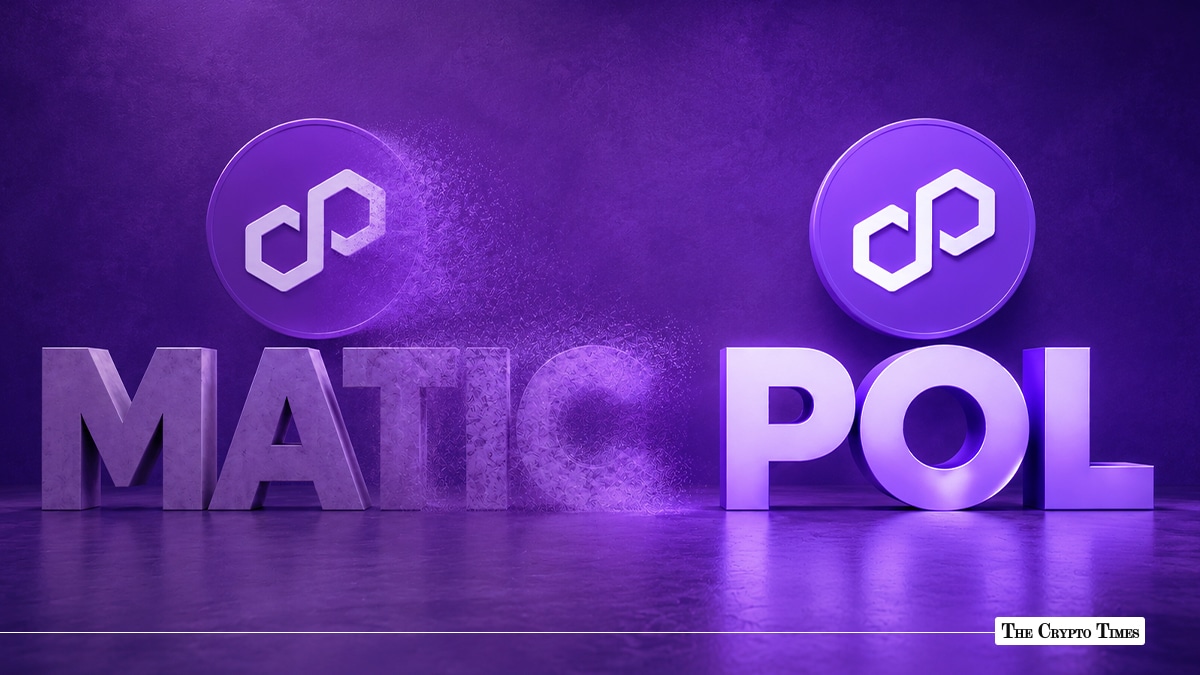
Polygon has changed significantly since its early days as Matic Network.
What began as an Ethereum-scaling project is now a broader blockchain ecosystem that includes Polygon Chain, an EVM-compatible proof-of-stake network; Agglayer, an interoperability layer connecting blockchains; and Polygon CDK, infrastructure for building custom chains.
The ecosystem’s native token has changed too.
POL replaced MATIC as the native gas and staking token of Polygon Chain on September 4, 2024. The migration uses a 1:1 conversion, meaning one MATIC can be upgraded to one POL.
Understanding Polygon in 2026 therefore requires separating four concepts:
- Polygon, the broader ecosystem
- Polygon Chain, formerly Polygon PoS
- POL, the ecosystem’s native token
- Agglayer, Polygon’s interoperability infrastructure
Key Highlights
- Polygon is an ecosystem, not a single Layer 2 network.
- Polygon Chain, formerly Polygon PoS, is an EVM-compatible proof-of-stake blockchain anchored to Ethereum through checkpoint contracts.
- POL replaced MATIC as Polygon Chain’s native gas and staking token in September 2024.
- MATIC held natively on Polygon Chain was automatically converted to POL; MATIC held on Ethereum may still need to be migrated through the official migration contract.
- Migrated MATIC is not burned. It is held in the migration contract, which includes a governance-controlled feature allowing POL to be converted back to MATIC.
- POL began with an initial supply of 10 billion tokens and currently has an ongoing emission schedule set by PIP-26.
- Polygon zkEVM Mainnet Beta was sunset in July 2026 and should no longer be described as an active Polygon network. Recovery of wallet-held assets runs through December 31, 2027.
- Miden, previously incubated by Polygon Labs, became an independent project in April, 2025.
- Agglayer is an interoperability protocol intended to connect different blockchains and liquidity rather than a conventional Layer 2 blockchain itself.
What is Polygon?
Polygon is a blockchain infrastructure ecosystem focused on low-cost EVM-compatible transactions, blockchain interoperability, and infrastructure for moving digital assets across networks.
Polygon began as Matic Network in 2017, originally focused on scaling Ethereum. Its mainnet launched in 2020, and the project rebranded to Polygon in 2021 as its ambitions expanded beyond a single scaling network.
Today, the term “Polygon” can refer to several related technologies rather than one blockchain.
| Polygon component | What it is | Role |
|---|---|---|
| Polygon Chain | EVM-compatible proof-of-stake blockchain | Executes applications and transactions |
| POL | Native ecosystem token | Gas, staking and network incentives |
| Agglayer | Cross-chain interoperability infrastructure | Connects liquidity and assets between chains |
| Polygon CDK | Blockchain-development toolkit | Lets organizations build custom chains |
| Open Money Stack | Broader payments/infrastructure offering | Wallets, settlement, ramps and cross-chain infrastructure |
This distinction matters because describing all of Polygon simply as an “Ethereum Layer 2” obscures how the current architecture actually works.
Is Polygon a Layer 2?
Not in the simple sense commonly used for networks such as Arbitrum or Base.
Polygon is a broader ecosystem containing different blockchain technologies.
The network commonly called Polygon PoS—and increasingly referred to by Polygon as Polygon Chain—is an EVM-compatible proof-of-stake blockchain anchored to Ethereum. It executes transactions using its own validator network and periodically submits checkpoints containing Polygon state to contracts on Ethereum.
That architecture differs from an Ethereum rollup.
A rollup is designed to derive its settlement or security guarantees more directly from Ethereum by posting transaction data or cryptographic commitments under a rollup-specific architecture.
Polygon Chain instead has its own proof-of-stake consensus and validator set.
A more accurate description is:
Polygon Chain is an EVM-compatible proof-of-stake blockchain anchored to Ethereum, while the broader Polygon ecosystem also develops interoperability and chain-building infrastructure.
What is POL?
POL is the native gas and staking token of Polygon Chain and the upgraded successor to MATIC.
Every transaction on Polygon Chain requires a network fee paid in POL. Validators also stake POL as collateral to participate in network consensus and can receive staking rewards and transaction fees.
POL was designed as part of Polygon’s broader move toward an ecosystem of interconnected blockchains.
Its current uses include:
Paying gas fees
POL is the native gas token of Polygon Chain.
Users need POL to:
- Transfer assets
- Interact with smart contracts
- Swap tokens
- Mint or transfer NFTs
- Use decentralized applications
Polygon Chain supports EIP-1559-style transactions, including a base fee that is burned and an optional priority fee paid to validators.
Also Read: Crypto Gas Fees Explained: What They Are and How to Reduce Network Fees
Securing Polygon Chain
Validators stake POL to participate in the consensus process.
Polygon’s staking contracts are deployed on Ethereum, while validators operate Polygon’s Heimdall and Bor infrastructure.
Token holders who do not operate validators can also delegate POL through Polygon’s staking system.
Network incentives
New POL emissions are used in part to support validator rewards and ecosystem development under the token’s current economic model.
Potential broader ecosystem utility
POL was designed with potential future roles across the wider Polygon and Agglayer ecosystems.
However, some proposed uses remain dependent on future governance decisions and implementation. They should not be described as already active simply because they appeared in earlier Polygon 2.0 proposals.
MATIC vs. POL: What’s the difference?
MATIC and POL are closely related, but they should no longer be treated as interchangeable names for the active Polygon Chain token.
| MATIC | POL | |
|---|---|---|
| Original role | Native token of Matic/Polygon PoS | Upgraded Polygon ecosystem token |
| Current status | Superseded by POL | Current native gas and staking token |
| Migration ratio | 1 MATIC | 1 POL |
| Gas on Polygon Chain | Historical | Yes |
| Staking rewards | Superseded | Paid in POL |
| Initial supply model | 10 billion MATIC | 10 billion POL at migration |
| Ongoing emissions | No comparable new POL model | Current emission schedule applies |
| Ethereum holders | May still require migration | Received through migration |
| Polygon Chain holders | Automatically converted | Native token |
Polygon’s official documentation says MATIC has been superseded by POL and staking rewards are now distributed in POL.
What happens to migrated MATIC
Migrating does not destroy the MATIC. Polygon’s documentation states that MATIC sent through the migration is held in the migration contract rather than burned.
The contract also includes an “unmigration” feature that can convert POL back into an equivalent amount of MATIC. Whether that feature is enabled is controlled by governance, which Polygon describes as providing flexibility in response to network conditions or security concerns.
Readers should not assume unmigration is available at any given moment. It is a governance-controlled capability, not a standing user right.
Why did Polygon replace MATIC with POL?
The migration was more than a ticker change.
MATIC was originally designed primarily around a single Polygon proof-of-stake network.
POL was proposed as part of Polygon’s broader strategy to support an ecosystem of interoperable blockchains, network security, and community-funded development.
The upgrade preserved a 1:1 migration ratio so that the initial POL supply corresponded to the existing MATIC supply.
The migration also introduced a different token-emission structure.
When did MATIC become POL?
The chronology matters because Polygon’s 2021 rebrand and its 2024 token migration were separate events.
| Year | Event |
|---|---|
| 2017 | Matic Network is founded with a focus on Ethereum scaling |
| 2020 | Matic mainnet launches |
| 2021 | Matic Network rebrands to Polygon |
| 2023 | POL is proposed as part of the Polygon 2.0 roadmap |
| September 2024 | POL becomes the native gas token on Polygon PoS/Polygon Chain |
| June 2025 | PIP-26 emission schedule takes effect |
| April 2025 | Miden spins out as an independent project |
| July 2026 | Polygon zkEVM Mainnet Beta sequencer is sunset |
| 2026 | Polygon increasingly positions Polygon Chain, Agglayer and its Open Money Stack around payments and cross-chain infrastructure |
Polygon’s own history now describes the project as evolving from Ethereum scaling toward payments and open money infrastructure.
Do MATIC holders need to convert to POL?
It depends on where the MATIC is held.
MATIC on Polygon Chain
No manual migration is normally required.
Polygon says MATIC held natively on Polygon Chain was automatically upgraded to POL at a 1:1 ratio. Wallet interfaces may have required users to update the displayed token symbol.
MATIC on Ethereum
MATIC held as an ERC-20 token on Ethereum can be migrated through Polygon’s official migration contract/interface.
The conversion remains:
1 MATIC = 1 POL
Users need Ethereum gas for the migration transaction.
MATIC used for staking
Polygon’s documentation says existing MATIC stakers and delegators do not need to manually migrate their position merely to continue receiving rewards. Staking rewards are distributed in POL.
MATIC on a centralized exchange
Users should check the exchange’s current policy.
Exchanges can handle ticker migrations differently, and deposit or withdrawal support can change. Users should verify the asset ticker, network, and withdrawal destination before transferring funds.
How does Polygon Chain work?
Polygon Chain uses a two-part architecture built around Bor and Heimdall.
Bor: execution layer
Bor processes EVM transactions and produces blocks.
Because it is based on Ethereum-compatible software, developers can use familiar tools, wallets, and Solidity smart contracts.
Heimdall: consensus layer
Heimdall is the proof-of-stake consensus layer.
Validators monitor Polygon blocks, reach agreement, and periodically submit checkpoints containing Merkle roots of Polygon block data to contracts on Ethereum. The current Heimdall v2 implementation uses the Cosmos SDK and CometBFT.
Ethereum: staking and checkpoint layer
Polygon uses contracts on Ethereum for functions including
- Validator staking
- Checkpoint storage
- Asset bridging
This creates an important connection with Ethereum without making Polygon Chain identical to an Ethereum rollup.
Polygon Chain vs. Ethereum
| Feature | Ethereum | Polygon Chain |
|---|---|---|
| Network type | Layer 1 | EVM-compatible PoS blockchain anchored to Ethereum |
| Native token | ETH | POL |
| Execution | Ethereum validators | Polygon validators/Bor |
| Staking asset | ETH | POL |
| Smart-contract environment | EVM | EVM compatible |
| Connection to Ethereum | Base network | Checkpoints and staking contracts on Ethereum |
| Typical purpose | General settlement and smart contracts | Lower-cost, higher-throughput EVM activity |
| Bridge required | Not applicable for native Ethereum assets | Required for certain Ethereum ↔ Polygon asset movement |
The important distinction is that Ethereum and Polygon Chain have different consensus and security architectures, even though their development environments are highly compatible.
What is Agglayer?
Agglayer is Polygon’s interoperability infrastructure for connecting different blockchain networks.
Its goal is to make assets and liquidity usable across connected chains without requiring every application to treat each blockchain as an isolated environment.
Polygon’s current documentation describes Agglayer as an interoperability protocol that can connect chains while allowing them to retain their own architecture and governance. It uses cryptographic mechanisms designed to isolate risks between connected chains.
Agglayer is therefore different from Polygon Chain:
- Polygon Chain executes transactions.
- Agglayer connects chains.
- POL currently secures and pays gas on Polygon Chain, with broader ecosystem utility subject to governance and continued development.
This distinction should remain clear throughout the article.
What is Polygon CDK?
Polygon CDK is infrastructure for organizations that want to build customized blockchains.
The current CDK architecture can support multiple technology stacks and is designed to connect chains to Agglayer.
This makes Polygon’s modern strategy broader than simply “making Ethereum transactions cheaper.”
The ecosystem increasingly includes:
execution + custom chains + interoperability + payments infrastructure.
What happened to Polygon zkEVM?
Polygon zkEVM should no longer be listed as an active Polygon scaling product.
Polygon Labs announced in June 2025 that it planned to sunset the Polygon zkEVM Mainnet Beta, giving roughly twelve months of notice. The sequencer was shut down on July 3, 2026, and the network is no longer producing blocks. Withdrawals can no longer be processed through the Agglayer Bridge.
The scale of the reversal is part of why it matters. Polygon acquired the underlying technology for $250 million and once described zkEVM as its flagship network before redirecting strategy toward Polygon Chain, Agglayer, and payments infrastructure.
Polygon’s developer documentation now states:
- Polygon zkEVM is deprecated.
- It is not recommended for new integrations.
- New applications should use Polygon Chain or Polygon CDK instead.
Recovering assets from the sunset network
Polygon operates a dedicated Claims interface for users who still had assets on the network. Three details govern eligibility:
- Only assets held in externally owned accounts can be recovered. Funds locked inside smart contracts—liquidity pools, lending positions, and similar—cannot be recovered through the Claims interface, because Polygon does not control those applications.
- The Claims interface remains available through December 31, 2027.
- Assets left unclaimed after that date are treated as abandoned, and Polygon Labs will no longer facilitate recovery.
Users should verify current eligibility and process through Polygon’s official channels rather than third-party instructions.
This is an important 2026 update because older Polygon guides still describe zkEVM as a core active product.
Is Miden still part of Polygon?
Not as a Polygon-owned product.
Miden was originally incubated inside Polygon Labs as a zero-knowledge-focused blockchain project, developed through the Agglayer Breakout Program.
Polygon Labs published its official announcement on April 29, 2025, confirming that Miden had spun off as its own project alongside a $25 million funding round. It remains connected to the broader Agglayer strategy but should not be presented as one of Polygon’s current products.
What is POL’s supply?
POL launched with an initial supply of 10 billion tokens, corresponding to MATIC’s supply under the 1:1 migration.
Unlike MATIC’s historical fixed-supply model, POL currently has ongoing token emissions.
The original POL proposal set a 2% annual emission rate, split evenly between the community treasury and validator rewards. Community consensus through PIP-26 revised the validator reward component, producing an effective annual emission of approximately 2% beginning after June 2025.
Emissions are executed by the EmissionManager contract, which distributes newly minted tokens to the StakeManager and Treasury contracts. Governance can change the emission rate by upgrading that contract but cannot exceed the mintPerSecondCap defined in the primary POL smart contract.
Does POL have a fixed maximum supply?
Under the current emission model, readers should not describe POL as permanently capped at 10 billion tokens.
- Ten billion was the initial POL supply at migration.
- Additional POL can be minted under the protocol’s emission rules.
Is Polygon considering changing POL inflation?
Yes, but this requires careful wording.
A community proposal published on the Polygon governance forum in October 2025 called for eliminating the current 2% emission model and introducing a treasury-funded buyback or burn mechanism. Its stated rationale was that ongoing issuance of roughly 200 million POL per year creates continuous sell-side pressure.
As of August 2026, the proposal remains in Polygon’s Proposal Ideas category with a status of draft under discussion. It has not been adopted as a canonical PIP.
Therefore:
- Current: POL has ongoing emissions.
- Proposed: Some community members want to remove or modify those emissions.
Do not report the proposed model as already implemented unless Polygon governance formally adopts it.
Can POL be staked?
Yes.
POL is the staking token used to secure Polygon Chain.
There are two broad ways users may participate.
Running a validator
Validators operate infrastructure, stake POL and participate directly in network consensus.
Polygon currently supports a limited active validator set and requires prospective validators to meet technical and staking requirements.
Delegating POL
Users who do not operate validators can delegate POL to validators through Polygon’s staking system.
Delegators receive staking rewards but also depend on validator performance and the rules of the staking system.
Polygon also offers sPOL, a liquid staking token representing a share of pooled POL and accumulated staking rewards. Liquid staking introduces additional smart contract and liquidity risks beyond ordinary delegation.
What is POL used for?
| POL use | Current role |
|---|---|
| Gas | Pays transaction fees on Polygon Chain |
| Staking | Validators and delegators use POL to secure the network |
| Validator rewards | Staking rewards are distributed in POL |
| Network security | Staked POL provides economic collateral for validators |
| Ecosystem funding | Part of current emissions supports community treasury activity |
| Broader Agglayer roles | Some additional utility remains subject to future governance and implementation |
The distinction between current utility and proposed future utility is particularly important.
Earlier Polygon 2.0 material used the term “hyperproductive token” to describe a vision in which POL could secure multiple networks and perform several ecosystem roles.
Not every part of that original roadmap should be presented as live functionality today.
How to obtain POL
Users who want POL generally have several routes depending on jurisdiction and starting assets.
Through a crypto exchange
Use a platform legally available in your jurisdiction that supports POL.
Before buying or withdrawing, verify:
- The ticker is POL
- The supported network
- Trading and withdrawal fees
- Whether withdrawals are enabled
- Whether the platform supports Polygon Chain or Ethereum POL
Do not rely solely on the ticker because assets can exist on multiple networks.
By migrating MATIC
MATIC holders on Ethereum can use Polygon’s official migration interface to convert MATIC into POL at the established 1:1 ratio.
Through decentralized markets
POL can also be acquired through compatible decentralized exchanges, depending on network and liquidity.
Users should independently verify token contract addresses through official Polygon sources before signing transactions.
Polygon specifically warns that the MATIC-to-POL migration has been used as a theme for scams and advises users to verify contract addresses through official sources.
What are the risks of POL?
POL is a functional blockchain token, but utility does not eliminate investment or technical risk.
Price volatility
POL trades on open crypto markets and can experience large price movements independent of Polygon’s technical development.
Token-supply risk
POL currently has ongoing emissions rather than a permanently fixed 10 billion-token supply.
Changes to issuance, rewards or treasury policy can affect future token economics.
Governance risk
Polygon’s architecture and POL’s economics can evolve through governance proposals and software upgrades.
A feature described in an older roadmap may therefore be modified, delayed or abandoned.
Polygon zkEVM’s 2026 sunset is a good example of why ecosystem roadmaps should not be treated as permanent commitments.
Validator and network risk
Polygon Chain depends on its own validator architecture and should not be treated as having exactly the same security model as Ethereum.
Bridge risk
Moving assets between networks introduces bridge and smart-contract dependencies.
Users should understand which bridge they are using, what asset representation they will receive, and what security assumptions apply.
Polygon’s own documentation notes that the bridge’s switch to disbursing POL rather than MATIC may have left funds locked in contracts written for the previous behavior—a concrete example of how a token-level change can propagate into application-level risk.
Smart-contract risk
Applications built on Polygon can contain vulnerabilities independent of the security of Polygon Chain itself.
Migration scams
Fake POL migration websites, malicious token contracts, and wallet-draining approvals can target users who still hold MATIC.
Always use links obtained from verified Polygon sources rather than advertisements, direct messages, or unsolicited social media posts.
Why does Polygon matter in 2026?
Polygon’s strategic direction has changed considerably from the narrative that defined it several years ago.
The ecosystem originally became known primarily for offering inexpensive Ethereum-compatible activity.
In 2026, Polygon increasingly positions its infrastructure around:
- Stablecoin payments
- Cross-border settlement
- Tokenized assets
- Interoperability
- Wallet infrastructure
- Custom blockchain deployment
Polygon’s official 2026 product stack centers on Polygon Chain, Agglayer, CDK and the broader Open Money Stack rather than the older portfolio of Polygon zkEVM and Polygon Miden.
For POL, this means the most important question is not simply whether Polygon can process inexpensive transactions.
It is whether Polygon Chain and the broader interoperability ecosystem can generate sustained network usage that gives POL meaningful demand as a gas, staking and security asset.
That outcome is not guaranteed and should be evaluated through actual network usage rather than token-price predictions.


Conclusion
Polygon in 2026 is significantly different from the Matic Network that first emerged as an Ethereum-scaling project.
The simplest way to understand the ecosystem today is:
Polygon Chain is the blockchain. POL is its native gas and staking token. Agglayer connects chains. Polygon CDK helps organizations build new chains.
POL replaced MATIC as the native Polygon Chain token in 2024, but the migration did more than change a ticker. It introduced a new token-economic structure designed to support network security and a broader interconnected ecosystem.
At the same time, some parts of Polygon’s earlier roadmap have changed. Miden became independent, Polygon zkEVM was sunset in 2026, and Polygon’s current strategy increasingly emphasizes payments, stablecoins, and cross-chain infrastructure.
For readers evaluating Polygon or POL, those distinctions matter more than older descriptions of Polygon simply as an “Ethereum Layer 2.”
Understanding what is operating today—and separating it from historical products and proposed future features—is the best starting point for evaluating Polygon’s technology and POL’s role within it.
Frequently asked questions
1. What is Polygon in crypto?
Polygon is a blockchain infrastructure ecosystem. Its core components include Polygon Chain, the POL token, Agglayer interoperability infrastructure and Polygon CDK.
2. What is POL crypto?
POL is the native gas and staking token of Polygon Chain. It replaced MATIC as part of Polygon’s ecosystem-token migration.
3. Is POL the same as MATIC?
POL is the upgraded successor to MATIC, but the two are separate token contracts. The migration operates at a 1:1 ratio. MATIC has been superseded as Polygon Chain’s native gas and staking token.
4. Do I need to convert MATIC to POL?
MATIC held natively on Polygon Chain was automatically converted to POL. MATIC held on Ethereum can still require migration through Polygon’s official migration system. Existing staking positions have separate migration handling.
5. Is Polygon a Layer 2 blockchain?
Calling all of Polygon a Layer 2 is imprecise. Polygon Chain is an EVM-compatible proof-of-stake blockchain with its own validator set that periodically anchors state to Ethereum. Polygon’s wider ecosystem also includes Agglayer and CDK infrastructure.
6. Is Polygon Chain the same as Polygon PoS?
Yes. Polygon’s documentation increasingly uses Polygon Chain for the network historically known as Polygon PoS.
7. Does Polygon inherit Ethereum’s security?
Not in exactly the same way as an Ethereum rollup. Polygon Chain uses its own proof-of-stake validator set and periodically checkpoints state to Ethereum. Its staking contracts and several bridge/checkpoint contracts are deployed on Ethereum.
8. What is POL used for?
POL is currently used to pay Polygon Chain gas fees, stake or delegate to validators, provide economic security and distribute network rewards. Broader roles across the Polygon ecosystem remain subject to governance and implementation.
9. Does POL have a maximum supply?
POL began with 10 billion tokens, but the current tokenomics include ongoing emissions. It should therefore not be described as permanently capped at 10 billion.
10. What is the POL inflation rate?
Polygon’s documentation describes an effective annual emission rate of approximately 2% beginning after June 2025, following PIP-26. Governance can modify the emission system by upgrading the EmissionManager contract, subject to the mintPerSecondCap in the POL contract.
11. Is Polygon planning to burn POL?
A proposal has been discussed that would eliminate the current emission model and introduce a buyback/burn policy. As of August 2026, it remains a proposal rather than an adopted canonical PIP.
12. Can POL be staked?
Yes. POL can be used by validators and delegated to validators. Polygon also provides a liquid-staking mechanism involving sPOL.
13. Is Polygon zkEVM still active?
No. Polygon zkEVM Mainnet Beta’s sequencer was sunset in July 2026 and the network is no longer producing blocks. Polygon’s current documentation considers zkEVM deprecated for new integrations.
14. Is Miden still a Polygon blockchain?
Miden began as a Polygon-incubated project developed through the Agglayer Breakout Program and spun out as an independent project announced on April 29, 2025. It remains associated with the Agglayer ecosystem but should not be described as a current Polygon product.
15. Is POL an ERC-20 token?
The POL contract on Ethereum uses an ERC-20 implementation. POL also functions as the native gas token on Polygon Chain.
16. Do I need POL to use Polygon Chain?
Yes. POL is required to pay native transaction fees on Polygon Chain, although some applications may abstract or sponsor gas for users.
17. Is POL a good investment?
That cannot be answered universally. POL’s market value depends on factors including network usage, token emissions, staking demand, ecosystem adoption, competition, and broader crypto-market conditions. Utility does not guarantee price appreciation.
Disclaimer: This article is for educational purposes only and does not constitute financial or investment advice. Crypto assets involve significant risk, and protocol features, token economics and governance decisions can change.
Disclaimer:
Some elements of this content may have been enhanced with the help of our artificial intelligence (AI) assistants for purposes such as basic refinement, review, image generation, and translation to deliver high-quality news in a shorter time frame. However, all AI-assisted content is reviewed and approved by our team to ensure accuracy, fairness, and editorial integrity.