Key Highlights
- Team behind record-breaking Covenant-72B model quits Bittensor, dumps ~37,000 TAO worth $10.2M and accuses founder Jacob Steeves of centralized control.
- Sam Dare slams the triumvirate governance as fake decentralization, triggering a sharp ~25% TAO price crash and around $900M market-cap wipeout.
- X and Reddit are divided between rugpull backlash and resilience calls — while 129 subnets keep building, the drama spotlights real governance risks in DeAI.
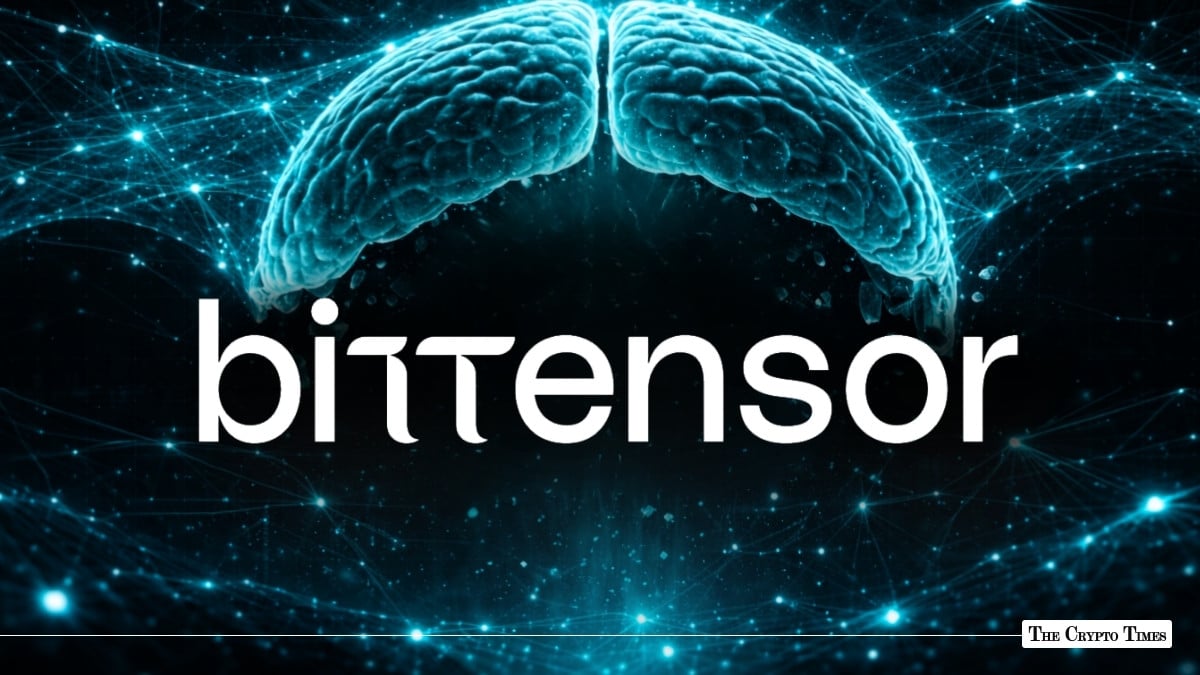
The decentralized AI narrative took a major hit in early April 2026. On April 9–10, Covenant AI, the team behind Bittensor’s most celebrated success story, publicly quit the network, slammed its governance as “decentralization theatre,” and triggered a massive cascade in TAO’s market price.
TAO plunged ~25% intraday, with nearly $900 million in market cap erased in hours and millions of dollars in long positions liquidated. The team behind the record-breaking Covenant-72B model, the largest permissionless decentralized LLM pre-training run in history, dumped roughly 37,000 TAO (worth approximately $10.2 million) and walked away with their research, models, and team intact.
This wasn’t just another subnet dispute. It was a direct challenge to Bittensor’s core promise: a truly permissionless, founder-proof AI economy. The drama exposed raw tensions between early builders, foundation influence, and the reality of a bootstrapping governance system. Here’s the complete story—from hype to heartbreak—plus what the market and on-chain metrics are actually saying.
Background: How Covenant AI Became Bittensor’s Star
Bittensor (TAO) incentivizes a marketplace of specialized “subnets” that compete for emissions (TAO rewards). Subnet owners run infrastructure; miners and validators contribute compute and intelligence, earning based on performance.
Covenant AI operated three high-emission subnets representing a full-stack AI pipeline:
- Templar (SN3): Distributed large-model pre-training.
- Basilica (SN39): Decentralized compute services.
- Grail (SN81): Reinforcement learning and post-training evaluation.
In March 2026, they delivered Covenant-72B. Using an innovation called SparseLoCo to drastically reduce communication overhead, they trained a 72-billion-parameter LLM permissionlessly across 70+ independent contributors on commodity hardware.
It processed 1.1 trillion tokens, scored 67.1 on the MMLU (outperforming Meta’s LLaMA-2-70B in zero-shot benchmarks), and earned high-profile shoutouts, including a nod from Nvidia CEO Jensen Huang.
The achievement drove TAO’s 90%+ March rally, expanded Grayscale’s TAO trust, and proved decentralized frontier training was viable.
Then, the cracks appeared.
The Timeline: From Internal Friction to Public Breakup
Here is the timeline for the Bittensor drama.
Weeks Leading Up (Late March–Early April 2026):
Tensions simmered over subnet operations. Covenant claimed Jacob Steeves (Bittensor co-founder, on-chain “Const”) took unilateral actions:
- Suspended emissions to their subnets (cutting revenue).
- Revoked moderation rights in their own community channels (Discord).
- Deprecated subnet infrastructure without process.
- Timed large, visible TAO sales as “economic pressure” during conflicts.
April 9–10 2026 – The Bombshell Announcement
Covenant AI founder Sam Dare posted a detailed open letter on X (@covenant_ai). Key excerpts:
“When a single actor can suspend a subnet’s emissions, override an owner’s authority over their own community spaces, publicly deprecate projects without process, and use token sales as a coercive mechanism to compel compliance, that is not decentralization. It is centralized control with decentralized branding.”
He zeroed in on the “triumvirate” governance (three individuals controlling the multisig for upgrades):
“It is decentralization theatre. Jacob Steeves maintains effective control over the triumvirate, resists any meaningful transfer of authority, and deploys changes unilaterally whenever he chooses, without process and without consensus… The power has never left one person’s hands.”
The post ended with Covenant’s full exit. Their research, models (including Covenant-72B), and team would continue elsewhere. “We cannot in good conscience continue to build on a network where the foundational claim… is contradicted by the reality.”
April 10, 2026: The Dump and Crash
On-chain forensics tracked approximately 37,000 TAO moving from Covenant-controlled wallets through exchanges. TAO plunged from the $337–$340 range to lows in the $250s, a 15–27% intraday drawdown, making it the worst-performing large-cap crypto that day.
Also Read: Bittensor (TAO) Price Analysis: Why the DeAI Pioneer Surged 62% in April 2026
Jacob Steeves (Const) Fires Back: Point-by-Point Rebuttal
Hours later, Const posted a direct response on X. He denied having special privileges and framed the dispute as operational, not foundational:
- Emissions suspension: “I do not have the ability to suspend emissions. What I did do is sell some of my alpha holdings on his three subnets, because they were not running, and were on near 100% burn code. This changed the emission the same way all buys and sells on Bittensor do.”
- Moderation rights: Dare “specifically deprecated his own channels” (via pinned Discord comment and X post). Const temporarily limited post-deletion after Dare allegedly removed “genuine, honest criticism,” then reinstated access. “I did not remove his moderator role.”
- Deprecating infrastructure: “Not even sure what this one means.”
- Token sales: “Not large. Less than 1% of what I had invested in his teams. Visibility is impossible to avoid in my position.”
In follow-up statements (April 12), Steeves called the exit a “deep betrayal” that harmed investors and the protocol. He apologized to holders for losses and proposed protocol-level fixes: a “staking lock-up” mechanism (time + staking commitment) for better transparency and investor protection. He noted the affected subnets (SN3, SN39, SN81) would continue via community efforts — the vision remains unchanged.
Market Impact & On-Chain Forensics
The fallout extended beyond the immediate TAO price dump.
- Subnet Carnage: Dedicated tokens for SN3, SN39, and SN81 dropped 55–70% within 24 hours.
- Protocol Resilience: Despite the massive liquidation event, the broader network of 128 active subnets remained functional, with community efforts immediately spinning up to revive the vacated infrastructure.
- Sector Isolation: The broader DeAI crypto sector remained relatively flat during the dump, proving the selloff was protocol-specific FUD rather than a macro AI correction.
Community Reactions: Reddit, X, and Forums Split Down the Middle
The drama ignited fierce debate across platforms. Sentiment is polarized between “rugpull greed” and “necessary wake-up call on governance.”
On X (April 9–13):
Heavy backlash against Covenant accused them of ego, rugpull, and ingratitude (“You sold your soul,” “You rugged your community,” “Without Const you would be nothing”). Many highlighted the timing — right after massive hype and profits.
The defense of Const emphasized resilience: “Bittensor is bigger than any subnet owner,” “One team doesn’t break 125+ subnets,” “This proves the market mechanism works.”
Balanced acknowledged growing pains in a bootstrapping DeAI project but called the public dump and narrative “classless.” Recent chatter still references the drama alongside other exploits, with many viewing TAO as a dip-buying opportunity for long-term DeAI believers.
On Reddit (r/bittensor_ and r/CryptoCurrency):
Dominant threads include:
- “‘It is decentralization theatre’: Covenant AI exits Bittensor, TAO drops 15%”
- “TAO Isn’t Just Dumping — It’s Facing a Credibility Test”
Bulls: “Greed is clearly what caused this… one subnet failing does not break a $3B platform.” Top holders accumulating; other subnets (Chutes, Targon, etc.) stepping up.
Bears/FUD: “Exposed structural weakness,” “Canary in the coal mine,” “If builders lose confidence, trust erodes slowly.” Questions like “Why now, after all the success?” and calls for faster power shift to subnet owners.
Neutral voices frame it as “growing pains” or a “liquidity event.” Some debunk “hack” rumors and note the ecosystem was already moving toward more headless/decentralized ops.
What It Means for Bittensor, TAO, and DeAI
This episode tested Bittensor’s narrative head-on. Covenant AI proved decentralized training works at scale — then highlighted that early-stage governance still relies heavily on founders during bootstrapping. The “triumvirate” was always presented as transitional, but the public optics of one person’s influence struck a nerve.
Bull Case:
- Ecosystem resilience — ~129 other subnets continue building.
- Proposed fixes (staking lock-ups) could strengthen investor protection.
- TAO’s halving (Dec 2025) already tightened supply; real utility (not one subnet) drives long-term value.
- DeAI narrative intact: The 72B model’s success lives on as open-source proof-of-concept.
Bear/Risk Case:
- Repeated centralization FUD could slow capital raises and talent attraction for subnets.
- Price volatility exposes how concentrated early emissions can be.
- Builders now scrutinize “decentralization” claims more harshly.
Outlook: As of April 13, TAO has stabilized but remains under pressure. The drama is fresh — expect continued debate on governance upgrades. For investors: This is classic crypto growing pain. For builders: It underscores the need for truly headless, subnet-owner-driven mechanics.
Covenant AI says their mission continues elsewhere. Bittensor says the network moves forward stronger. The market will decide which story wins — but one thing is clear: the conversation around real decentralization in DeAI just got a lot louder.
Disclaimer:
Some elements of this content may have been enhanced with the help of our artificial intelligence (AI) assistants for purposes such as basic refinement, review, image generation, and translation to deliver high-quality news in a shorter time frame. However, all AI-assisted content is reviewed and approved by our team to ensure accuracy, fairness, and editorial integrity.