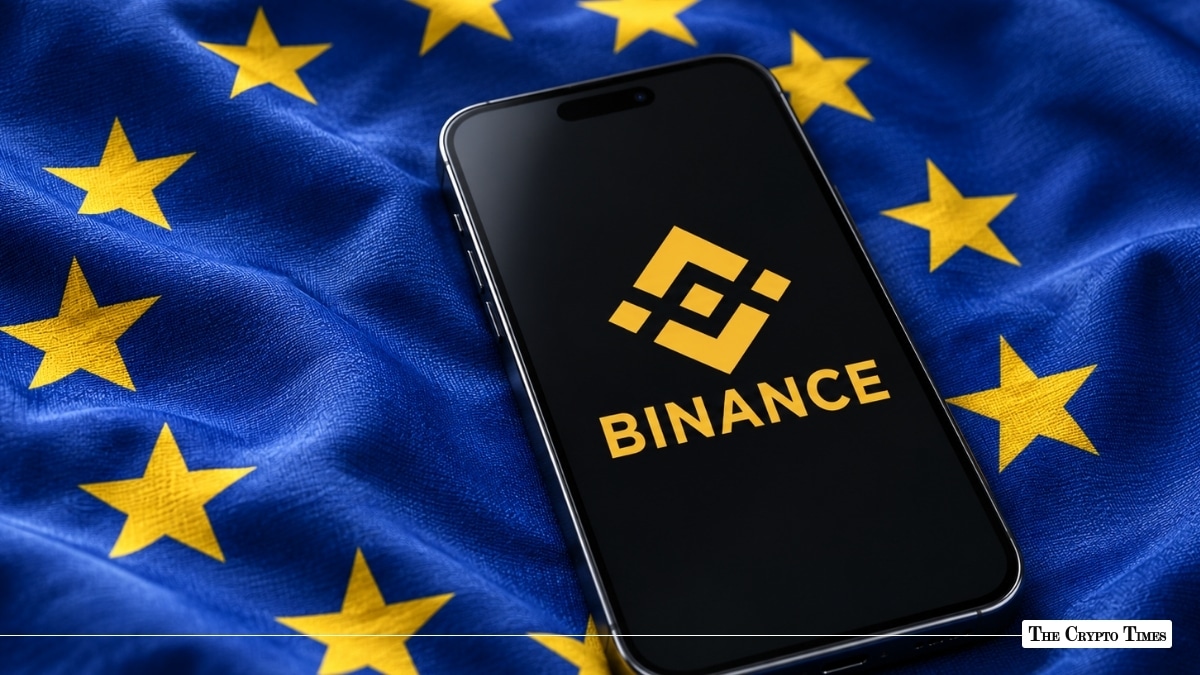
European regulators are questioning Binance over its continued service to customers in the European Union after the crypto exchange failed to secure a licence under the bloc’s new Markets in Crypto-Assets (MiCA) rules and was expected to wind down its EU business from July 1.
According to a Financial Times report, the European Securities and Markets Authority (ESMA) and regulators in France, Germany, and Greece are looking into Binance’s reliance on the reverse-solicitation exemption, which allows firms outside the EU to serve customers who independently approach them.
Several regulators have requested information from Binance as they assess whether the exchange is using the exemption within the limits of EU law.
Binance continued to open accounts after July deadline
The regulatory scrutiny follows reports that Binance continued onboarding European customers after the MiCA deadline.
On August 19, 2026, tests by Geneva-based publication Sandmark found that new Binance accounts could be opened, verified, and funded from several EU countries, including Austria, France, Germany, Spain, and Belgium.
Sandmark said its staff used a European identity document and residential address to open and verify an account and then deposit crypto. The account had reportedly been created after the July 1 MiCA deadline.
Further tests from several European locations produced similar results, with fully verified accounts successfully opened in two countries. Sandmark also reported that its tests did not produce a warning that Binance lacked MiCA authorization.
Why reverse solicitation matters
Reverse solicitation applies when a customer takes the initiative to approach a financial services provider outside the EU. Under MiCA, however, the exemption is limited and cannot be used as a substitute for authorization or to actively target European customers.
ESMA has stressed that the provision should be used only in narrowly defined circumstances. “The reverse solicitation exemption should be understood as very narrowly framed,” ESMA said.
The regulators’ current review therefore centers on whether Binance’s European customers genuinely initiated their relationships with the exchange and whether the company’s activities remain within the boundaries of the exemption.
Binance seeks MiCA authorization
Binance said it complies with applicable regulatory requirements in the jurisdictions where it operates and regularly reviews its products and services against those obligations.
The exchange also said it is working toward obtaining MiCA authorization. “We are actively working toward becoming MiCA-authorised,” Binance said, adding that authorization would support a regulated service across the European market.
Before the MiCA framework took full effect, Binance held local licenses in countries including France, Spain, and Poland. Those arrangements have since lapsed under the new regulatory system.
What happened on July 1?
The July 1, 2026 deadline marked an important point in Binance’s European regulatory transition. After failing to obtain a MiCA licence, Binance suspended most of its regulated services for affected EU users. The exchange told customers that their assets remained safe and that withdrawals and transfers would remain available where applicable.
On July 3, Binance’s Head of Europe and the UK, Gillian Lynch, defended the company’s position, arguing that MiCA should be assessed by how effectively it brings crypto companies into the regulated market rather than simply by which companies it excludes.
The company has since continued to seek a regulatory route back into the European market.
Regulators could take enforcement action
The Dutch financial markets regulator, AFM, has also warned that crypto companies cannot simply claim reverse solicitation without meeting the applicable requirements. “Crypto asset service providers cannot simply claim reverse solicitation,” the regulator said.
If European regulators conclude that Binance has improperly relied on the exemption, enforcement measures, including possible fines, could follow.
The scrutiny also extends beyond Binance, with regulators looking at how other crypto companies are using reverse solicitation as the EU strengthens enforcement of its licensing framework.
Binance’s wider regulatory background
The latest European review adds to Binance’s broader history of regulatory scrutiny.
In 2024, the exchange agreed to pay $4.3 billion to US authorities after pleading guilty to criminal charges involving money laundering and violations of international sanctions.
The current EU issue is different and centers specifically on Binance’s authorization status and how it continues to provide services to European customers.
Regulators are now assessing how Binance determines that customers have independently initiated relationships and whether the exchange’s current European operations fall within the narrow limits of reverse solicitation.
Also Read: Binance Pay Expands to PayPay Merchants Across Japan