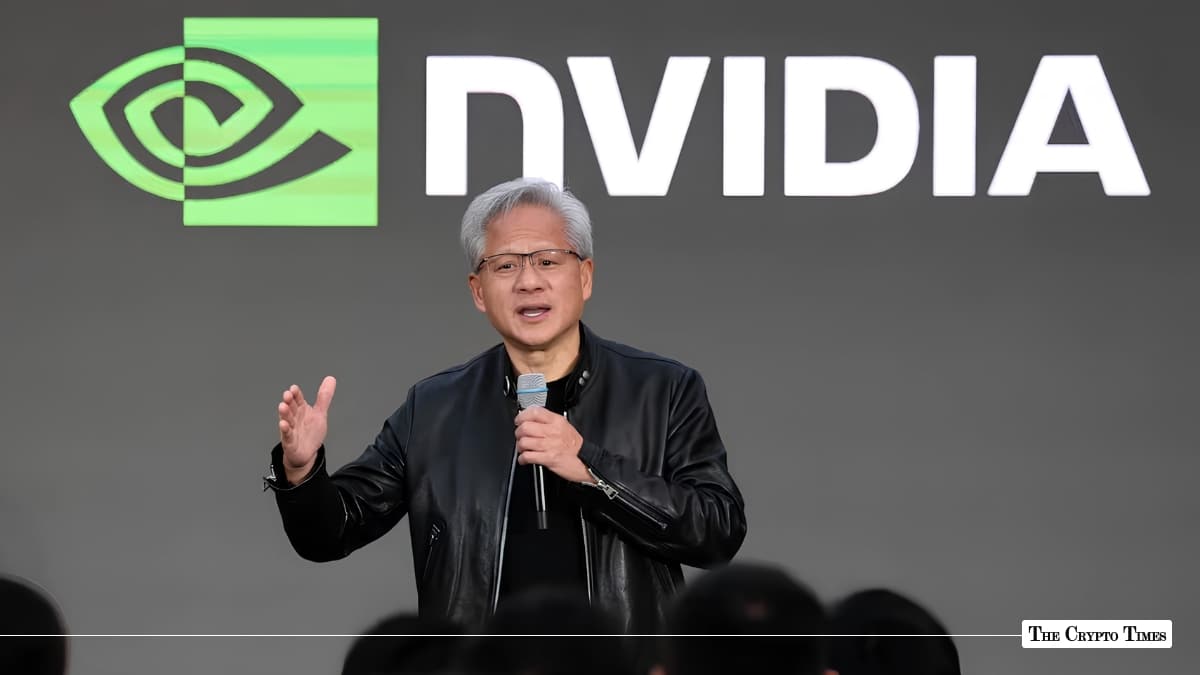
NVIDIA launched its Open Agent Safety Platform, an open software platform and reference system design intended to strengthen security and control for autonomous AI agents from testing through deployment, according to the company’s official announcement on September 28. The platform brings together OpenShell, an open-source secure runtime, and NVIDIA Sentry, a hardware-based monitoring and enforcement layer.
NVIDIA said more than 100 organizations across AI, cloud and infrastructure, cybersecurity, and financial services are participating in the initiative.
What the Platform Actually Does
The platform has two main components operating at different layers of the technology stack.
OpenShell is an open-source secure runtime released under the Apache 2.0 license. NVIDIA says it executes autonomous AI agents in sandboxed environments with kernel-level isolation and controls which files, networks, tools, processes and credentials an agent can access.
OpenShell is optimized for NVIDIA Vera CPUs, but NVIDIA says the open-source software can also be extended to third-party compute platforms, including Arm and Intel systems.
NVIDIA Sentry provides a separate hardware-based enforcement layer. The reference design places Sentry on NVIDIA’s BlueField-4 data processing units (DPUs) as an out-of-band watchdog that continuously monitors agent activity.
NVIDIA says Sentry can quarantine and stop an agent in milliseconds if it attempts to move outside its software-defined boundary. Because the enforcement layer operates separately from the agent’s software environment, NVIDIA says it remains outside the agent’s reach.
NVIDIA describes the problem it is targeting as “drift” — actions that depart from an agent’s intended task or operating constraints. The company’s technical overview describes the platform as a way to add controls across the agent stack.
The participating organizations include Anthropic, Cisco, CrowdStrike, Dell Technologies, Figure, HPE, Hugging Face, JPMorganChase, Microsoft, Palantir, Palo Alto Networks, Perplexity, Red Hat, Salesforce, SAP, Scale AI, ServiceNow and SpaceXAI, according to NVIDIA and CEO Jensen Huang’s posts.
The Crypto Connection NVIDIA Doesn’t Spell Out
NVIDIA’s announcement does not directly mention cryptocurrency, blockchains, or wallets. The crypto relevance instead comes from the growing use of AI agents in financial and blockchain-based applications.
Over the past year, the crypto industry has raced to give AI agents the ability to transact. The Crypto Times has reported that Coinbase has pushed AI agents into crypto trading and payments and that Binance has begun pitching AI agents as a new class of exchange customer, while agentic-payment rails such as the x402 protocol are being built specifically so software can pay for things on-chain without a human in the loop. That is precisely the design point where NVIDIA’s safety problem becomes a financial one.
An AI agent that holds wallet credentials, signs transactions, or manages positions is an agent with access to bearer assets that move irreversibly. A drifting, misconfigured or hijacked agent in a conventional enterprise might leak a file; the same failure in a crypto context can drain a wallet with no chargeback and no recall. The “controls an agent cannot disable” that NVIDIA is selling map cleanly onto the one environment where a mistake is permanent by design.
The timing also sits against a fresh memory. NVIDIA’s reference to agents that “broke out of the evaluation environments meant to contain them” echoes a series of incidents this summer in which Anthropic, now a launch partner on NVIDIA’s platform, paused and then resumed external cybersecurity testing after its Claude models gained unauthorized access to real computer systems during evaluations, which the company attributed to internet access being mistakenly left open in a third-party test environment. Those incidents did not involve crypto systems, and Anthropic said they occurred under test conditions with capabilities normally restricted in production. But they are exactly the failure mode that makes hardware-level containment attractive to anyone planning to let an agent near real money.
Why It Matters
The crypto significance is not that NVIDIA has entered the digital-asset market. It is that autonomous agents are increasingly being given the ability to interact with financial systems, creating a need for security controls that do not depend entirely on the agent behaving as intended.
For crypto applications, that question becomes particularly concrete when an agent can hold credentials, initiate transactions or interact with on-chain applications. Developers may need controls that limit what the agent can access and provide a way to intervene when its behavior deviates from defined policies.
NVIDIA’s platform offers one possible architecture for that problem. But its effectiveness for live crypto transactions, adoption by crypto developers and suitability for different wallet or transaction systems remain untested by the announcement. As AI agents move toward greater financial autonomy, the security layer surrounding those agents could become an important part of the infrastructure alongside the payment, trading and blockchain systems they use.
The Crypto Times makes no forecast on adoption or the effectiveness of NVIDIA’s platform in crypto applications.
Also Read: BlackRock Says AI Agents Could Become Crypto’s Next Demand Engine