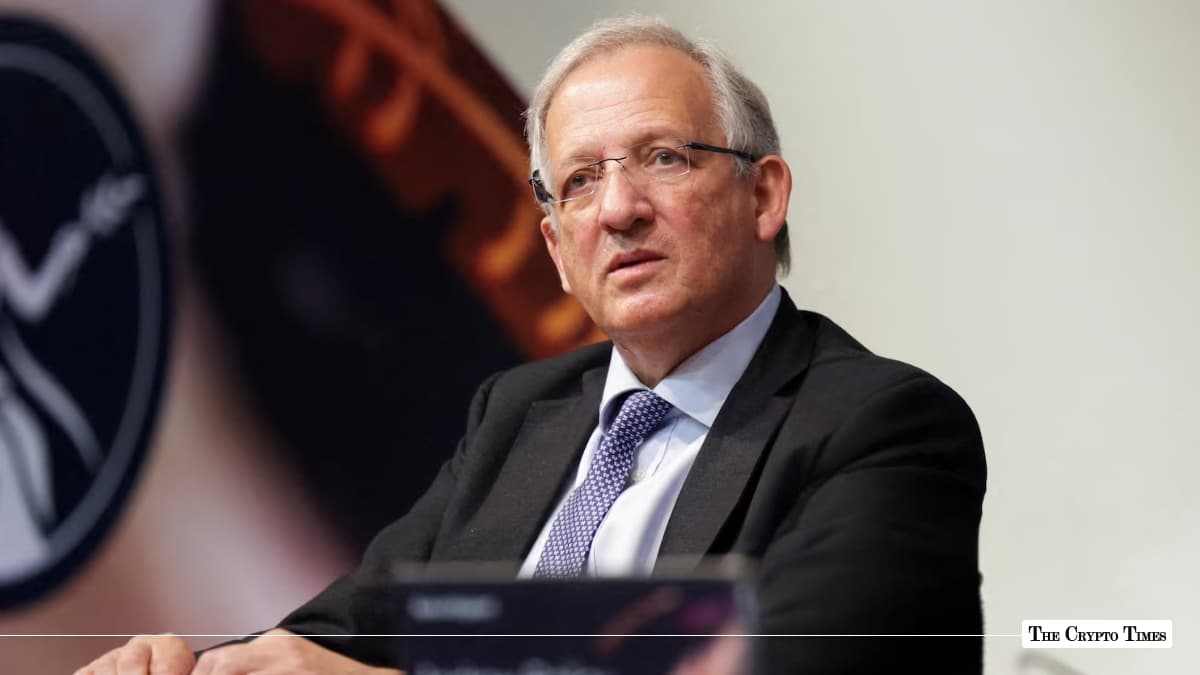
Former Bank of England Deputy Governor Jon Cunliffe has joined blockchain payments company Fnality, taking the chair of its UK board as the firm works to expand its central bank-backed settlement network.
According to a Bloomberg report, Fnality said Thursday that Cunliffe, who previously served as the Bank of England’s deputy governor for financial stability, will chair the board of its UK entity.
Jochen Metzger, a former director general for payments and settlement systems at Deutsche Bundesbank, has also joined Fnality Europe’s supervisory board and is expected to become its chair.
Ron Berndsen, formerly head of oversight and head of market infrastructures policy at De Nederlandsche Bank, is also joining the supervisory board of Fnality’s Germany-based European business.
The appointments come as banks and other financial institutions accelerate efforts to move traditional assets such as stocks and bonds onto blockchain networks. As more securities become tokenized, financial firms are also looking for digital payment systems that can settle transactions alongside those assets.
Fnality’s central bank money model
Fnality operates a wholesale payments system that allows participating banks to settle obligations using money backed by central bank balances.
Its sterling payment system launched in 2023 and is regulated by the Bank of England. The company is now working through regulatory approvals to introduce dollar- and euro-denominated versions of the network.
The model is designed to connect the movement of digital assets with digital payments, potentially allowing securities and the money used to settle them to move across compatible infrastructure.
“It is really important that we find a way to get central banks and central bank money at the heart of the new technologies that were pioneered in the crypto world,” Cunliffe said in an interview.
He added that some of those technologies are moving into mainstream finance because they can offer greater functionality and speed.
Tokenization drives demand
The push comes as financial institutions increasingly experiment with tokenized securities and other blockchain-based financial products.
Tokenization represents traditional assets digitally on blockchain infrastructure, allowing them to be transferred through digital networks. But moving the asset itself is only part of the process. The payment used to complete the transaction also needs to be settled efficiently.
Fnality is positioning its network as one option for that cash leg, using central bank-backed money for wholesale settlement rather than relying exclusively on stablecoins or commercial bank deposits. Its sterling system has already been used for transactions involving tokenized securities, foreign exchange and repo markets.
Banks test other digital money models
Fnality’s approach is developing alongside other forms of digital money being tested by major financial institutions.
Banks are exploring tokenized deposits, which represent commercial bank deposits on blockchain networks, as well as stablecoins, which are generally issued by private companies and backed by reserve assets.
Fnality Group Chief Executive Officer Michelle Neal said multiple forms of digital money are likely to coexist, while distinguishing the company’s model as regulated wholesale settlement.
The broader financial industry is also building blockchain-based settlement infrastructure. Swift has been working with global banks on a blockchain ledger aimed at supporting tokenized deposit payments for cross-border transactions around the clock.
Meanwhile, individual banks including Wells Fargo, JPMorgan and others are developing tokenized deposit systems for corporate payments and settlement.
Major banks back Fnality
Founded in 2019, Fnality is backed by major financial institutions and market infrastructure companies, including Goldman Sachs, UBS, Banco Santander, Bank of America and Citigroup.
The company raised $136 million in a Series C funding round in September 2025, taking its total funding since inception to more than $280 million. The funding was intended to support the expansion of its sterling system into additional currencies, as well as liquidity management tools and connections with stablecoins and tokenized deposits.
Fnality previously raised $95 million in a Series B round in 2023 led by Goldman Sachs and BNP Paribas.
With its sterling network already operating, the company’s next major step is securing the regulatory approvals needed to extend its central bank-backed settlement model to additional currencies, particularly the U.S. dollar and euro.
Also Read: India Favors Bilateral CBDC Payments Over a Unified BRICS Payment System