Key Highlights
- President Sadyr Japarov led the National Council’s third meeting on virtual assets and blockchain technologies on September 5.
- Kyrgyzstan plans to improve its virtual asset regulatory framework, infrastructure, and oversight mechanisms.
- A unified digital platform for licensing and supervision of the virtual asset sector is planned, with pilot testing set to begin on January 1, 2027.
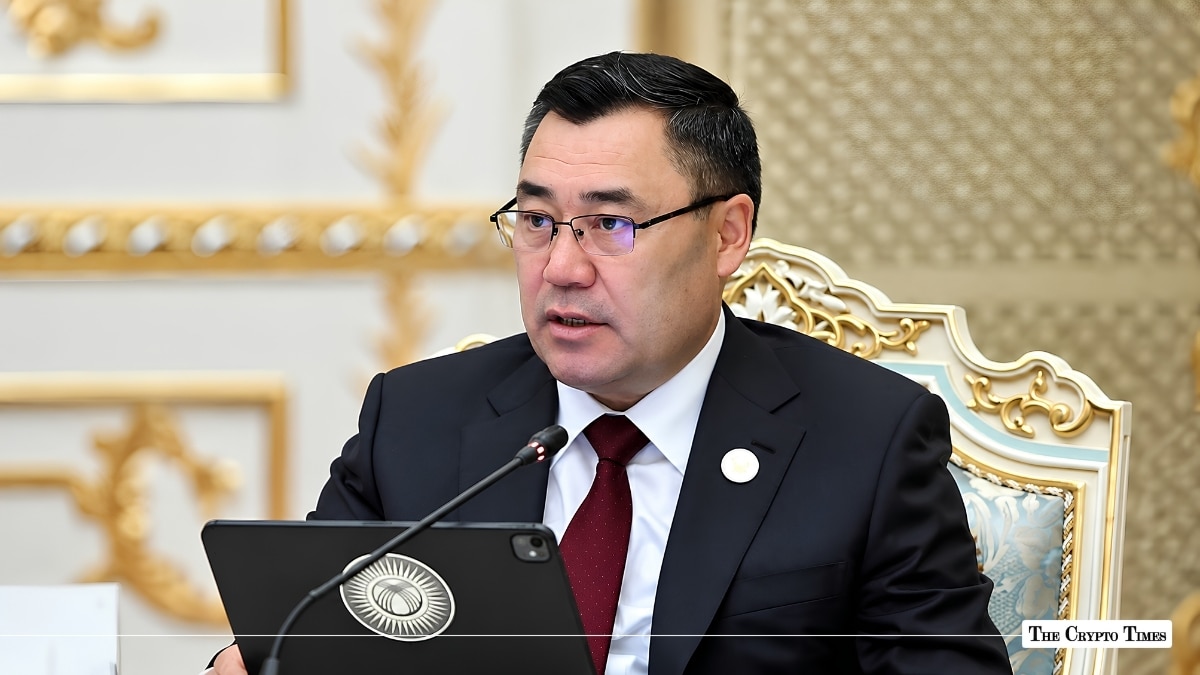
Kyrgyzstan President Sadyr Japarov chaired the third meeting of the National Council for the Development of Virtual Assets and Blockchain Technologies on September 5, 2026, in Cholpon-Ata, Issyk-Kul Region.
According to the official announcement, participants exchanged opinions and information and identified specific objectives for the further development of virtual assets and blockchain technologies.
President’s opening remarks
In his opening speech, President Japarov outlined the strategic importance of developing virtual assets and blockchain technologies for Kyrgyzstan, as well as key priorities of state policy. He noted the importance of developing virtual assets, blockchain technologies, and new digital financial instruments as areas of technological and economic transformation.
The president stated that the Kyrgyz Republic is consistently improving its legislative framework and creating the necessary technological and financial infrastructure. He also referred to market dynamics and interest from businesses and investors in the sector.
President Japarov said the creation of the National Council was a timely decision. Over the past eighteen months, the Council has united the efforts of government agencies, the professional community, and international partners to develop a unified approach to the industry.
He emphasized the need to maintain the pace of development and advance in designated areas, drawing on international experience and best practices.
Presentations and topics discussed
Participants heard presentations on the prospects for the development of virtual assets, blockchain infrastructure, and the digital economy in Kyrgyzstan. Discussions covered potential areas of international cooperation and the further improvement of the state system for regulating virtual assets and blockchain technologies. Security issues in the virtual asset sector and methods to counter associated risks were also addressed.
A new digital platform was presented to digitize licensing and government oversight processes in the virtual asset sector. Participants explored the possibility of launching a digital som in a limited pilot environment.
The meeting also discussed the prospects for developing and using KGST, a stablecoin pegged 1:1 to the Kyrgyz som. Current and prospective approaches to taxing virtual asset activities were examined. Risks associated with international sanctions and restrictions that may affect participants in the Kyrgyz virtual asset market were also discussed.
Tasks assigned by the president
Following the meeting, President Japarov identified specific objectives and emphasized the need to continue work to improve institutional mechanisms and regulatory frameworks in the field of virtual assets and blockchain technologies.
The National Agency for Virtual Assets and Blockchain Technologies (NAVA) was tasked with ensuring coordination of government agencies’ work on issues related to the development of virtual assets and blockchain technologies, including the implementation of projects and initiatives. All ministries and departments are required to conduct work in coordination with the agency.
NAVA must, within three months, ensure the adoption of a package of by-laws taking into account proposals received, and within three months work out the issue of amending the Law of the Kyrgyz Republic “On Virtual Assets” and other legislative acts regulating related issues.
The State Tax Service was instructed to review issues of improving tax regulation within two months.
The State Committee for National Security and the Ministry of Internal Affairs were instructed to conduct a comprehensive assessment of current legislation and cooperation mechanisms and to develop a unified approach with a clear definition of powers and responsibilities, information exchange procedures, and response procedures.
The initiative to create a unified platform for licensing and supervision was supported. NAVA was tasked with determining the platform’s cost and submitting proposals for funding sources within one month. Pilot testing of the platform is to begin on January 1, 2027.
The National Bank of the Kyrgyz Republic was tasked with developing a basic digital som platform and conducting pilot testing by December 31, 2026, and beginning real-world testing in 2027, followed by a phased national rollout.
The Ministry of Science and Higher Education was tasked with ensuring high-quality training of specialists in relevant and promising areas needed for the development of the sector.
Prior meeting with TRON founder
On April 19, 2026, TRON founder Justin Sun met with President Sadyr Japarov in Kyrgyzstan. The meeting addressed blockchain technology and the development of digital money in the country. Sun presented proposals related to the development of virtual assets, AI, and Web3 technologies.
According to the presidential administration, the discussion focused on the use of blockchain to improve the financial system and expand the use of virtual assets such as stablecoins, as well as the potential role of TRON’s network in digital transactions in the region.
Also Read: Robinhood Chain Activity Raises Questions Over New-User Adoption