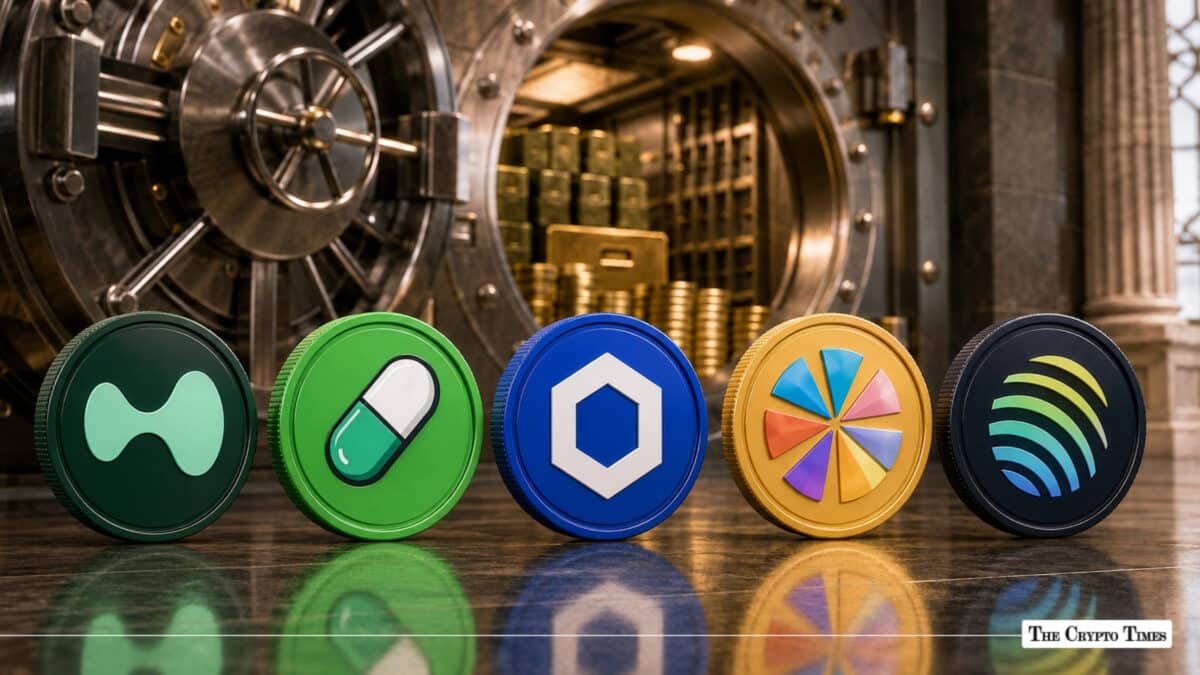
Digital asset firms have spent close to $640 million buying back their own tokens in 2026, borrowing a playbook long associated with public equities in an effort to shore up prices during an extended market downturn.
The $638 million tally marks a meaningful step up from the $545 million spent over the same period last year, and a dramatic escalation from 2024 as a whole, when only about $366,000 was deployed on token buybacks across the industry. Two projects, Hyperliquid and Pump.fun, are responsible for nearly nine out of every ten dollars of that activity.
The data, reported by the Financial Times, was compiled by blockchain analytics group Allium Labs and covers the year through August 25. Token repurchases in the crypto sector remained rare until recently, in part because former US Securities and Exchange Commission (SEC) chair Gary Gensler’s tenure made many executives cautious about actions that could invite classification of their tokens as securities. That posture has shifted under the current US administration, whose friendlier regulatory stance toward digital assets has given founders more room to run repurchase programs without fear of enforcement.
Hyperliquid Leads the Field
Perpetuals exchange Hyperliquid has been the single largest force behind the trend. The protocol allocates 99% of its trading-fee revenue toward buying back and cancelling its native HYPE token, and has repurchased roughly $1.3 billion worth since the token’s December 2024 launch.
Over the past year, HYPE has climbed about 70%, sharply outperforming the wider market even as most other digital assets have fallen. The Crypto Times has previously examined how Hyperliquid’s buyback engine chips away at token supply faster than comparable mechanisms on larger networks.
Matt Hougan, Chief Investment Officer at Bitwise Asset Management, said that the aggressive repurchase programme is the primary reason for HYPE’s rally, arguing that it gives investors a clear channel through which rising protocol activity flows back into token value. Bitwise has separately argued in a wider memo that markets have not fully priced in the growth of revenue-return mechanisms among a small group of protocols.
Pump.fun, Sky Protocol and Lido Join the Trend
Solana-based launchpad Pump.fun is the second-largest buyer in the sector, directing a significant share of its fee income into PUMP repurchases. Together with Hyperliquid, the two platforms account for the overwhelming majority of the 2026 total tracked by Allium.
Decentralised finance protocol Sky Protocol, which rebranded from MakerDAO, has spent about $26 million buying back its SKY token over the period covered. Co-founder Rune Christensen told the Financial Times that the project generated more than $400 million in revenue over the past year, and framed the repurchases as a way to align tokenholders who steer governance with the long-term performance of the protocol.
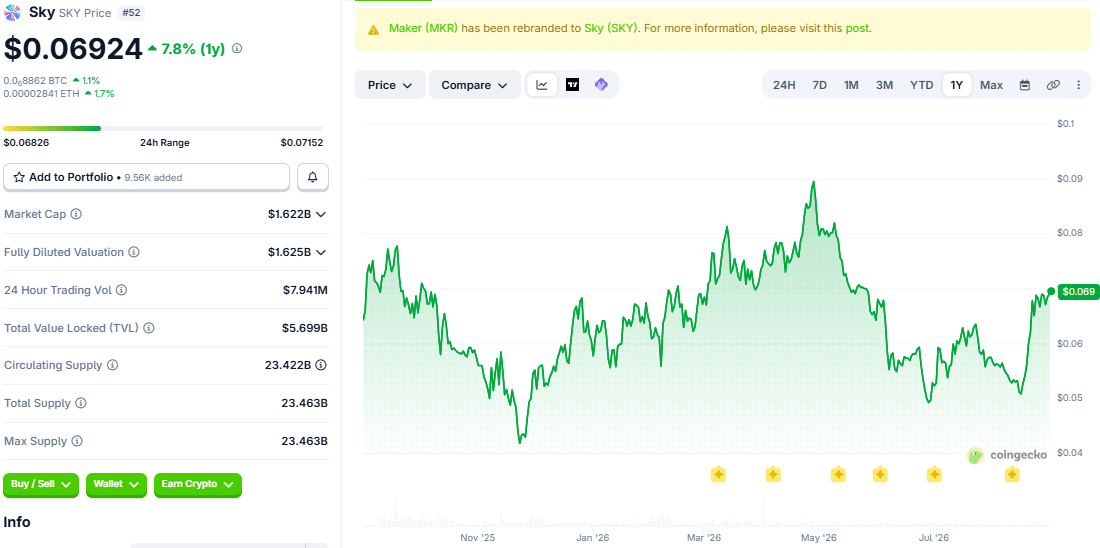
SKY is up roughly 8% over the past 12 months — one of the few tokens in the buyback cohort trading higher year-on-year.
Liquid staking protocol Lido said in August that it plans to run regular buybacks once specific thresholds are met, including reaching $40 million in annualized revenue, tying the token’s value more directly to protocol performance.
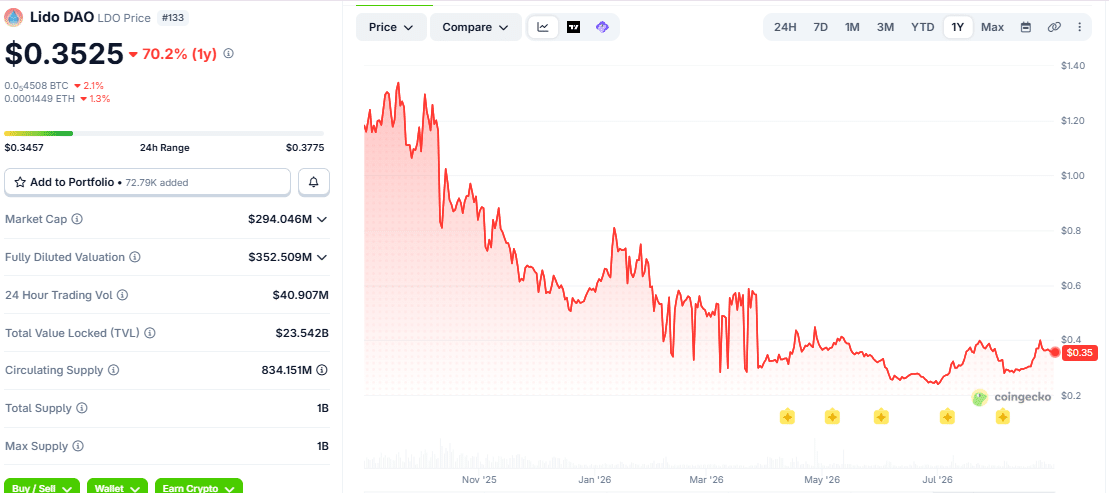
Its LDO token has fallen approximately 71% over the past year and is trading close to record lows.
Not Every Buyback Has Moved the Market
The correlation between repurchases and token performance has proved uneven. Decentralised exchange aggregator Jupiter has spent nearly $14 million on JUP buybacks so far in 2026, according to Allium’s figures cited by the Financial Times, yet the token has still fallen around 55% over the past year. Earlier in the year, Jupiter’s founders themselves publicly debated whether to continue the strategy after limited price impact in 2025.
Blockchain oracle network Chainlink has also executed buybacks under its onchain reserve programme, but its LINK token has roughly halved in dollar value over the same 12-month window. Internet connectivity project Helium halted its own repurchase scheme in February. Co-founder Amir Haleem said at the time that the market did not appear to reward projects for buying their tokens back, and that the team preferred not to continue allocating capital toward the strategy.
Elton Shehdula, head of research at Allium Labs, told the Financial Times that repurchases can create an appearance of confidence and mechanically reduce circulating supply, but cautioned that a buyback programme alone does not make a project fundamentally sound. He said he remained sceptical that such initiatives, on their own, would meaningfully lift token prices.
A Shift Toward Fundamentals
Amir Hajian, a researcher at crypto firm Keyrock, said that the era of tokens rising broadly on hype has come to an end, with holders paying closer attention to whether an asset offers any tangible economic benefit. Some projects have responded by structuring their tokens more like dividend-paying equities.
At decentralised exchange THORChain, for instance, holders who stake the protocol’s token can receive 55% of revenues, while a further 20% of income is directed toward buybacks. Even so, the token’s price has still fallen by around half over the past year, underscoring how difficult it has been for any single tokenomics feature to override wider market conditions.
The broader crypto backdrop has weighed on almost every project pursuing these programmes. Bitcoin recently traded below $78,000 as US monetary-policy expectations shifted, while altcoins including XRP and Solana have posted steeper year-on-year declines. Prices did receive a temporary lift after the US Treasury’s recent bond-market intervention rattled confidence in the dollar, but the sector remains well below its late-2025 peaks.
Whether the buyback wave continues at its current scale will likely depend both on individual project revenue and on the broader direction of the market. As with equity repurchases, industry observers note that the mechanism is a tool for returning capital rather than a substitute for underlying demand and, as the mixed 2026 record has shown, its effect on token price is anything but guaranteed.
Also Read: Crypto Funds See $3.2B Weekly Inflow, Most Since October 2025: Bank of America