Key Highlights
- Brian Armstrong said stablecoins could become a default payment rail for AI agents as they handle more transactions.
- He said AI could improve financial security and expand access to financial advice, while pushing back on fears that AI agents will cause major market manipulation.
- The CFTC proposed removing an order book requirement from some permitted swap transactions.
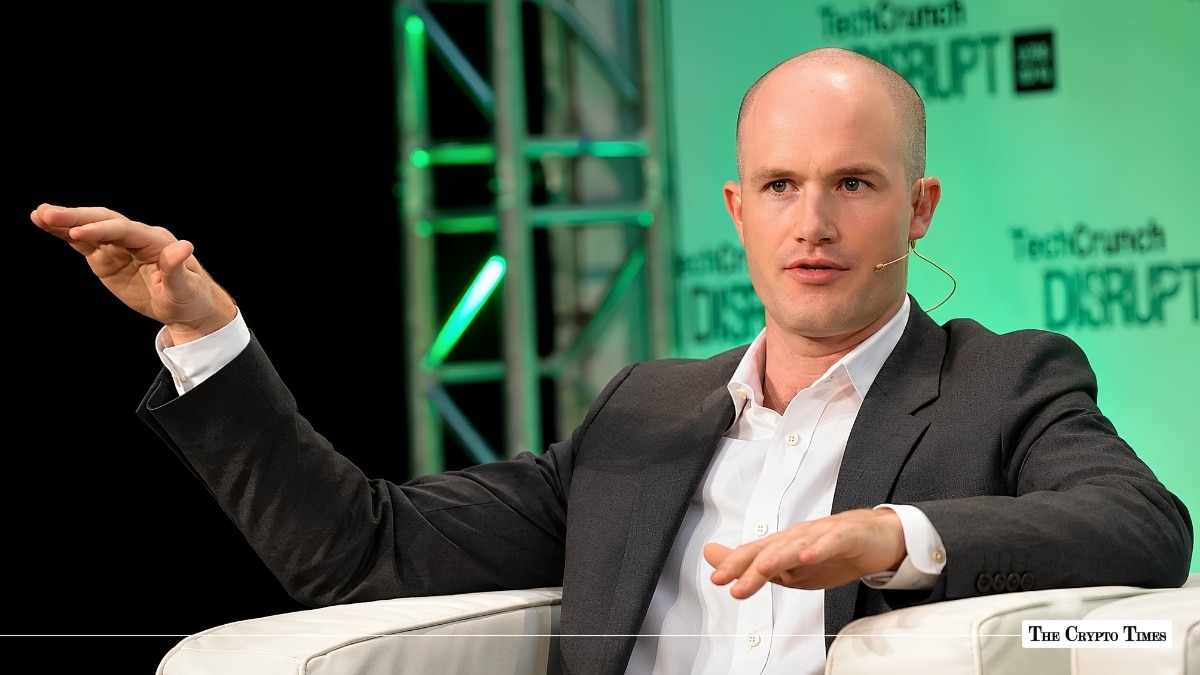
Coinbase CEO Brian Armstrong said stablecoins could become a key way for AI agents to make payments as artificial intelligence takes on more financial tasks.
Armstrong made the comments on Thursday at the Commodity Futures Trading Commission’s (CFTC) first Innovation Advisory Committee meeting in Washington. The discussion began when Walt Lukken, president and CEO of FIA, asked Armstrong which AI developments could have the biggest effect on CFTC markets and which risks the commission should be watching.
Armstrong said the growing link between AI and financial services was “really exciting” and pointed to several areas where the two technologies could work together.
Armstrong says AI could help financial firms identify vulnerabilities
One area Armstrong focused on was security. He said advanced AI models could help financial companies find weaknesses in their systems before hackers take advantage of them. Instead of waiting for an attacker to find a problem from outside, companies can use AI to check their own code and systems.
Armstrong said this could give financial companies an advantage over attackers. He explained that companies could use advanced AI models to review code before it is released. In his view, having AI check every piece of code before it reaches production could help make financial systems safer.
Stablecoins could power AI agent payments
Armstrong’s broader argument focused on how AI agents could change the way payments are made. He said more people are beginning to use AI agents to complete tasks on their behalf. As these systems become more capable, they may need to buy goods and services, pay other agents, and even create smaller groups of agents to handle different jobs. That could create a new type of economy where machines are making payments for people.
Armstrong said the traditional financial system is not designed well for very small, fast, and cross-border transactions. An AI agent could need to make a payment worth only a few cents, while making payments every second or even faster. Armstrong believes blockchain-based stablecoins could handle these transactions more easily.
“I think stablecoins will be a default payment rail for AI in this agentic economy,” Armstrong said.
AI agents could make financial advice more accessible
Armstrong also said AI could make some forms of financial guidance more accessible. Someone with only a small amount of money may not normally have access to a traditional registered investment adviser. An AI agent, however, could help such users understand portfolio allocation, dollar-cost averaging, and tax-loss harvesting.
Armstrong said AI agents may not always beat the market, but they could provide useful financial guidance to people who previously had limited access to it.
AI market-manipulation concerns
The conversation also touched on concerns that AI agents could cause market manipulation.
Armstrong compared this with the algorithmic trading already used by hedge funds and other financial firms. He said automated trading is not new, even though the technology has changed from statistics and machine learning to today’s AI systems.
He rejected the idea that AI would automatically cause everyone to make the same trade at the same time. Different companies will use different AI models, while the same model could give different advice to clients based on their risk levels and investment goals.
Armstrong urged regulators to focus on risks that actually emerge rather than attempting to address every potential scenario before it occurs.
CFTC looks to cut some trading requirements
The CFTC meeting came as the agency was also considering changes to some existing trading requirements.
The commission proposed removing an order book requirement for certain permitted transactions on swap execution facilities (SEFs). The CFTC said these order books have been rarely used by market participants for swaps trading, despite being available. CFTC Chairman Michael S. Selig said the move was part of the agency’s effort to use the “minimum effective dose of regulation.”
The proposal would give SEFs more freedom to decide how to use their resources and could support the development of new ways to execute trades. The public will have 30 days to submit comments after the proposal is published in the Federal Register.
Coinbase also weighs in on stablecoin rewards
Armstrong’s comments come as Coinbase continues to engage in the broader debate over stablecoin regulation.
Coinbase Chief Policy Officer Faryar Shirzad recently warned that proposed changes supported by the American Bankers Association could “kill” the bill.
Shirzad argued that stablecoins are not bank deposits and should not be treated as deposit interest. He also pointed to existing provisions in the GENIUS Act and CLARITY Act covering stablecoin yield and rewards.
Armstrong’s comments at the CFTC meeting add another part to Coinbase’s broader focus on stablecoins, payments and the developing intersection between crypto and AI.
Also Read: Ripple’s Garlinghouse, Coinbase’s Armstrong Back CLARITY Act After White House Crypto Meeting